
Trump on right track with drug prices, but plan needs to be refined | Opinion
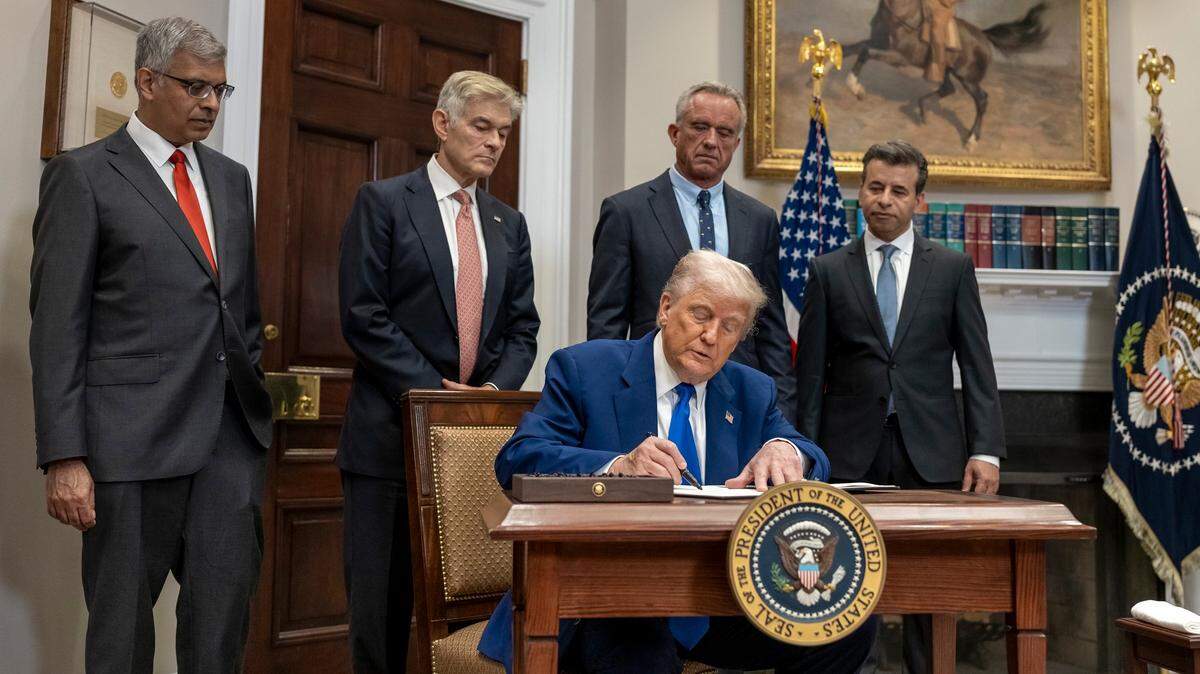
President Donald Trump recently announced a plan — or really, “concepts of a plan,” to borrow his humorous debate-stage quip — to lower prescription drug prices.
The proposal is light on details but big on ideas. And depending on how those details are fleshed out, the consequences could be enormously positive — or negative — for families across Kansas and the nation as a whole. It’s up to Kansas’ congressional delegation to guide Trump’s reform agenda in the right direction.
The central theme of the president’s “Most Favored Nation” executive order is that America has been getting ripped off by other countries for decades when it comes to prescription drugs.
And that’s undeniably true. Other countries impose socialist price controls on American-invented, American-made medicines. As a result, they get cheap medicines, while U.S. patients and taxpayers fund the vast majority of global pharmaceutical profits.
Trump is right that this broken status quo is unfair and unacceptable. The question, of course, is how to correct it.
His executive order contains several potential solutions. For starters, he suggests creating ways for patients to get their medicines without having to deal with middlemen in the supply chain that jack up prices.
He’s referring primarily to pharmacy benefit managers, the giant companies that determine which drugs are covered by insurance. They use that decision-making authority as leverage to extract huge price concessions from drug companies. On average, 42 cents of every dollar spent on brand-name drugs in the commercial market ultimately flows back to PBMs.
Yet these companies produce virtually nothing of value. They don’t invent or manufacture drugs. They don’t provide medical care to sick patients. They’re just paper-pushers — but in many cases, they take in more revenue per drug than those same medicines cost in total in other countries.
Trimming these middlemen down to size could bring down drug prices substantially. Kansas’s own Sen. Roger Marshall has been advocating such reforms for years — and he could help save patients billions of dollars by convincing the president to enact them.
Another solution, also floated in the president’s executive order, is to force other countries to stop freeriding by getting tougher in trade negotiations. The order instructs the Commerce Secretary and U.S. Trade Representative — the nation’s top trade negotiator — to punish foreign countries that are “suppressing the price of pharmaceutical products below fair market value.”
However, one of the other ideas mentioned in the order would backfire. Importing drug price controls from abroad would expose Kansans to the same sorts of medicine shortages and access restrictions that plague socialist countries across Europe. It’d let foreign freeloaders off the hook while killing American biotech innovation.
Rather than copy those socialist price-setting regimes, Trump should pressure them to rejoin the free market. That would force the rest of the world to pull its own weight in drug development — and reduce global price disparities — without jeopardizing Americans’ access to new medicines.
Trump has always been a bold thinker. But as a political outsider, his plans often need fleshing out. Kansas’s congressional delegation — especially Marshall, who sits on the Senate committee that oversees health care reform — ought to help the president with the details, and implement reforms that put patients first.
— Peggy Mast, of Emporia, is a Republican former member and speaker pro-tempore of the Kansas House of Representatives who represented the 76th District from 1997 to 2017.