
Wichita, Sedgwick County need to add audible crossing signals to downtown project | Opinion
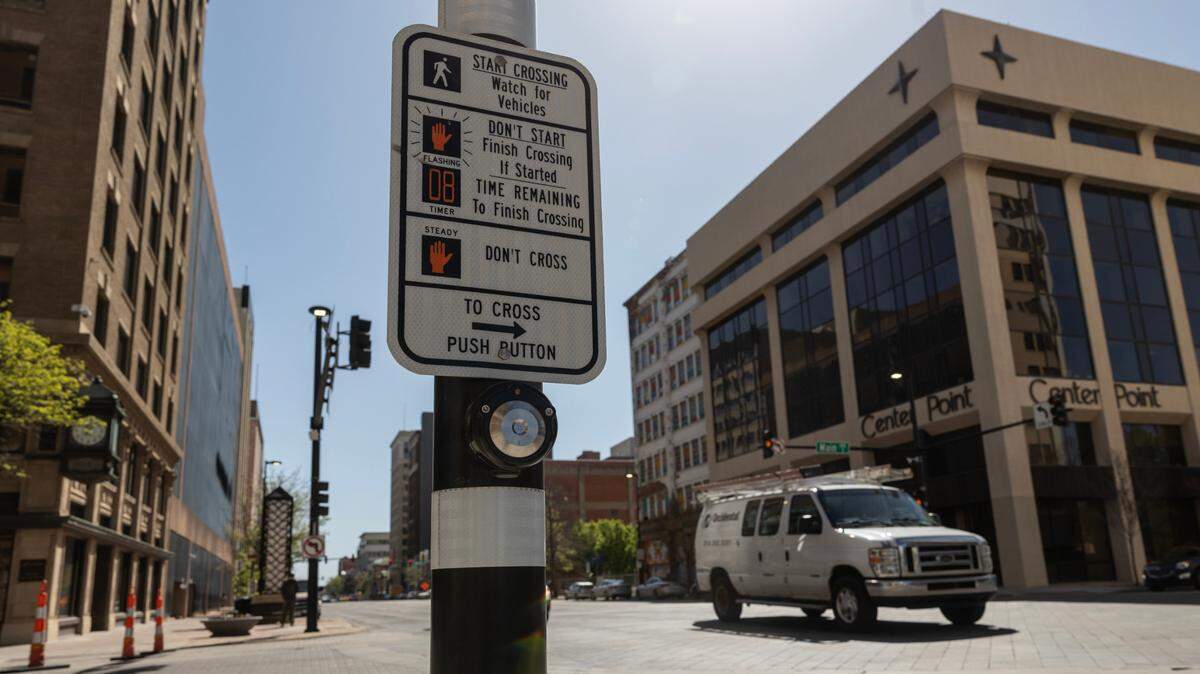
Editor’s note: The following is a letter to the Wichita City Council, the Sedgwick County Commission, and their respective staffs from the Wichita/Sedgwick County Access Advisory Board, regarding the decision not to install audible walk/don’t walk signals as part of the resurfacing and directional change project recently completed on streets in downtown Wichita. It references an Opinion column on the subject that ran April 12 on Kansas.com and April 13 in the print edition of the Wichita Eagle.
As members of the Wichita/Sedgwick County Access Advisory Board, we are addressing the April 12, 2025, Wichita Eagle opinion piece. This article involved the City of Wichita, WSCAAB, and the $4.9 million project that intends to create a more walkable downtown.
Most importantly, WSCAAB hopes that the city and county will keep the needs of all in our community in mind, especially projects involving transportation. We beg to differ that the scope of the two-way traffic conversion project does not warrant meeting the federal requirements for pedestrian accessibility.
Best practices prescribed by the Federal Department of Transportation and the Institute of Traffic Engineers makes clear that resurfacing of roads and/or new construction should trigger updating any affected intersections to meet the August 2023 Public Right of Way Accessibility Guidelines. The goal of these practices is effective communication, consistency, and safety for anyone traversing public streets and sidewalks. This includes modifications of curb cuts and installation of audible pedestrian signals.
We agree with the statements by Professor Emeritus Robert Dinerstein (quoted in the Wichita Eagle article) that the time to implement important safety factors such as APS and curb ramps are during extensive renovations. This is generally accepted as the most cost-effective and efficient process.
The need for installation of new and maintenance of current APS is highlighted as Wichita hosts events such National Federation of the Blind conventions as well as compensating for the increase of electric vehicles on the roads.
The WSCAAB is frustrated that our concerns, which have been repetitively voiced, are not consistently shared with city and county leadership. We are disappointed that despite the advice of WSCAAB, the Federal DOT, and other local stakeholders prior to this project commencing, the city chose to proceed. Please note that WSCAAB communicated in the fall of 2023 that this project did not conform to PROWAG.
The WSCAAB advises that the city develop and articulate a plan to consistently bring the ramp/concrete work to the affected intersections and also address the APS at these crosswalks. Further, this board recommends that the city and the county immediately create and implement policies requiring all future transportation projects conform to the best practice standards, including the Manual on Uniform Traffic Control Devices and the current PROWAG.
This situation has illustrated multiple gaps in communication between city planners, traffic engineers, public leadership, and the community. We advocate for better communication regarding construction, road closures, signage, and barrier placement, especially during Riverfest, Intrust Arena activities, and other civic events.
This includes consideration for the placement of construction signage, cones, and barriers which may be disruptive and dangerous for blind and low vision individuals, those with mobility issues who are using mobility devices, and visitors who are unfamiliar with the downtown area. Insufficient communication not only impacts our community safety but is stifling to business relations and economic development.
In conclusion, we ask that mitigation of the current $4.9 million two-way traffic conversion project and implementation of policies regarding traffic infrastructure best practices be brought to fruition in a timely manner. We hope that city and county leaders understand that while not intentional, limiting our safe access conveys that certain groups of citizens are not wanted, needed, or valued in our community.