
Remembering Kansans killed in WW II ‘friendly fire’ sinking | Opinion
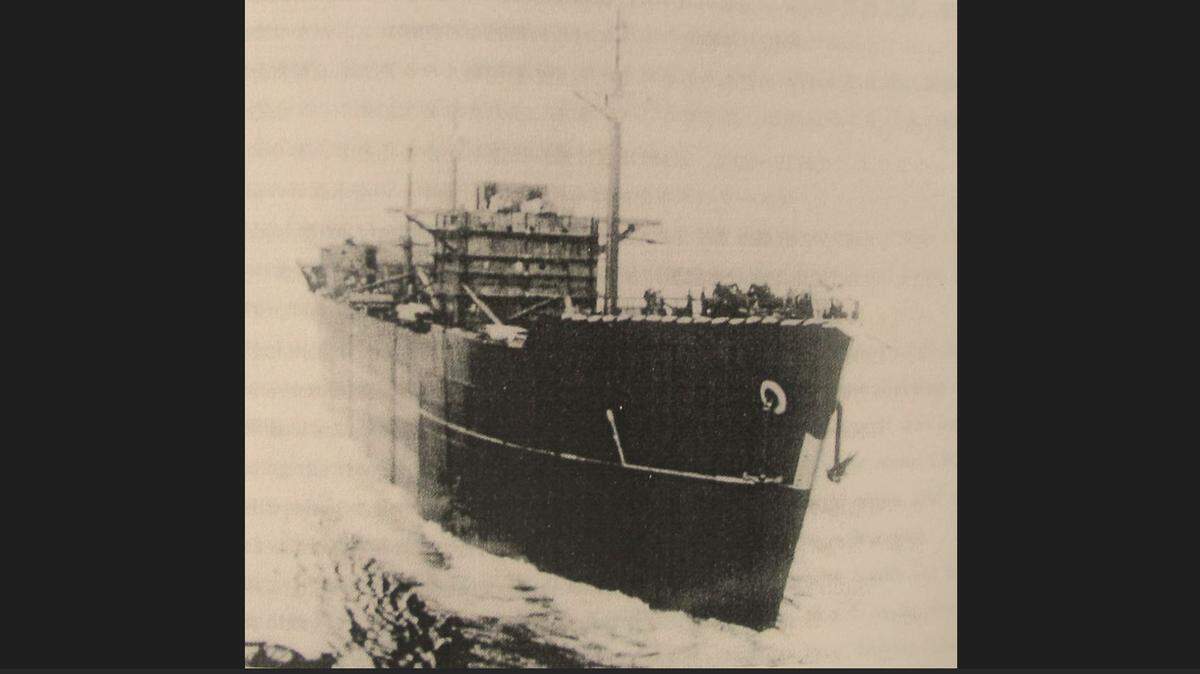
Eighty years ago this week, on October 24, 1944, Capt. Donald A. Amend from Wichita sailed toward Japan aboard a ship called the Arisan Maru. Crammed into the ship’s cargo hold with him were nearly 1,800 other Allied prisoners of war, including 30 fellow Kansans.
These soldiers hailed from across the state and represented multiple military branches. Private First Class Robert Lee Hale from Bonner Springs belonged to the famed Fourth Marine Regiment. Captain Herman H. Hauck from Valley Falls was in the Army. Corporal Russell L. Lash from Cunningham served in the Army Air Force, while Fort Scott native Alfred W. Hausam was a Navy torpedoman.
The Kansans were also survivors. Most had endured the notorious Bataan Death March and then over two years in brutal POW camps in the Philippines. But now, the sight of American airplanes over Manila signaled a shift in the tide of war.
Forces under General Douglas MacArthur landed in the Philippines just four days earlier. In a massive amphibious assault codenamed “A-Day,”, MacArthur fulfilled his famous promise: “I shall return.” Liberation seemed just weeks or months away.
What the sick, starving POWs locked inside the Arisan Maru didn’t know was that another Kansan, 24-year-old quartermaster Jesse L. Selig from Dodge City, was aboard a nearby submarine. Minutes later, a torpedo fired from Selig’s submarine, the Shark II (SS 314), would fatally cripple the Arisan Maru.
A staggering 1,791 of the 1,800 POWs died in the explosion or during the minutes and hours that followed. Sadly, all 31 Kansans perished. This little-known tragedy remains the deadliest friendly fire incident in U.S. military history. It’s time we remembered these brave soldiers.
Only nine POWs on the Arisan Maru survived. Japanese ships recaptured four from the ocean. The other five miraculously floated 250 miles to China, where sympathetic villagers nursed the men back to health and helped them reach a remote American base.
Meanwhile, Jesse Selig and his 86 fellow submariners suffered a fate that made the tragedy even worse.
The Shark II didn’t survive the October 24 encounter—sunk by a devastating depth charge attack that sent the submarine to the bottom of the South China Sea. The Japanese destroyer Harukaze announced the kill in a radio message, which U.S. radio spies in Hawaii intercepted and quickly decoded.
Vice Admiral Charles Lockwood, commander of Submarine Force, Pacific Fleet, documented the incident in a memorandum dated November 27, 1944. Now declassified, Lockwood’s memo suggests that instead of fleeing the scene, the Shark II “may well have been sunk while attempting to rescue American prisoners of war.” Any effort to save POWs floating in the ocean, while heroic and noble, proved fatal.
Eighty years later, the U.S. government still calls the Arisan Maru sinking a tragic accident. But declassified records blur the line between accidental and intentional. American codebreakers knew the locations, destinations and cargos of Japanese ships in 1944. They secretly passed details to Submarine Command, which then directed submarine skippers precisely where to attack.
As we mark the 80th anniversary of this grim chapter of American history, we face mounting threats at home and abroad. Let us remember Donald Amend, Jesse Selig and their fellow Kansans who gave their lives on the Arisan Maru and Shark II.
Let their story remind us of the enduring value of freedom, service, and the vigilance required to protect democracy and our way of life. Their sacrifices, like those of so many others, demand nothing less.
This story was originally published September 25, 2024 at 12:51 PM.