
Libertarian ideals behind Wichita’s callous contempt toward the homeless | Commentary
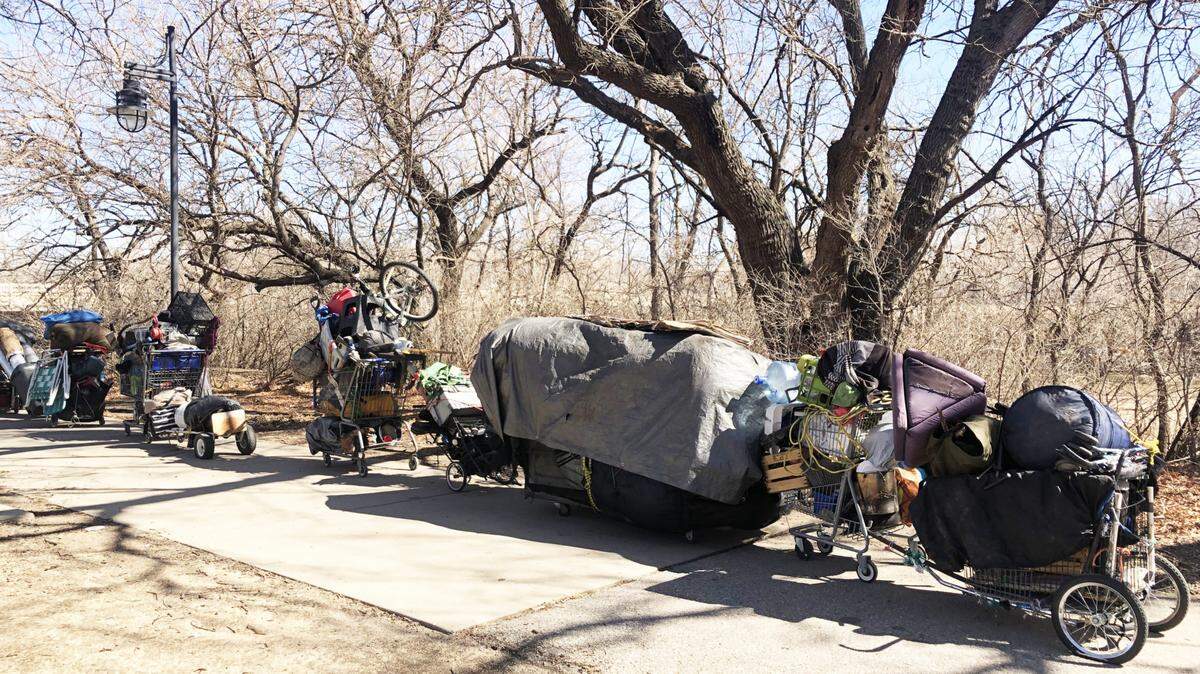
As hundreds of homeless struggle to survive on the streets here in Wichita, with temperatures already plunging to near-freezing this month, we got news that their last safety net — private emergency shelters sponsored by local churches through HumanKind Ministries — would not open this winter.
At this writing, they’ve recanted, partially, in negotiations with local government, but no full commitment has yet emerged from anyone.
Not that those shelters would be any help in this month’s nights of cold wind chills on the street.
They don’t normally open until sometime in November — regardless of how soon the freezing happens. And for the last decade, every October has dropped to near-freezing or well below freezing.
Even when shelters are “open,” many homeless, in recent years, have reported being barred from the them over past issues — even when the temperature plunged below zero and they were in obvious imminent risk of death on the street from hypothermia.
The shelters have denied this, of course, and it’s true the homeless have little credibility, as so many are reputed to be criminals, desperate addicts, or mentally dysfunctional.
But most are not and speak honestly of life without shelter.
From decades of living in inner-city Wichita — engaging with hundreds of homeless, struggling to find essential resources for them, even occasionally housing a few, myself — it’s clear that most homeless in Wichita are simply people down on their luck, with little or no resources, often with precious little education, health or mental capacity to survive starving on the street and freezing in the shadows.
It’s too-often argued that many are there because they’re alcoholics and drug addicts. Though often true, it’s also often true that many are addicts because they are homeless, and hopeless, with no other way but drugs or alcohol to endure the aching loneliness, the dreadful torment of destitution, hunger, illness, the cruel cold — and the terrifying vulnerability of having no safe place to sleep, nowhere to turn, and no one who cares.
Pernicious philosophy breeds callousness
In Wichita, a particularly pernicious contempt for the homeless has become a community disease.
It’s spread by billionaire Charles Koch’s philosophy of libertarianism — a “let the strong survive, and the weak die” attitude towards the poor — a philosophy slyly spread with sugary lies about the make-believe “benefits” to the poor, ultimately, from denying them public aid.
His collaborators are many, as too many Wichitans — especially among its greedy, ruthless, wealthy class — seek only to hoard resources to themselves, or dribble a bit through private channels and churches, rather than bow to civic duty and pay any real taxes for real government aid to those in need.
They demand their taxes be spent on purely selfish concerns, rather than the public’s greatest needs.
They would rather pay for cops, judges, jails and prisons than homeless shelters and mental health facilities — despite the spectacular, costly failure of their “get tough” approach. And they fund candidates with similar attitudes.
Wichita’s churches and religious leaders also too often embrace the fantasy libertarians spread: that churches will provide for the poor. “Donate to us,” churches tell the public, “and we will take care of the poor.”
But that fraud was firmly debunked by the Salvation Army’s decision, in July, to stop providing emergency homeless shelter for women and children, and by the recent shelter-closing decision by HumanKind, the city’s main church-based charity, which the bulk of Wichita churches use as their conduit to the poor.
Vague promises in their recent partial retraction offer no solution.
It’s time for an attitude adjustment by city and county leaders, and by state leaders since many Wichita homeless come from cold neglect in smaller communities throughout Kansas.
It’s time officials stop reacting to the homeless only because wealthy property owners, political donors, and cold-hearted constituents want them to “just go away.”
It’s time to muster community resources to actually rescue and not just reshuffle the homeless.
It’s time to shelter them permanently in safe, compact, private quarters, not just cold, hard floors of last-resort warehouses.
It’s time to break the cycle of desperation and despair, so the mentally struggling can recover faith in the future, calm their fears, and gather their wits to begin to think and function normally, productively and constructively, in our society, once again.

Accountability diffused and denied
The city and county need to end the classic dodge of “wrap-around services” — where responsibility, accountability, and results are diffused into nothingness in the complex “joint efforts” of multiple entities, public and private, where no one is fully empowered, nor fully responsible for outcomes, so nothing ever really gets done — and no one faces consequences but the homeless, themselves.
The city and county, jointly, need to appoint and empower one government agency, with one manager, to be fully responsible for resolving the homeless issue here.
Other parties may be engaged, but all operating solely under one responsible party — for clear accountability, and clear results.
And this accountability, then, should ultimately rest with the city and county elected leaders, who must each take responsibility for ensuring that the homeless agency and executive have the taxpayer-funded resources to make things fundamentally better, and provide the direct, continuing, official pressure for real and lasting results.
Last year, about 50 of the desperate died on our streets and under our bridges, for lack of a responsible, caring community.
This year, for God’s sake, let it be different.
Let us be different.
This story was originally published October 19, 2023 at 1:49 PM.