
Kudos to Wichita for adding water stations and restrooms downtown | Commentary
Our world is continuing to heat up, and cities are the places where the impacts of rising temperatures are felt most acutely.
Because of the high concentration of people, the large number of buildings and automobiles, and the massive expanses of heat-trapping concrete, urban areas tend to become “heat islands,” where temperatures typically rise five to seven degrees higher than in outlying areas.
We have all felt the results of these effects this summer, as a lingering heat dome over the middle of the U.S. has yielded extreme temperatures and prolonged drought in Wichita.
While we all suffer from the impacts of the heat, homeless individuals bear a disproportionate burden due to their constant exposure to the sun and the humidity, with insufficient access to water and air conditioning.
This problem has been exacerbated this year, as the severe drought has prompted the city government to turn off most of the public fountains throughout downtown Wichita.
Access to basic quality-of-life amenities like clean water and public restrooms is a persistent challenge for low-income and homeless people in cities, as sociologists and other observers of urban space have long noted.
That’s why it’s so exciting to see the Wichita City Council take proactive measures to remediate this problem.
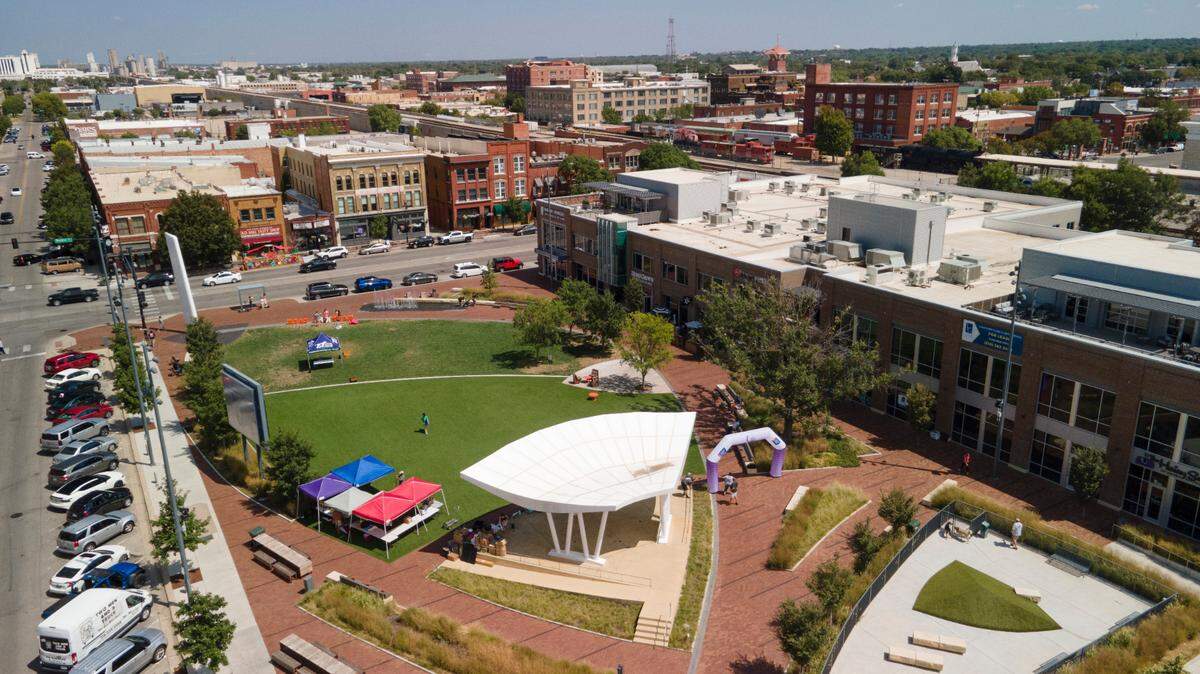
Last week, the council voted to spend $435,000 to erect new permanent public restroom facilities in Naftzger Park and A. Price Woodard Park, and to install public hydration stations at Naftzger Park, Old Town Square, and other locations around downtown Wichita.
When complete, these will be vitally important assets for everyone in our community.
Not only will they make daily existence easier and more sustainable for the most vulnerable in the urban core, they will make these key downtown spaces more enjoyable for those attending events at Century II and INTRUST Bank Arena.
They will make downtown a more attractive place for visitors to come and stay for extended periods, which is bound to have positive ramifications for retailers, food and drink establishments, and cultural facilities.
As I have consistently explained through my published research over the past several years, the history of downtown development in Wichita—and, in particular, the long saga surrounding the birth, death, and reconstruction of Naftzger Park — has been bound up with efforts to evict or make life more difficult for the city’s poor and homeless.
Last week’s vote was an important step in the other direction.
If the city follows it up with other steps like bolstering access to public transportation, promoting the development of affordable housing, and repealing harsh restrictions on camping and panhandling, we may have the opportunity to create a downtown that is truly inviting and inclusive for all, not just for wealthy developers and occasional concertgoers.
Of course, constructing these amenities is only the first step.
It will be critically important that they be consistently maintained over time.
Existing restrooms at A. Price Woodard Park have long been shuttered, and the public restrooms in Old Town are regularly locked up.
These facilities have been sites of vandalism, crime, and neglect in the past, and like other downtown amenities, the city has responded by closing them off to the public altogether.
Avoiding that fate for these new amenities will require constant vigilance and rapid remediation of the damage, destruction, and deterioration that are likely to occur.
City leaders should begin working immediately to develop a long-term maintenance plan. For now, though, they deserve appreciation and commendation for the forward-looking vision of a welcoming downtown that this action will promote.
This story was originally published September 18, 2023 at 10:57 AM.