
Rural America deserves better than ‘Try That in a Small Town’ and ‘Rich Men North of Richmond’ | Opinion
The media has been ablaze in recent weeks with discussions on the populist power of a good country anthem.
As a man who grew up in rural Kansas, I can certainly relate.
Growing up in the early ‘90s with no access to MTV or a even a radio station that played anything harder than Bon Jovi, I spent many a morning blasting down a dirt road, rooster tail flaring from the back of my pickup, with a favorite country song blaring from my homemade 6”x9” speaker boxes.
My favorite songs were the ones that reminded me of dirt roads, muddy cowboy boots after a day’s work, or maybe just reminded me of my grandma.
There was something undeniably special about growing up in a rural community and every day I yearn for a return.
But country music is failing us now, and it was probably failing us in the 1990s.
In the 1990s, I was not just a country boy. I was a simple country boy.
My dad was an oil well pumper and my mom was the daughter of a wheat farmer.
I learned to drive a pickup when I was 6 years old and could do my dad’s job at the age of 10.
I believed that hard manual labor was all you really needed to make it in this world and my world seemed to end at the county line. The closest billionaire or politician was hundreds of miles away.
I got the itch to leave one day on a journey that would take me around the world several times over. I learned a lot of things and met a lot of people. My exposure to social issues and views on policy changed tremendously.
But many of my childhood friends never left. Their world is still pretty simple and it still ends at the county line. They still blast down the same old dirt roads, rooster tail flaring from the back of their pickup trucks, country music blaring from their speakers.
Angry nationalism
The problem with so many country music anthems is that, while they really capture how we feel, they so poorly direct those feelings in the right direction.
They exploit and feed off the simplicity and misconceptions of rural people. The working class is angry and rightfully so. The rich are getting filthier, the middle class is shrinking, and the poor are getting poorer.
These modern country anthems are capturing that anger. But they are taking that anger, weaving it through dangerous tropes, and ultimately working against the very blue collar workers the songs claim to advocate for.
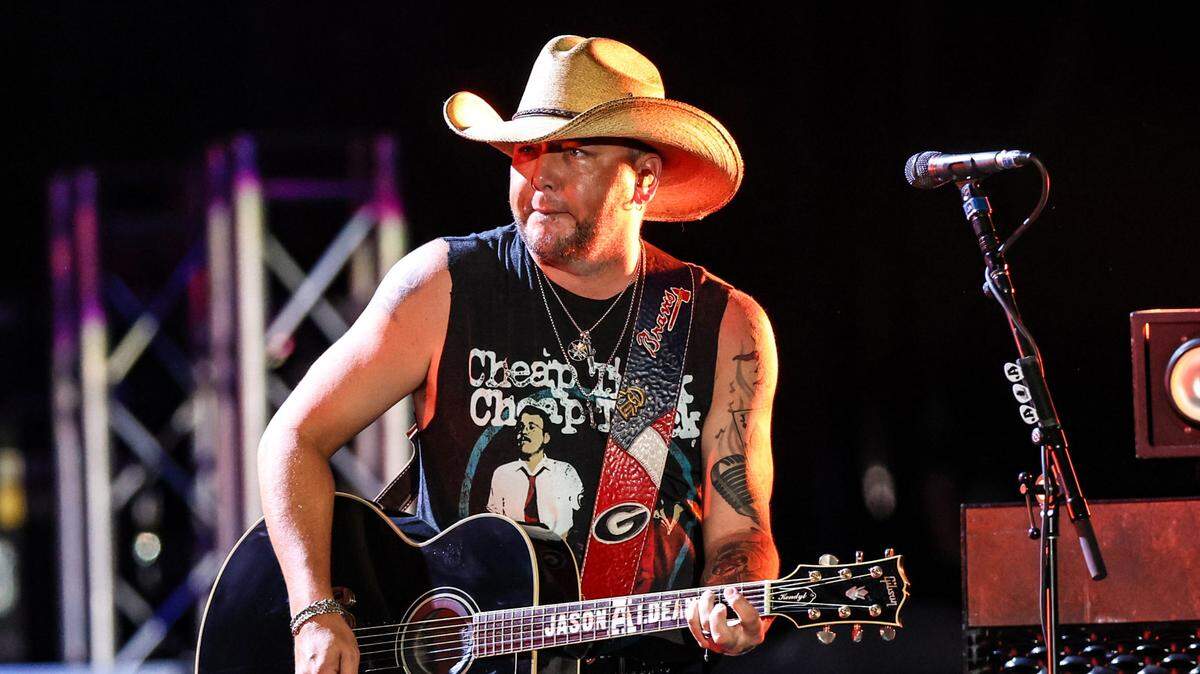
“Try That in a Small Town” by Jason Aldean is tropist, pop-country trash. It’s an angry, nationalistic, good-ole-boy, “break stuff” song.
Growing up in a small town, I know what this song is about. It sings to a younger me.
It says, if you’re from out of town, you look differently, you talk differently, or if you have a Bernie Sanders sticker on your Prius, you probably oughta leave town.
I’m not saying we’ll become violent. I’m just saying we’re suspicious of you and we will amass a group of good-ole-boys to escort you out of town, walking or otherwise, if we get the impression you’re here to do anything we disagree with. If we’re drinking beers, we may go ahead and assume you came here looking for trouble.
Either way, its our way or the highway.
The irony of this song is that it is entirely based on a trope. A city boy can make a lot of money singing about small towns and rural values, which has resulted in an endless stream of urban cowboys headed to Nashville with their fancy guitars.
Jason Aldean hails from Macon, Georgia, a metropolitan area with a quarter of a million people that abuts the Atlanta metropolitan area.
Jason Aldean wouldn’t know living in a small town if it bit him. Yet he makes a killing telling us all what you can or can’t do in a small town.
Who benefits?
Another song hit the mainstream last week is of a much different nature. “Rich Men North of Richmond” by Oliver Anthony is soulful and haunting.
Like a Townes Van Zandt song, the vocal emotionality alone has captured me and influenced my mood. Anthony’s anger at rich politicians and his yearning for a simple past is not just heard, but felt.
But, once again, the song falls prey to dangerous tropes and ultimately benefits those rich men north of Richmond.
While expressing anger at the rich, Anthony draws his crosshairs on the obese poor person living in a food desert.
Lamenting the plight of miners, he recycles the old creeds that work will set us free and all taxes are evil.
This anthem is exactly what the rich need.
Coal barons benefit when the poor clamor for exploitative and dangerous jobs in the mines.
The rich benefit when the poor blindly fight against a progressive tax system.
The rich benefit when poor people blame other poor people for all of their problems.
The rich benefit when poor support policies hurt poor people.
So many country anthems either explicitly or implicitly help perpetuate this value system. Country music tells you that, if you work hard, live a simple life, and the taxman leaves you alone, you’ll live a long, happy, fruitful life.
This is quite simply short-sighted and untrue in America. It has never been true in America.
Hello Kansas farmer
My mom used to love listening to the band Alabama.
In the 1980s, Alabama sang, “Hello Kansas wheat field farmer, let me thank you for your time. You work a 40-hour week for a livin’ just to send it on down the line”.
Alabama’s song celebrated the auto workers, steel mill workers, and truck drivers as well. The song still makes me want to pick up a hammer, go get dirty, and work up a sweat.
But Alabama, while celebrating the American blue collar worker, left out a critical bit. No blue collar worker in America has ever made a fair living wage working 40 hour weeks unless they were unionized or regulated by the government.
We need a new country anthem that actually advocates for the working class in a meaningful way:
▪ An anthem that calls out billionaires and politicians but doesn’t turn around and attack other poor people.
▪ A country anthem that sings of a world where billionaires pay more taxes.
▪ A country song about a place where people are polite and humble both on the inside and outside.
▪ A song where people genuinely love other people even when they look or talk differently.
We need a simple, heartful song about a world where every person can get a healthy, nutritious meal — a country anthem like Woody Guthrie would have sung.