
We’re past the heat wave, but still stranded on Heat Island | Commentary
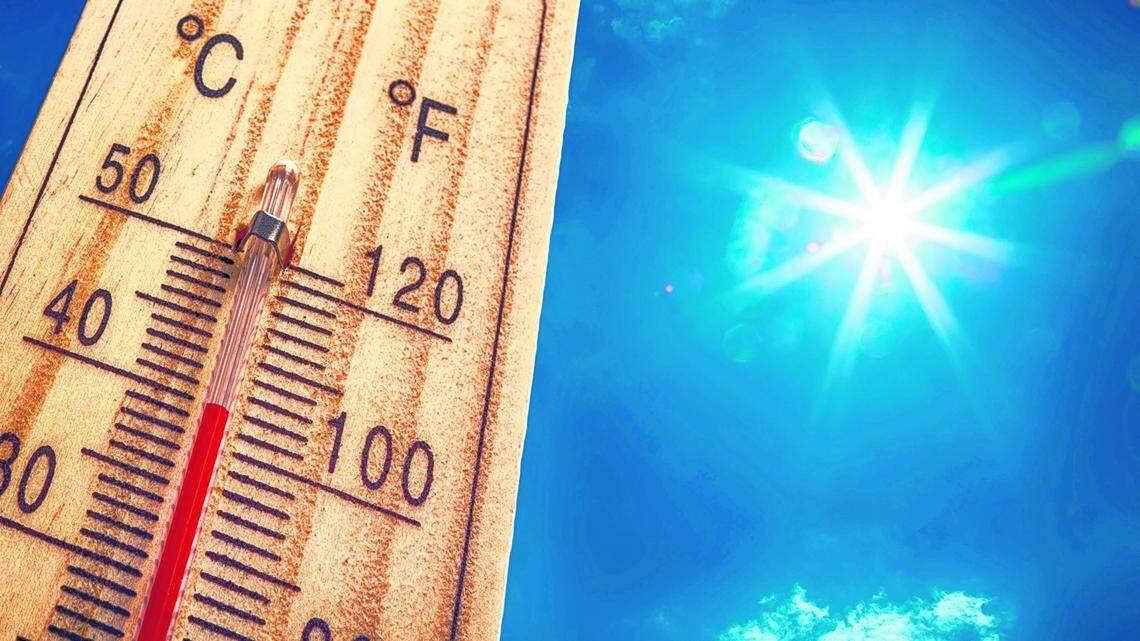
Today as I write it’s not so hot as it’s been. Does that mean climate just changed again?
Nope.
One day’s temperature is weather.
Climate change is the increased heat affecting us and the entire globe. It is planet-altering, food-endangering, even — in some areas — deadly.
Is climate change too big for us? Can we in Wichita do something about it?
Yes we can.
Among significant actions, personally, commercially and governmentally, here’s just one: Address our urban heat island. Urban heat means that cities are warmer than rural areas.
Heat islands are from concrete in highways, streets, parking lots and other hard, exposed surfaces. Concrete is energy-intensive during its manufacturing, and then magnifies heat throughout its existence.
In Wichita, our city’s extra heat was measured by NASA, the National Aeronautics and Space Administration. This report was commissioned by the City of Wichita. It is dated August 11 2022.
Another, quite extensive report was commissioned by the city and prepared by the Wichita State University Environmental Finance Office of the Environmental Protection Agency, and mentioned heat island mitigation in “bundles” 13, 14 and 15.
To my knowledge, the City has not highlighted either report to the public, nor has the 2021-created Sustainability Integration Board actively contemplated either report.
The NASA report identified two areas which have hotter temperatures both day and night than normal urban heat.
NASA identified the 17 census tracts as “environmental justice” because of their increased heat, older residents, people of color and low incomes.
Most of these areas have many rental units which are too often neglected by distant owners.
What is recommended by both reports, NASA and WSU?
Trees!
Trees, trees and more trees to throw shade onto parking lots and along residential streets, bike lanes and sidewalks. Tree canopies lower the heat where we live. Mature trees throw far more shade than young trees.
Mature trees eventually die due to drought, disease and normal aging. But Wichita trees have been depleted over the past 15 years.
The City had planted more than 21,000 trees each year in the 1990s and the 2000s.
At some point the City continued to cut down diseased, aged and dying trees, but has replanted only half as many young trees each year.
And trees are seen developers as obstacles: the first thing they do is to cut out trees.
Developers and property owners have minimal guidance for cutting down healthy trees or for planting and nurturing young trees.
The Parks Department recently drafted a tree policy to plant trees in the 17 census tracts, but makes no recommendations for developers or property owners.
Trees cool streets and homes and businesses.
They also cool the one-third of Wichitans outside of air-conditioned cars and trucks, including bicyclists, pedestrians and wheelchair-users, no matter if they’re schoolchildren, commuters, seniors, church-goers, grocery-getters, health-seekers or recreationalists.
Beyond shading concrete, trees benefit us and our planet major ways: they sequester carbon from the atmosphere, filter pollution from the air and water, and increase home values.
A new entity — ICT Trees, P O Box 2504, Wichita 67201 — is intending to protect and expand Wichita’s tree canopy.
It wants to provide information to Wichitans and policy makers, to find volunteers to plant trees on both public and private land, to provide trees to home owners, and to generate public events to celebrate our tree canopy.
We can lower the temperatures in the City of Wichita.
To ameliorate the hotter weather in our future, government, developers and residents can respect existing trees and by planting and caring for more trees.
Plant more trees!