
Presidents Eisenhower, Biden and unwinnable wars | Commentary
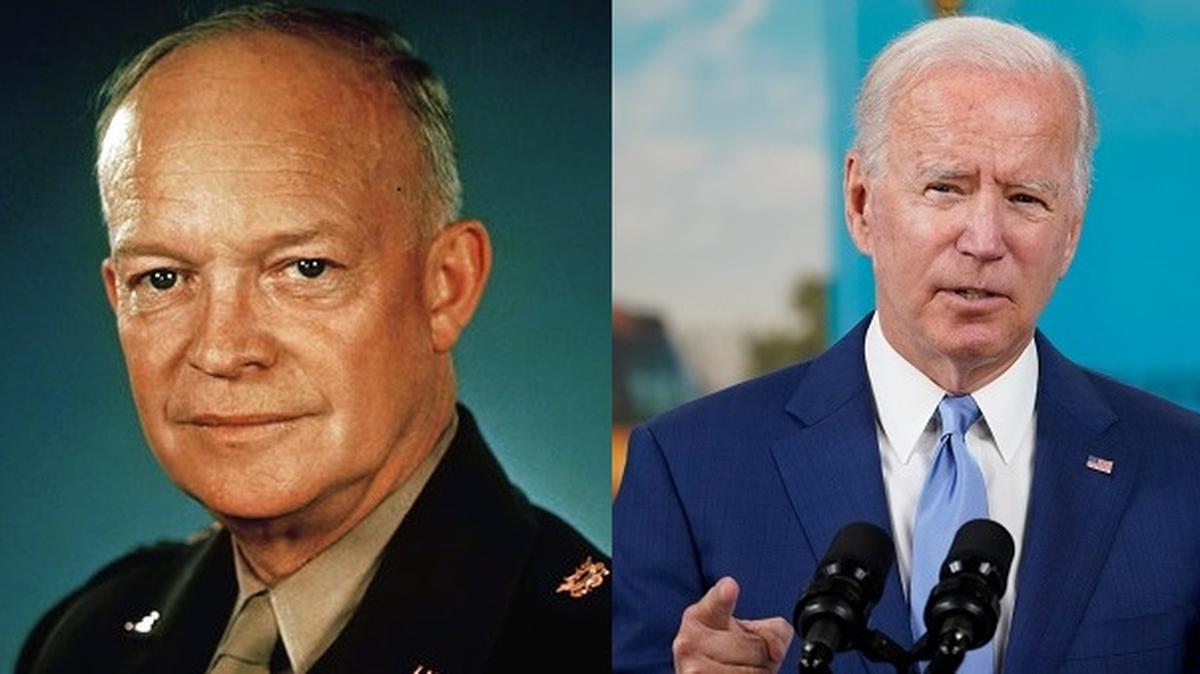
These two presidents’ origins are very different. Dwight Eisenhower grew up in Kansas, Joe Biden in Pennsylvania and Delaware. Eisenhower was a military hero but Biden never served in the armed forces, receiving multiple draft deferments. Ike never held office until elected president in 1952, but Biden labored 44 years in the Senate and the vice presidency before becoming the 46th president.
Yet both, as president, ended wars they inherited their first year in office — Eisenhower in Korea, Biden in Afghanistan, with contrasting settlements. Korea’s armistice resulted in a tense division into two political bastions, lasting to the present. Biden’s ending of the Afghanistan conflict has been more unilateral, a withdrawal disparaged by critics as a poorly planned, botched operation, facilitating a Taliban takeover.
But botched, as compared to what? By September 1, 2021, an estimated 124,000 Americans and Afghans had been evacuated from Afghanistan, the most successful operation of its kind in American history. Consider Vietnam, where we evacuated only a handful of people. In Korea, evacuation was less important, due to the partitioning of the country at the 38th parallel.
Another commonality with these two presidents is their attitude toward war as an instrument of American foreign policy. Despite his military credentials, Eisenhower opposed fighting land wars in Asia and, in 1955, faced down American allies to avoid a major war over Egypt’s Suez Canal. He provided token assistance to the French in Indochina, refusing to intervene massively in what became the Vietnam war.
As vice president, Biden privately opposed Obama’s escalation of the Afghan war. The lynchpin of the situation President Biden inherited was the deal the Trump administration, excluding the Afghan government, signed with the Taliban on February 29, 2020, pledging withdrawal in fourteen months.
There is no uncomplicated way to end a war, won or lost. Our memories have faded about the Korean conflict but its settlement is still troublesome. We wrongly assume that World War II, which we won, ended peaceably. In fact, its termination spawned a tense “Cold War” for decades thereafter.
In 2011, the United States had more than 100,000 soldiers in Afghanistan. By the time he left office, Trump had reduced the American contingent to an estimated 3,500; continuing orders shrunk the troop level in 2021 to about 2,500 — a number unsustainable without significant reinforcements.
Biden’s choices? Put off the decision like three other presidents: George W. Bush, Obama and Trump? Pull out quickly, leaving the remaining troops, personnel and Afghan supporters to the mercy of the Taliban? For this president, the only honorable choice was to withdraw after evacuating as many American personnel and Afghan allies as possible.
On August 31, Biden explained his dilemma: “Either follow through on the commitment made by the last administration and leave Afghanistan, or say we weren’t leaving and commit another tens of thousands more troops going back to war.” That, the president stated, was “the real choice — between leaving or escalating.”
Biden’s quandary roughly parallels Eisenhower’s Korean predicament — negotiate a truce or use nuclear weapons in China as well as Korea. However different the situations, both threatened war without end.
American withdrawal from Afghanistan is an accomplished fact. While messy, America is arguably better off, although Afghanistan’s citizens, especially its women, are not.
Truman fought a limited war he was unable to end. Bush began a war he could not terminate and Obama continued the fighting. Almost seven decades apart, Eisenhower and Biden ended unwinnable wars and terminated misguided efforts, in Biden’s words, “to remake other countries.”
Instead, they embraced what Eisenhower called “waging peace.”