
How to save local news (without government interference) | Guest commentary
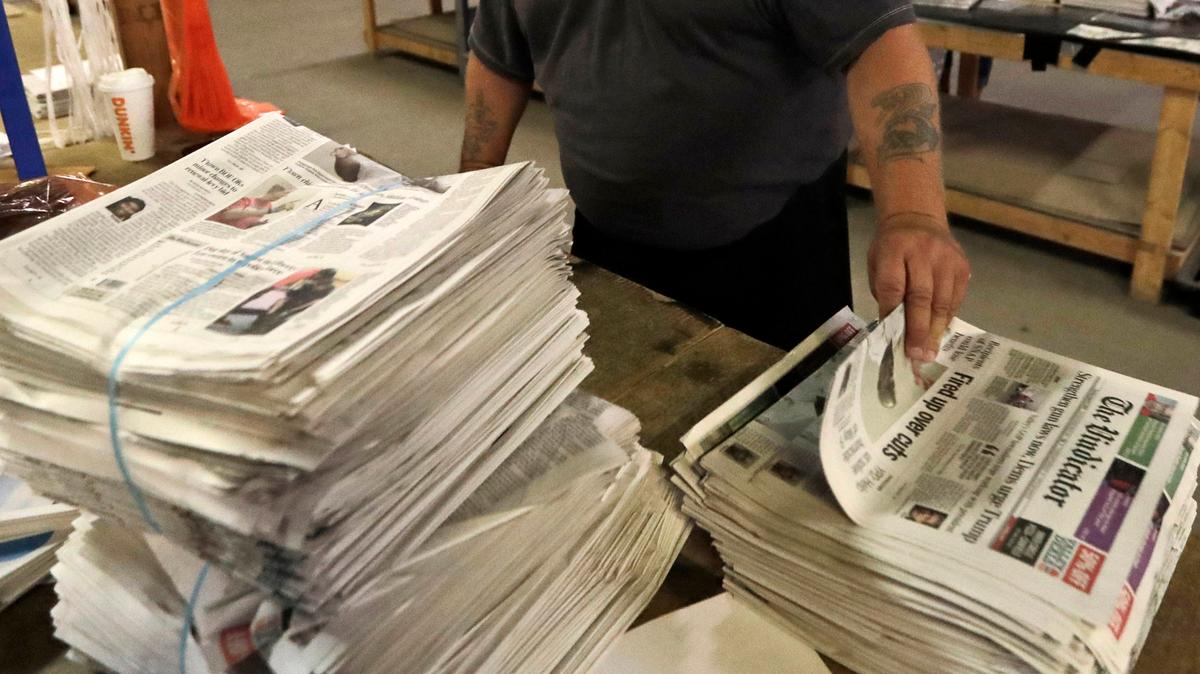
During the past two decades, the number of newspaper reporters across America has dropped by 36,000 or 60%. Some 1,800 communities have lost newspapers. Thousands more — especially in rural areas and communities of color — have newsrooms so desolate that they don’t truly cover the town.
This is a serious threat to communities around the country. The local news vacuums are being filled by social media, partisan hyperbole and harmful disinformation. Without good, accurate information, families cannot make good decisions for themselves — and communities cannot solve their own problems.
Rebuilding local news will require a massive effort that must include a significant increase in philanthropic support, loads of innovation in the news business — and, yes, some (smart) help from the government.
Government help? You might wonder: How on Earth can newsrooms take money from the government? Isn’t that like the muckrakers taking money from the muckmakers?
Fortunately, there is a shrewd way to help save local news without excessively involving the government. It’s called the Local Journalism Sustainability Act, which was just reintroduced by Reps. Dan Newhouse (R-WA) and Ann Kirkpatrick (D-AZ). This clever, bipartisan bill would provide more help for local news than any time in about a century, yet it’s done in a very First-Amendment-friendly way.
The bill is focused on local news (not national), and helps community newsrooms by amplifying the choices of consumers and small businesses, rather than having the government pick winners and losers. It is strictly nonpartisan and guards against government favoritism or manipulation of media. It helps small media as well as larger players, nonprofits as well as commercial models, digital and print, communities of color and rural areas.
The key provisions are:
Tax credit of up to $250 for consumers to buy newspaper subscriptions or make donations to nonprofit local news organizations.
A refundable payroll tax credit of up to $25,000 for local news organizations for journalists
A tax credit of up to $5,000 for small businesses to use to advertise with local news publishers.
There are several things to like about this. Because it doesn’t involve a government agency picking journalism projects, it’s akin to the Postal Subsidy implemented by the Founding Fathers. By giving lower postal rates, the policy helped create the newspaper industry but without having either Alexander Hamilton or Thomas Jefferson select their favored publications.
This approach could really goose the growth of digital subscriptions, which most local news leaders believe are the only way that local news can become sustainable in the long run. We don’t want legislation that just ladles water into sinking ships. We want to help build a durable model.
The refundable tax credit for small businesses to advertise obviously has two beneficiaries, the newsroom and the small business, which basically gets free marketing money. Kansas restaurants and small businesses sure could use that as they try to get back on their feet post-COVID-19.
The payroll tax credit could change the dynamics within newsrooms by making the hiring or retaining of journalists relatively more appealing. Because it’s a payroll tax break, rather than an income tax break, it is also available for nonprofit news organizations.
Because this approach tries to help local news -- but uses a market-oriented approach -- it has gained truly bipartisan support. (The “Newhouse” of Kirkpatrick-Newhouse is a Republican from Washington state.)
What it currently lacks is a Republican leader in the Senate. We hope Senator Moran will consider being that person who helps strengthen our communities by saving local news, through this bottom-up approach.
This bill is not just a stop-gap but rather would help create a stronger, more inclusive local news system for Kansas in the future.
This story was originally published July 11, 2021 at 2:44 AM.