
School boards ignore income and racial educational discrimination | Dave Trabert

School boards across Kansas are gushing about their devotion to equality and determination to stamp out racism, but until they stop ignoring their own systemic educational discrimination for low-income kids and students of color, their words are merely political posturing.
Does the Wichita school board really think their high school kids are getting equitable and fair educational opportunities with just 5% of Black students on track for college and career, compared to 22% for White students?
Low-income high school students in Andover are more than twice as likely to be below grade level than their more affluent peers (42% vs. 17%), and only 25% are on track for college and career compared to 44% of students who are not low-income.
Economically disadvantaged high school students in Goddard are twice as likely to be below grade level in Math (49% vs. 25%), and the more affluent students are three times more likely to be on track (33% vs. 10%).
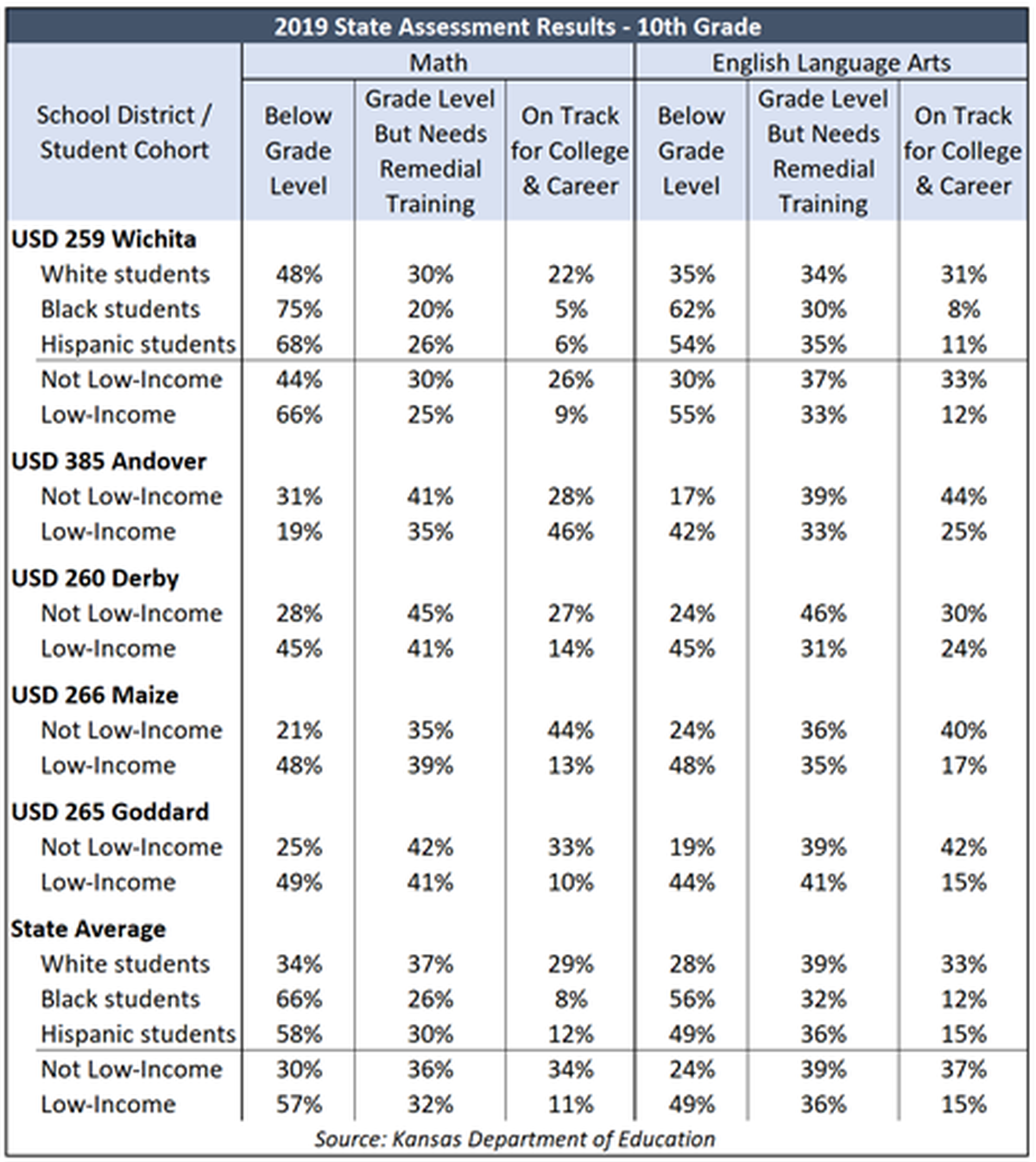
Similar disparities are found all across the Wichita metro area.
Where in Kansas are the courageous conversations about redirecting resources to at least get students to grade level? Funding per-pupil jumped 53% since 2005, districts hired managers and other non-teaching staff at more than double the rate of classroom teachers, and they started this year with almost $1 billion in leftover cash reserves. The money is there, but there has been no accountability for using resources to get students to grade level.
Since the Montoy court ruling in 2005, the Legislature has provided about $5 billion more for at-risk students, but a 2019 Legislative Post Audit found most of the at-risk funding they reviewed “was used for teachers and programs for all students and did not appear to specifically address at-risk students as required by state law.” Our 2015 study found similar results.
After a scathing editorial by the Kansas City Star, State Board of Education president Kathy Busch wrote a response that basically said, ‘shut up, go away, we know what we’re doing.’ But student achievement results and feedback from employers and colleges suggest otherwise.
Busch’s disdain for following the law and getting students at least to grade level is shared by local school boards and administrators all across Kansas. Just pay attention to their actions and how they spend money, not their public proclamations.
Gains in other states while Kansas goes backward
The picture for low-income kids and students of color is much brighter in states like Arizona, Florida, and Indiana that have taken bold action to close achievement gaps with robust school choice programs.
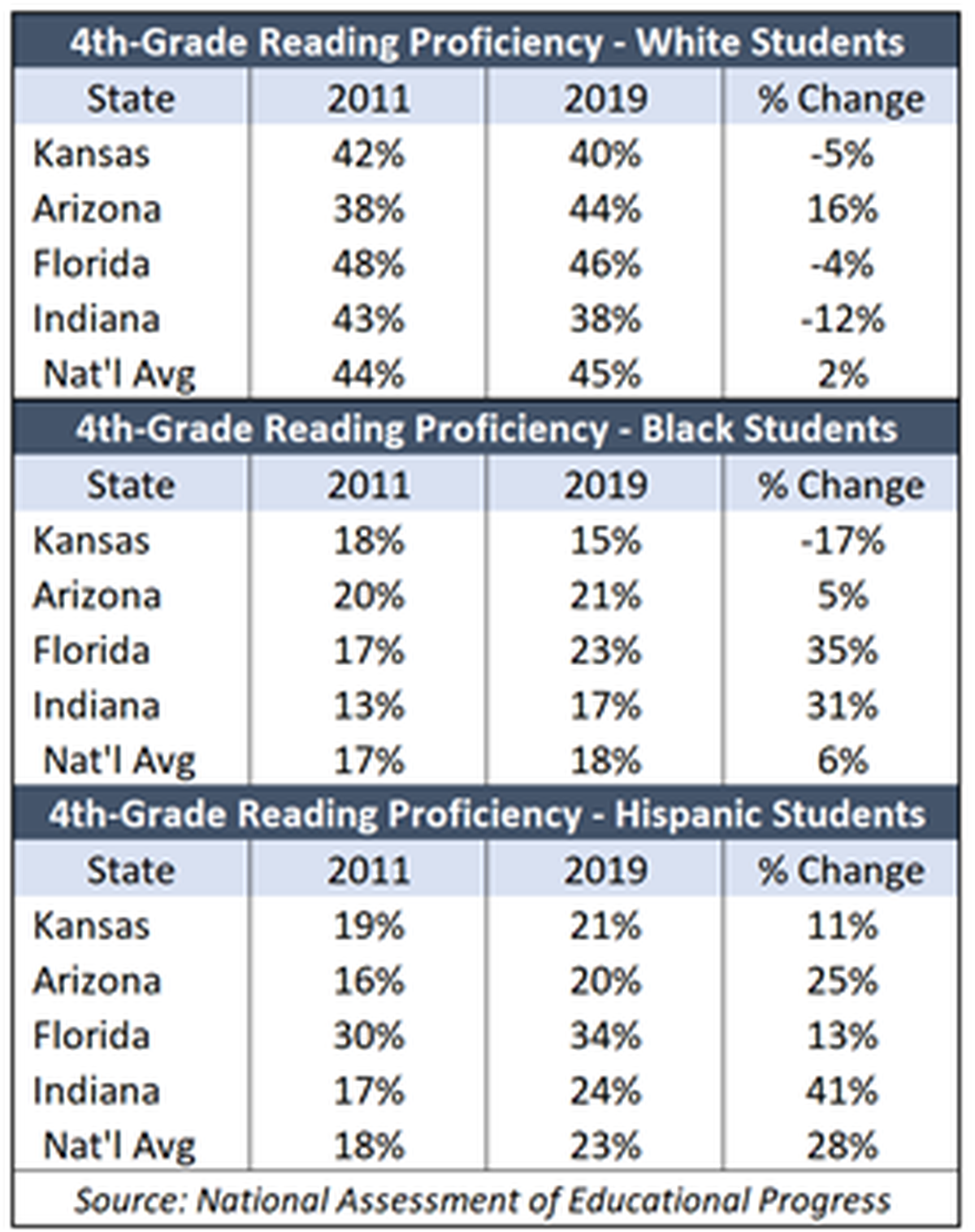
Between 2011 and 2019, Indiana’s Black students’ reading proficiency improved by 31% in the 4th grade and Hispanic students improved by 41%. Arizona’s Black students improved from 20% proficient to 21%. Black students in Florida had remarkable gains, going from 17% to 23% proficient.
But proficiency for Black students went backward in Kansas, declining by 17%, from 18% to just 15%.
Proficiency for white students in Kansas, Florida, and Indiana declined, while Arizona and the nation showed improvement.
Parental choice gives kids a fighting chance
A recent national poll conducted by Real Clear Opinion Research on behalf of the American Federation of Children found 71% of voters back parental choice.
People support school choice because they know it works for students.
But the Kansas education establishment and the teacher unions vehemently oppose school choice. They all know that the majority of low-income kids and students of color in high school are below grade level. They know that no more than 15% of those students are on track for college and career, and that white students and the more affluent are two to three times more likely to be on track, while audits show they aren’t spending the money to help at-risk students as required by law.
That, my friends, is educational discrimination.