
Could William McRaven be the next Dwight Eisenhower? | Commentary
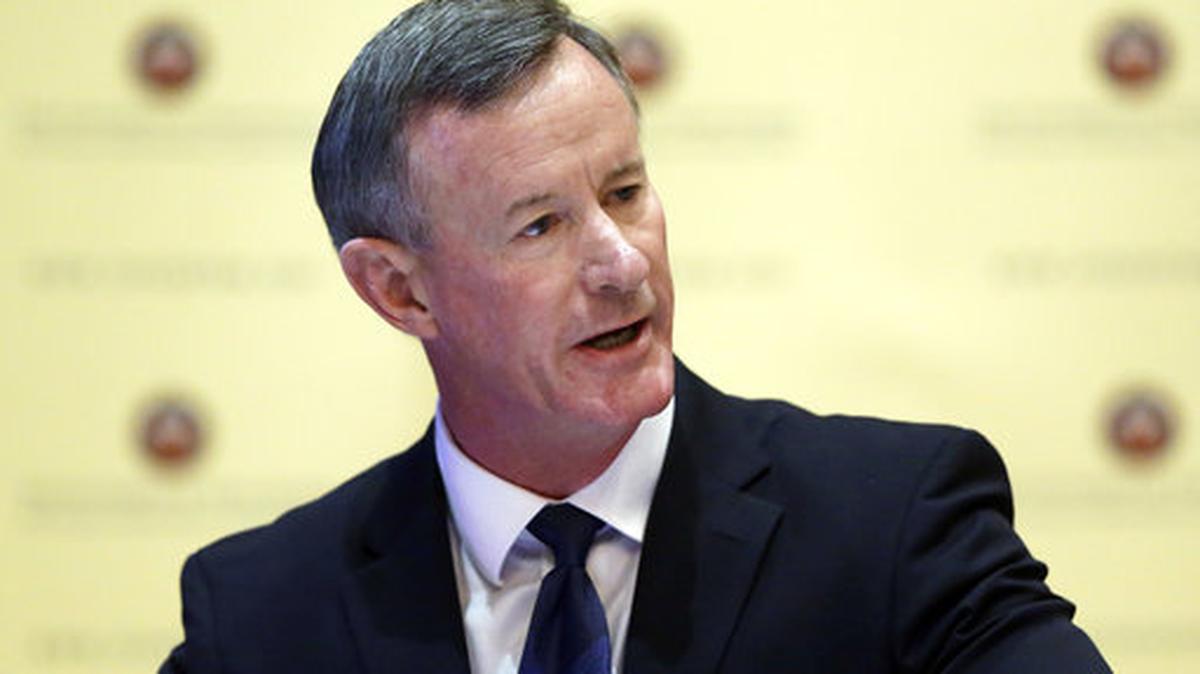
Adm. William McRaven is actively promoting his new book, “The Hero Code: Lessons Learned from Lives Well Lived.” McRaven was the Navy Seal commander whose operation killed Osama Bin Laden in 2011; he later served as chancellor of the University of Texas. Similarly, in 1948, Dwight D. Eisenhower became president of Columbia university and that year published his memoir of the war against Hitler, “Crusade in Europe.”
In the 1952 election, Eisenhower campaigned as the military man who could stand up to the Soviet Union. Is McRaven positioned to run for president in 2024? He is uniquely qualified for preventing and countering future terrorist attacks, foreign or domestic. In their time, both men captured the public’s fancy with their military bearing, good looks, engaging smiles, and riveting recitation of stories of American heroism.
The United States has traditionally given lip service to civilian control of the military. However, twenty-nine of our 46 presidents served in some branch of the military, twelve as generals. Three stand out: George Washington, Ulysses S. Grant, and Dwight Eisenhower. Washington provided stable leadership for the fragile new republic. Grant, the military hero of the Civil War, served at a time of post-war political and racial unrest, leaving office in 1877.
Not unlike 2020, the election of 1876 was haunted by charges that it had been stolen. Samuel Tilden, the New York Democrat, won the popular vote over Ohio Republican Rutherford B. Hays, and led in the electoral college. However, in response to charges of electoral fraud and fearing renewal of sectional conflict, Congress established a commission to determine the winner. After much conflict, Congress voted on March 2, 1877, to make Hays president, three days before he was formally inaugurated.
Eventually, the details of this corrupt bargain became public. In return for the presidency, Republican leaders agreed to withdraw federal troops from the South, freeing former Confederate states to violate the 15th Amendment’s prohibition against denying the vote “on account of race, color, or previous condition of servitude.” The result was racial violence and “Jim Crow” laws legalizing segregation, lasting until Truman’s and Eisenhower’s initiatives that culminated in Lyndon Johnson’s civil rights legislation in the 1960s.
Eisenhower was courted by both parties until he joined the Republicans to run in 1952. McRaven’s political loyalties have also been ambiguous, although he defended former CIA Director John Brennan when President Trump revoked Brennan’s security clearance. In response, Trump called McRaven a fan of Hillary Clinton and belittled his heroism in 2011: “Wouldn’t it have been nice if we got Osama bin Laden a lot sooner than that?” McRaven responded: “I did not back Hillary Clinton or anyone else. I am a fan of President Obama and President George W. Bush, both of whom I worked for.”
In 1952, the challenge was winning the Cold War with the Soviet Union. Today, the challenge is domestic terrorism, which FBI Director Christopher A. Wray has described as “metastasizing across the country.”
So, can the handsome, articulate, best-selling author and antiterrorism strategist, William McRaven, be another Eisenhower — the next gift from heroic military service to American presidential leadership? In 1952, American voters overwhelmingly “liked Ike.” In 2024, they may be “ravin’ about McRaven.”
This story was originally published June 11, 2021 at 3:41 AM.