
Wichita’s Black Alliance: Coronavirus is no laughing matter
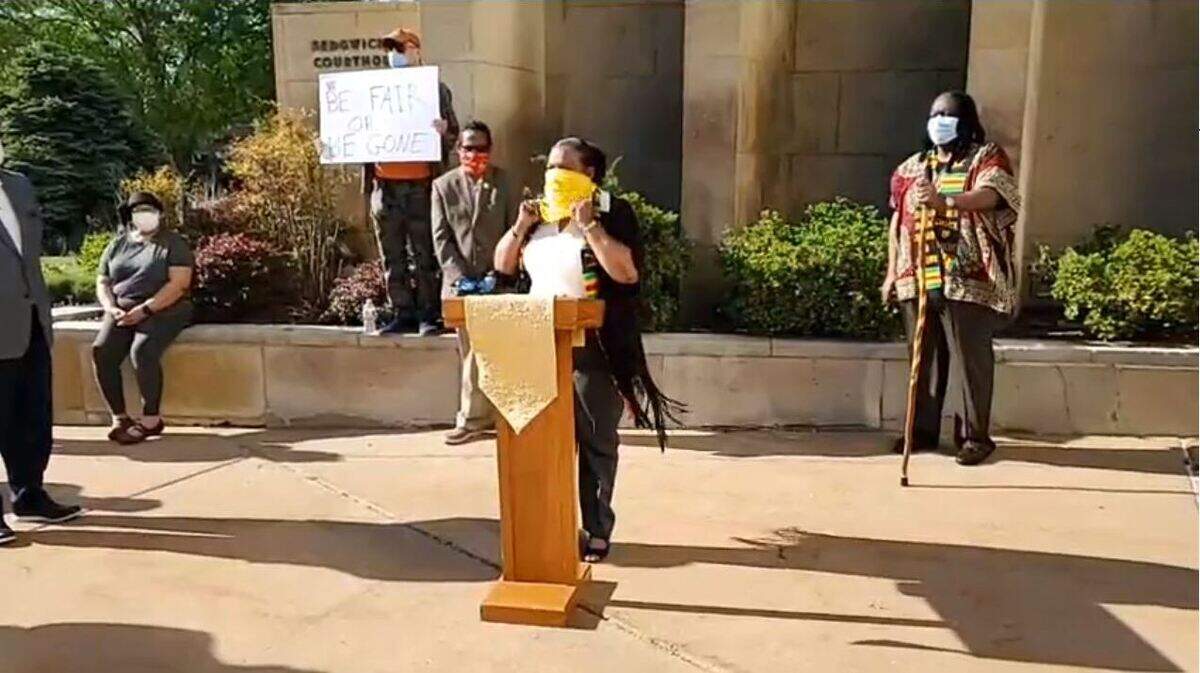
At a recent Sedgwick County Commission meeting, several commissioners were overheard laughing about being paid to talk, about the insignificance of COVID-19, and the funds they received to help constituents they represent as the county Board of Health. What we, as black people, know about the coronavirus is no laughing matter.
Communities of color, particularly black people, remain at greatest risk from illness and death from the COVID-19 pandemic ravaging our planet. From the available data, which remains partial, we account for a full 80% of deaths in some areas of the U.S., and we’re seven times more likely to die in Kansas, according to a recently released APM Research Lab study. Our neighbors in Kansas City represent 50% of those infected, with Wyandotte County being hit the hardest. The numbers for those incarcerated or institutionalized are even more bleak.
Are you surprised? We’re not.
Black people suffer a lack of equity in healthcare access and treatment options while simultaneously suffering from higher incidence of comorbidities, due to a variety of factors, including poverty, lack of healthy food options and food deserts, environmental injustice and racism in how we are treated by providers. (Some think we’re lying. We’re not.)
We’ve already seen and felt the disparity in Sedgwick County. We account for 13% of patients infected with COVID-19, although we represent 9.3% of the population. As the commission demands that the state open up and the county readies itself so that folks can go about their “normal” lives, the commission ought to at least attempt to remember who is impacted the most by this illness — often those with the least or those with disparate impact, and in some cases that person just may be black.
Out east in 67212, a zip code with only a single testing site, 325 tests were administered; 34 patients tested positive. In 67214, a zip code with four potential testing sites available and the highest concentration of black people in Sedgwick County, only 125 tests were administered and 27 patients tested positive. Further south, in 67217 and 67216, 237 and 202 tests were administered; 34 and 51 patients tested positive, respectively, with no testing site in either area.
These failures continue to mount our concerns, and we demand that the commission provide everyone in our community — symptomatic or not — with free, high-quality, equitable access to rapid testing and treatment options without having to be deathly ill, and without fear of being turned away. Testing should be funded by tax dollars provided in the more than $90 million given to the county by the federal government, according to need. That money shouldn’t be used by hospital corporations to recoup losses caused by COVID-19.
In addition to the Ninth Street health department, we have a number of churches and non-profit organizations that are willing to provide their services and facilities for testing, including mobile testing for seniors and those with disabilities and on Saturdays while free bus transit is available. We also require more functional N-95 masks and other personal protection equipment accessibility for our citizens and workers prior to loosening restrictions.
If our community is to deal with an oncoming onslaught of potential illness having to both return to work without childcare while facing the threat of death from customers or having to choose to stay home with our children at the risk of homelessness because of being denied unemployment, we should at the very least be protected while doing so. The commission ought to ensure that employers protect workers by posting clear PPE guidance for customers and staff. Black business owners should also have the discretion to remain closed and to qualify for financial protection in doing so. If our community is to be offered the least, we ought to at best be able to suggest what such a minimum requires.