What Sedgwick County needs to do now to help prevent another fire-related tragedy | Editorial

You can have the best firefighters in the world, but it doesn’t matter if they don’t know where to go to save a life.
And that, sadly, is the tragic reality that Wichita and Sedgwick County are left with following the arguably preventable death of Paoly Bedeski, a 22-year-old woman who died in a Wichita apartment fire in October.
The record of the Oct. 13 fire at the Brookhollow apartment building at 8165 E. Central clearly shows that 911 dispatchers in Sedgwick County Emergency Communications who handled the fire call were in way over their heads.
That’s unacceptable. It’s a clear and present threat to every resident of this county. And it has to be fixed, pronto.
When Bedeski called 911, she was obviously in immediate peril and scared out of her wits.
But the process that should have sent her potentially life-saving assistance broke down at at least two points.
The first part of Bedeski’s call is practically unintelligible, but does get across that there’s a fire in her apartment.
Through repeated questioning, the dispatcher does get her to state that she’s in apartment 306 of the Brookhollow Apartments. She goes silent 53 seconds into the call, possibly from smoke inhalation, although she apparently continued to sporadically push buttons on the phone.
But that information didn’t get relayed to firefighters responding to the emergency.
“Unfortunately the information about Miss Bedeski calling from apartment 306 was not intelligibly heard or understood on the phone from the dispatcher. There was not any understanding or assumption she was trapped,” Emergency Communications Director Elora Forshee said at a Tuesday news conference, where she answered criticism of her department.
Forshee said in an interview Friday that the geolocation feature in the county’s Computer Aided Dispatch system put the call at Apartment 304 in the building, so the dispatcher who took the call “felt that we had the location, felt that we had a building number, felt that we had an apartment number, and didn’t realize at that time of course that we were not at the same apartment that she was in.”
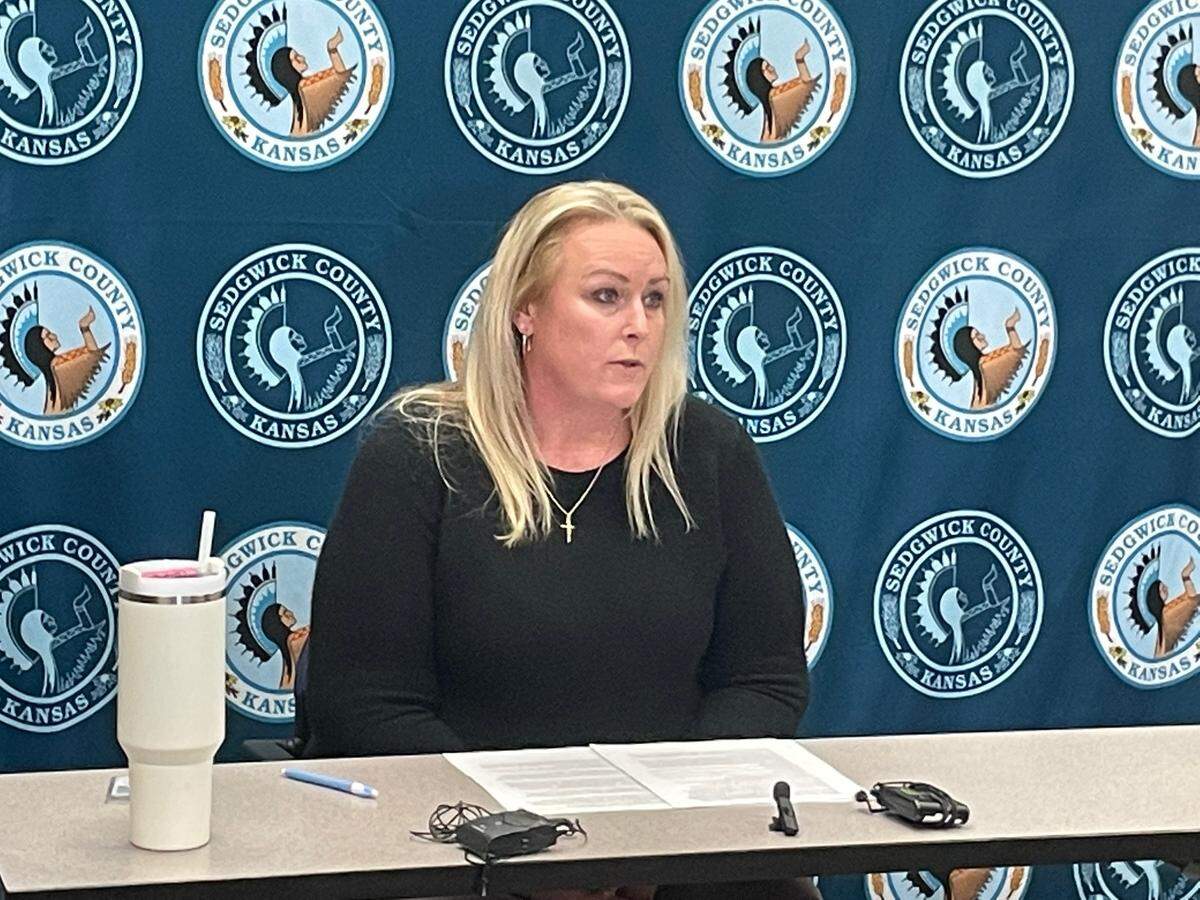
The International Association of Fire Fighters Local 135, which represents Wichita firefighters, held a separate news conference last week criticizing the dispatch response to the fire and later issued a lengthy written response to Forshee’s defense.
Union president Ted Bush said Friday that if firefighters had known there was a person in immediate danger in Room 306, it would have triggered a directed response rather than a more generalized search for victims.
Firefighters would have immediately sent up a ladder, broken through the window, searched the apartment and found Beleski, and carried her to another firefighter to assist in bringing her to the ground, where she would have received immediate medical attention. It takes 2 1/2 minutes, Bush said.
Whether she’d have survived is a question that may never have a definitive answer, but Bush speaks truth when he said “she’d have had a hell of a lot better chance.”
The second breakdown came when there was a 17-minute delay in calling a second alarm on the fire, which would have rapidly sent more firefighting resources to the scene.
The problem there was that two dispatchers on duty forgot how to order a second-alarm response through the CAD system. For some reason, as yet unexplained, they let vital minutes go by before asking a third dispatcher, who remembered the steps and was able to complete the second-alarm call.
That is not confidence inspiring.
Nor is the fact that when they couldn’t use the computer for whatever reason, they didn’t immediately get on the radio and start dispatching units the old-fashioned way, which is the backup procedure for CAD hiccups.
County Manager Tom Stolz blames human error and the fact that Sedgwick County dispatchers are often younger and inexperienced. Also, their training emphasizes speed — getting trucks moving as soon as possible — as the top priority.
After the fact, there was another error, and a troubling one.
When the emergency communications records were sent over to fire investigators, one piece of the package was missing: the recording of Bedeski’s frantic plea for help.
It would have never come to light if it wasn’t for a private investigator noticing the omission and pointing it out to the county and the Fire Department.
Forshee said Bedeski’s call was similar in narrative to others that came in about the same time, and the person who compiled the information package for fire investigators simply missed it.
“When they’re entered into the CAD system they kind of get absorbed into each other as we marry them together, so getting exact times to pull recordings becomes a little bit trickier as they’re married together and the times become of one event,” she said.
The firefighters find that suspicious. “The most damning call, and that’s the one call that’s missing? Come on,” Bush said.
The union’s calling for Forshee to be removed as director of emergency communications.
We’re not willing to go there just yet.
The County Commission is waiting for recommendations from the local 911 advisory committee. That input is welcome and should be considered, but it’s not enough.
The compound miscues that caused this situation merit a full and detailed investigation by an independent consultant with recognized expertise in dispatch operations — to identify fixes and we would hope, put to rest any suspicions of a cover-up.
At least two improvements are clearly and immediately needed:
1) The training system needs a major overhaul — on the spot, on the job training is not enough when lives are at stake. Dispatchers, particularly inexperienced ones, should be drilled in various scenarios they might face until those responses are second nature. If it costs the county some overtime pay, pay it.
2) Dispatchers need to be instilled with the authority and confidence to switch over to manual response and dispatch units by radio immediately whenever they’re not getting the desired result from their computers.
Common sense would dictate that sending too much too soon to a life-threatening emergency is vastly preferable to sending too little too late.
This story was originally published December 4, 2023 at 4:53 AM.