
City Hall scrubs police video in CJ Lofton case. Why we’re suing to get it back. | Editorial
In the game of golf, there’s a concept known as “taking a Mulligan.”
What that means is if you hit a shot and don’t like where it ends up, you take out another ball and hit the shot again, as though the first shot never happened.
While that might be acceptable in a friendly game of golf, it is wholly unacceptable when it comes to the release of public information by public agencies.
As a news organization and a front-line defender of the public’s right to know, we strongly believe the city government of Wichita would do well to confine Mulligans to the tees and fairways of its four municipal golf courses.
Unfortunately, the city of Wichita doesn’t see it that way.
In the case of the in-custody death of Cedric “CJ” Lofton, City Hall has scrubbed the public record of previously released body-camera video showing how its police officers behaved in the incident leading up to Lofton’s death — which occurred after they took him to juvenile jail rather than the hospital where, if he’d been taken there, he’d still be alive.
And so we, as The Wichita Eagle acting on behalf of you, the reading public, have filed a District Court lawsuit demanding that the city re-establish public access to the footage that it is now withholding.
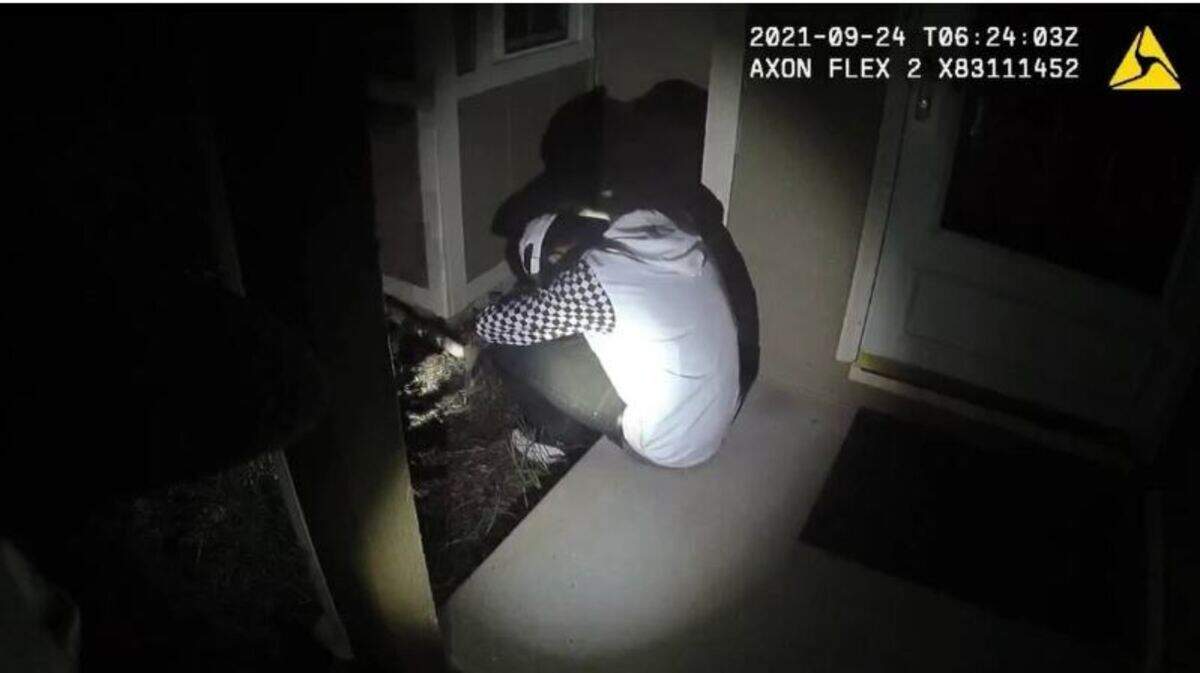
The video showed officers confronting Lofton on the porch of the foster home where he lived.
In the beginning, Lofton cowered from police who initially sought to take him for a mental evaluation at Ascencion Via Christi St. Joseph Hospital.
But the situation deteriorated when Lofton, who was in a mental-health crisis and experiencing delusions, fought back as police tried to drag him into a patrol car.
The video shows — or at least did when it was public — that Lofton kneed an officer, and another officer retaliated by kneeing him multiple times, while he and other officers cursed out the teen.
Police ultimately forced Lofton into a full-body straitjacket, at one point pushing on his face to force him to release a restraint strap that he was gripping with his teeth.
Instead of taking Lofton to the hospital as originally planned, they arrested him and dumped him on the Juvenile Intake and Assessment Center, where, after police left, he allegedly scuffled with guards.
Seeking to subdue Lofton, JIAC personnel laid him on his stomach and sat on him for about 40 minutes until he lost consciousness. His heart stopped beating and JIAC personnel performed CPR until police could be recalled and an ambulance could transport him — belatedly — to the hospital, where he died two days later.
The county coroner ruled it a homicide, citing “complications of cardiopulmonary arrest sustained after physical struggle while restrained in the prone position.”
Sedgwick County has consistently provided access to video taken by JIAC’s security cameras, while Wichita has now blocked access to its previously released body camera video for almost a year and a half.
The Eagle has tried repeatedly to explain to city officials that they cannot take back materials that have already been released to the public under the Kansas Open Records Act, and retroactively declare them closed records. But the city won’t budge, hence our lawsuit to make them.
At one point, a city spokesperson asserted they could no longer release the video footage because of a protective court order in a federal lawsuit filed by Lofton’s brother, Marquan Teetz.
However, that order clearly states that “Information or documents that are available to the public may not be designated as Confidential Information.” Moreover, it says “As there is a presumption in favor of open and public judicial proceedings in the federal courts, this Order will be strictly construed in favor of public disclosure and open proceedings wherever possible.”
A big part of this problem is that the city department that handles open-records requests is called “Strategic Communications.” As the name implies, decisions on whether to release information or attempt to withhold it are often based on whether the information is favorable or negative to the city’s image-control strategy.
Cities shouldn’t withhold information in the public interest — and that the taxpayers pay for in the first place — and they absolutely shouldn’t be allowed to take it back.
Litigation isn’t cheap and our decision to file a suit is not one we take lightly. But when it comes to something as important as a teenager in mental crisis dying in custody, we believe to the very bottom of our hearts that your right to know what happened that night supersedes the city’s right to protect its brand.
We’re committed to not letting City Hall take a Mulligan on this one. They’re just going to have to play it where it lies.
This story was originally published November 3, 2023 at 11:08 AM.