
No Ferguson here
If Wichita is no Ferguson, Mo., when it comes to distrust of law enforcement and dissent in the streets, there are sufficient concerns to make the coming search for a new police chief crucial for the community.
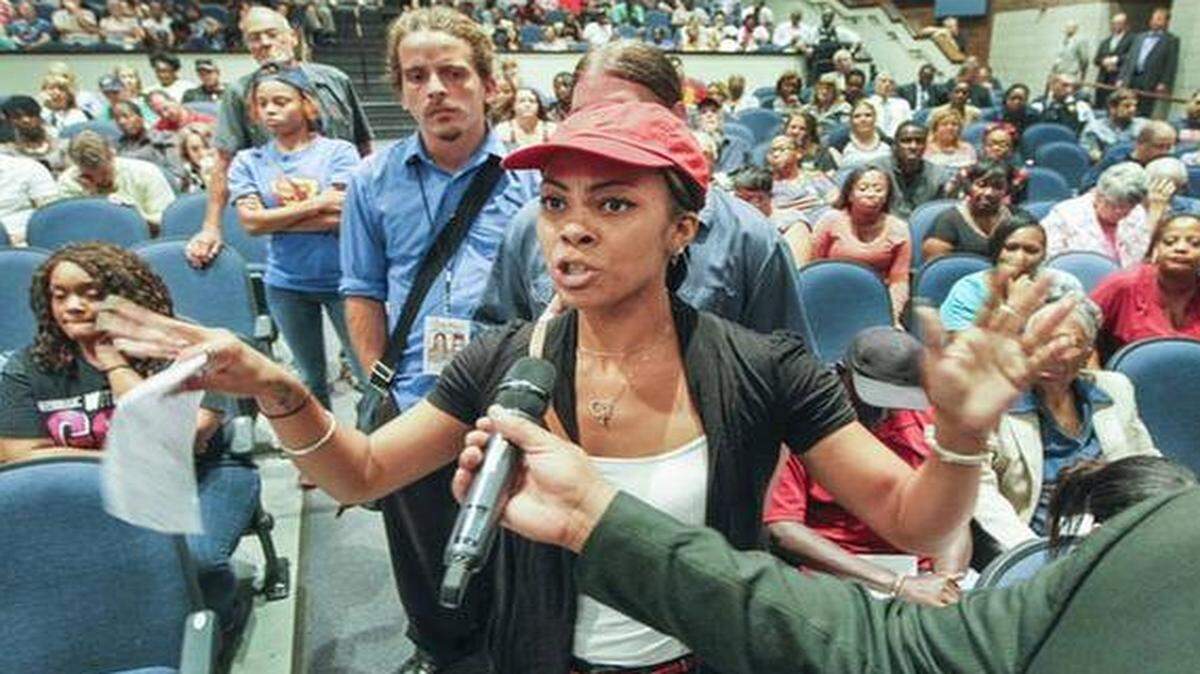
That was evident from the size of the crowd and the depth of the emotion at a recent forum held at Wichita East High School, where the issues raised about Wichita mirrored many that have dogged Ferguson since the Aug. 9 shooting death of teen Michael Brown by a police officer.
Participants at the local forum questioned procedures after incidents in which individuals are shot by officers, spoke of educating and mentoring young black men on responding to officers, and called for the community to be as accountable as police for improving relations.
Long-standing calls to equip officers with more video cameras and to form a citizens review board to scrutinize officers’ use of deadly force deserve better answers than they’ve had to date.
With a recent Wichita State University study of six months of Wichita traffic citations having found that African-Americans were ticketed at disproportionately higher rates than whites, the concerns about racial profiling that persist in the minority community seem well-founded. In order to reflect the city’s demographics, the police force needs more black and Hispanic officers. And even two decades later, community policing has room to grow.
So with Chief Norman Williams’ retirement official as of Friday, expectations are high for City Manager Robert Layton’s search for a new permanent chief (while Nelson Mosley serves as interim chief).
Layton, who has made gathering and heeding public input a defining priority during his time at City Hall, has set the right tone, talking about wanting to hear from “the usual voices and the unusual voices” as part of his search. He appears to be in no hurry, planning to spend the rest of the year on a thorough assessment of department policies, community relations, safety and training programs and more.
The deliberative approach should be useful in identifying the skill set needed in a new chief and, after 14 years under Williams, illuminating areas due attention and updating.
One question will be whether to find the new leader of the state’s largest police force by doing a broad search or looking close to home. Memories linger of the rough tenure of Chief Rick Stone, who came in with shiny Dallas credentials in 1989 but resigned in 1995 amid criticism about weak leadership and low morale.
However Layton proceeds, he should try to be as transparent and open with the public as possible, involving social media and even allowing citizens to question candidates if he can.
While bringing attention to some troubling parallels between Wichita and Ferguson, Brown’s shooting and its aftermath already have increased awareness and better community engagement, with pastors of predominantly African-American churches deserving special praise for providing positive leadership.
Now citizens will be looking to Layton to find the police chief with the skills and experience to draw positive lessons for Wichita from Ferguson’s pain.
For the editorial board, Rhonda Holman
This story was originally published September 6, 2014 at 7:06 PM with the headline "No Ferguson here."