
End roadblock on Keystone
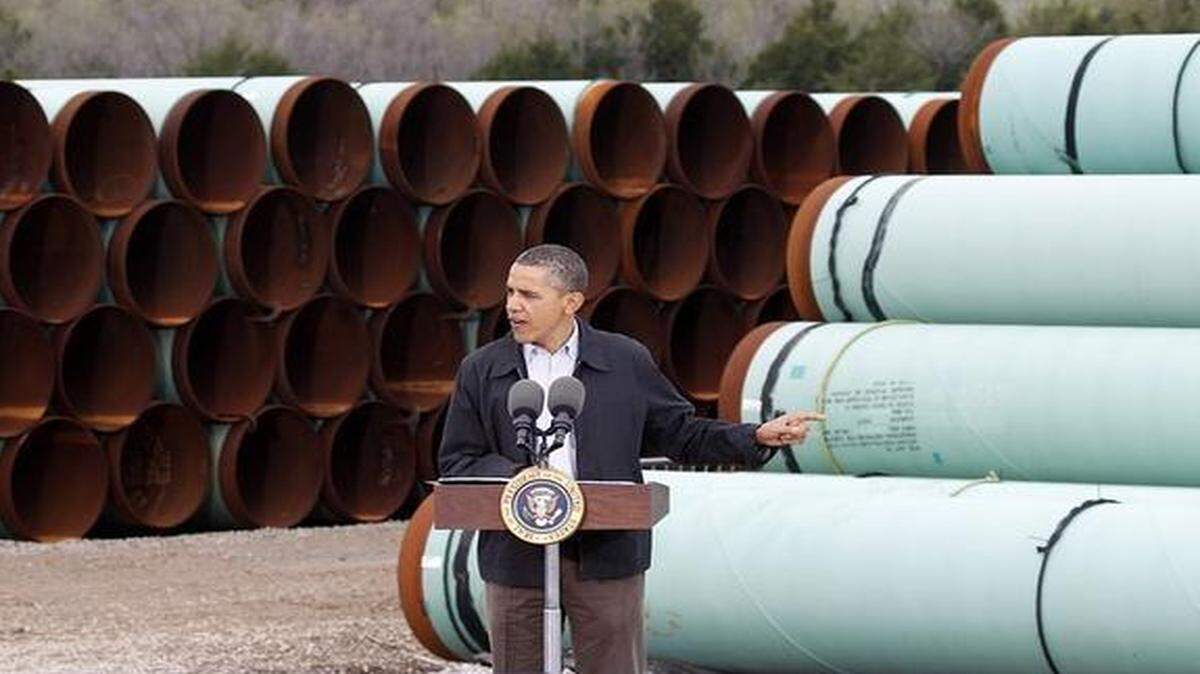
Finding fault with lawmakers’ attempted pre-emption of the process, President Obama predictably – and instantly – vetoed a bill Tuesday meant to force approval of the Keystone XL pipeline.
If only his administration would apply some of that urgency to the pipeline’s review by the State Department, which has taken six years so far for what can only be assumed are political reasons.
Both sides have exaggerated the pros and cons of the 1,179-mile pipeline, which would complete the infrastructure needed to ship crude oil from the oil sands in Canada to the refineries and ports in Texas.
Proponents have acted as if it would single-handedly make the U.S. energy-independent while providing tens of thousands of jobs and a huge economic benefit. It won’t.
But opponents have made too much of the benefits to the environment of not building Keystone, when it’s inevitable that the crude will be tapped and sent to the world market by whatever means available.
Americans saw one of the ugly consequences of that last week in West Virginia, when an oil train derailed and burned. Federal officials expect an average of 10 annual derailments over the next 20 years. Canadian officials have warned that blocking Keystone would push more oil onto rail cars.
Legal challenges remain in Nebraska and South Dakota. But the main roadblock to the pipeline is the president, especially with Congress lacking votes to override. If Obama wants to show evidence of his “all-of-the-above energy strategy,” he will proceed with Keystone approval on his own.
For the editorial board, Rhonda Holman
This story was originally published February 25, 2015 at 6:07 PM with the headline "End roadblock on Keystone."