
Reduce war authority?
Even considering all the curiosities of President Obama’s foreign policy, his request for war authorization to fight the Islamic State stands out. Not only is it redundant, but it would handcuff his successor’s administration as well as his own in a war with no rules or obvious exit.
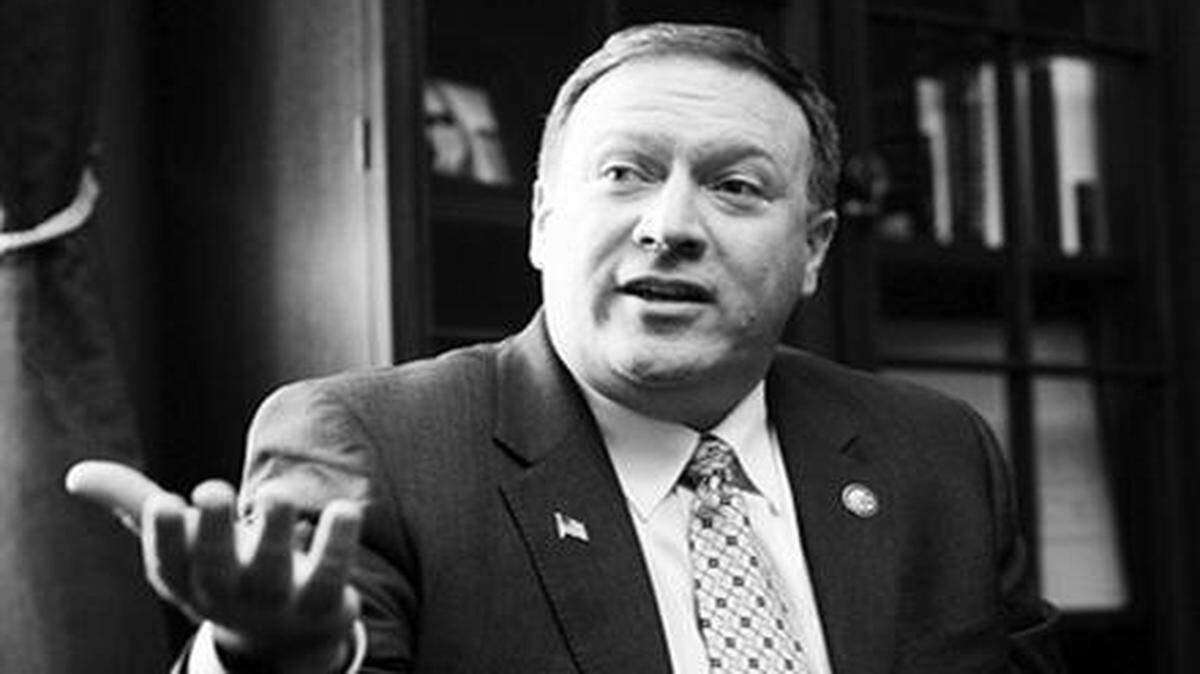
Rep. Mike Pompeo, R-Wichita, told The Eagle editorial board this week that it’s the first time a “president has asked for his authority to be reduced,” saying the White House wants the world to know the U.S. won’t put boots on the ground.
“This is leadership from behind at an extraordinary level,” Pompeo said.
If so, though, few counterproposals with any detail are coming from the Republicans now in control of Congress, which seems just as hard-pressed as the White House to know how to handle this metastasizing new kind of Islamic extremist terrorism.
Pompeo is on target in calling on the president to look at the threat as more broad than the Islamic State, to acknowledge the ideology and goal of establishing a caliphate stretching far beyond Iraq and Syria, and to recognize that the president’s muddled Iran policy is related and isn’t helping.
But it’s not useful to say, as Pompeo did, that “you have to have a credible U.S. president” without saying what the GOP’s preferred commander in chief would do differently to bring regional partners to the fight. And what would that better way cost in U.S. troops, lives and tax dollars? Let’s hear the congressional debate.
It shouldn’t be too much to expect the new GOP Congress and Democratic president to put national security first, and settle on courses of action on the Islamic State and Iran that make sense strategically rather than politically.
Pompeo downplayed Israeli Prime Minister Benjamin Netanyahu’s March 3 address to a joint session of Congress as reasonable and “well inside the American tradition.” But GOP congressional leaders’ invitation, which was news to the White House, seems calculated to widen rather than bridge their divide with the president over Iran’s nuclear program.
On another foreign policy topic, Pompeo discounted suggestions that the House’s special Benghazi panel, on which he serves, would prove pointless, referring to the thousands of documents it’s acquired that no one had seen and saying he still has unanswered questions. Complaining about the Democrats’ roadblocks, he urged the White House: “Turn the documents over. Put them online.”
Asked about what looks like the new GOP Congress’ politically risky strategy of tying funding for the Department of Homeland Security to a defunding of Obama’s immigration action, Pompeo sounded certain that his party is doing what voters said they wanted in November and that any resulting DHS shutdown wouldn’t hurt the GOP.
The House voted to fund the department, Pompeo kept saying.
“What more can you ask?”
Many an American might wonder: How about for a federal government that works?
For the editorial board, Rhonda Holman
This story was originally published February 19, 2015 at 6:06 PM with the headline "Reduce war authority?."