
Kansas, surprise us again by rejecting state Supreme Court elections | Opinion
Several years ago, a friend made an observation that has stayed with me: “Kansas has the ability to surprise.” Given the upcoming ballot issue about state Supreme Court justice selection, I hope that’s still true.
Kansas was shaped for surprise. After all, our state was founded by abolitionists from Massachusetts bent on making Kansas a free state, even though it was abutted by Missouri, a slave state. Our progressive past also includes the nation’s first female mayor and our early adoption of the 19th Amendment granting women the right to vote. And not only are we led by a Democratic woman in Gov. Laura Kelly, but she is our third female governor. Only Oregon and New Hampshire match that achievement, with Arizona besting us all with five female governors.
A hopeful surprise occurred before the opening of the 2026 Kansas legislative session when Republican leaders failed to garner enough votes to call a special session to redraw — in other words, gerrymander — our congressional map, at the request of President Donald Trump.
When reporting this development on Nov. 11 of last year, The New York Times even wrote that “something surprising happened.”
I was pleased — but then, I know our state is capable of dodging stereotypes. The Times reporter went on to note that “the state’s voters have an independent streak,” citing the rejection in 2022 of the proposed amendment to the state constitution that would have gutted a woman’s right to abortion, and the fact that we’re led by Gov. Kelly, a Democrat.
Kansans will have another opportunity to surprise this summer. A proposed Aug. 4 amendment to the Kansas Constitution would abolish the current state Supreme Court Nominating Commission method of selecting justices. The commission is made up of a lawyer and a non-lawyer from the state’s four congressional districts, with an added lawyer as chairperson. This composite body conducts interviews with applicants and forwards three vetted finalists to the governor. The sitting governor selects the justice. All proceedings are open to the public and livestreamed.
According to the Kansas Legislative Research Department, the amendment will be introduced by an explanatory statement that refers to the nominating commission as being comprised of “a majority of lawyers.” Yes, by one person. And why wouldn’t we want our justices selected largely by law school graduates trained in interpreting the state’s constitution and its laws? Why would we want this system replaced by direct election?
Frankly, that proposed change smells musky to me. Billionaire Elon Musk funneled $3 million into an attempt to sway the election of a Wisconsin Supreme Court justice. In total, $100 million was spent by both sides on that race. Musk’s preferred pick lost by 10 percentage points.
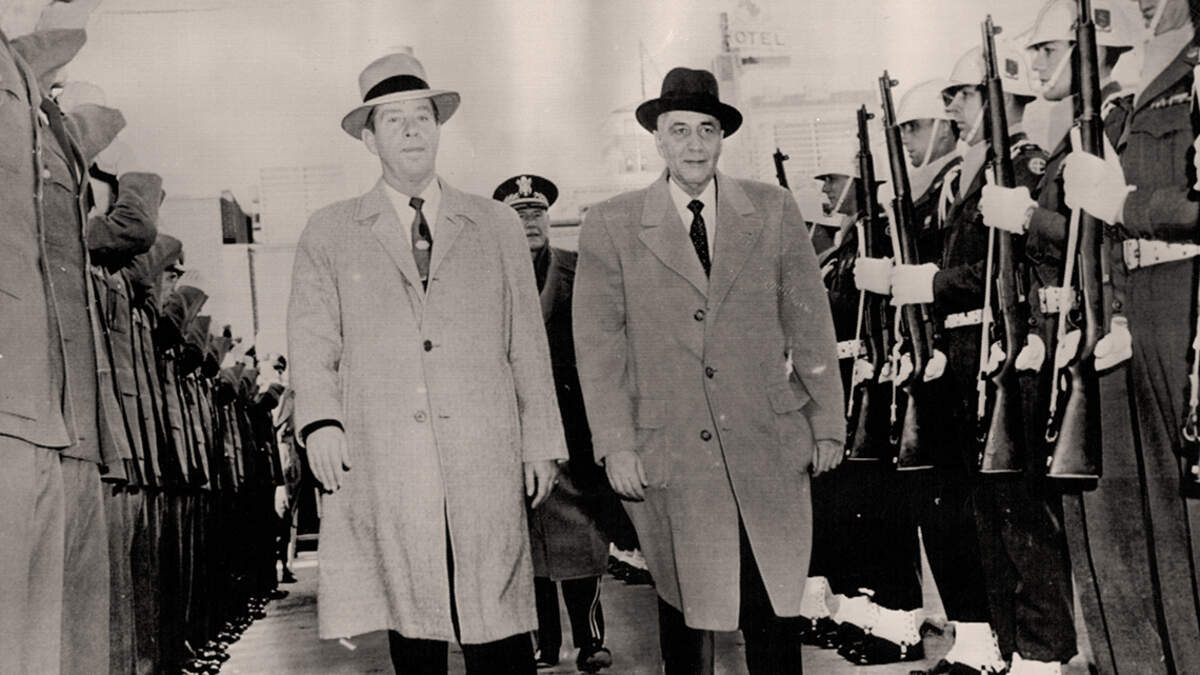
Wisconsin voters didn’t like the smell of that tainted money, just like Kansans didn’t like the Triple Play scandal of the 1950s. In 1957, Gov. Fred Hall, a Republican lame duck who’d been defeated by Democrat George Docking, resigned as governor 11 days before the end of his term. He was succeeded by Lt. Gov. John McCuish, who appointed Hall to the state Supreme Court vacancy that had opened when Chief Justice William Smith resigned for health reasons. The public did not like such shenanigans. A Kansas City Times headline read: “A brazen, raw deal for Kansas justice.”
The Legislature agreed. During its 1957 session, it passed a constitutional amendment that required that state Supreme Court justices be selected through the present merit and retention vote system. The amendment was approved by 70% of voters in 1958. Sam Zeff and Matt Hodapp tell this story in a podcast archived by Humanities Kansas.
If we are to change our state constitution so that justices become politicians, we risk returning to our scandal-marked past. We risk electing justices who are ideologues first, and qualified interpreters of the law second. We risk the erosion of the checks and balances that are at the core of our democracy.
Our judicial selection process helps ensure consistency, constancy and respect for the Constitution and the rule of law. Would the election of justices accomplish anything beyond transforming them into politicians, juggling fundraising for office alongside studying and weighing complicated legal issues?
Let’s surprise the nation again with our “independent streak” on Aug. 4. I’ll be voting no.
Jeffrey Ann Goudie is a Topeka-based freelance writer whose work has appeared in The Kansas City Star, The Kansas Reflector, The Topeka Capital-Journal and The Huffington Post, among other publications.
This story was originally published July 8, 2026 at 5:06 AM with the headline "Kansas, surprise us again by rejecting state Supreme Court elections | Opinion."