
University of Kansas not the academic powerhouse it once was | Opinion
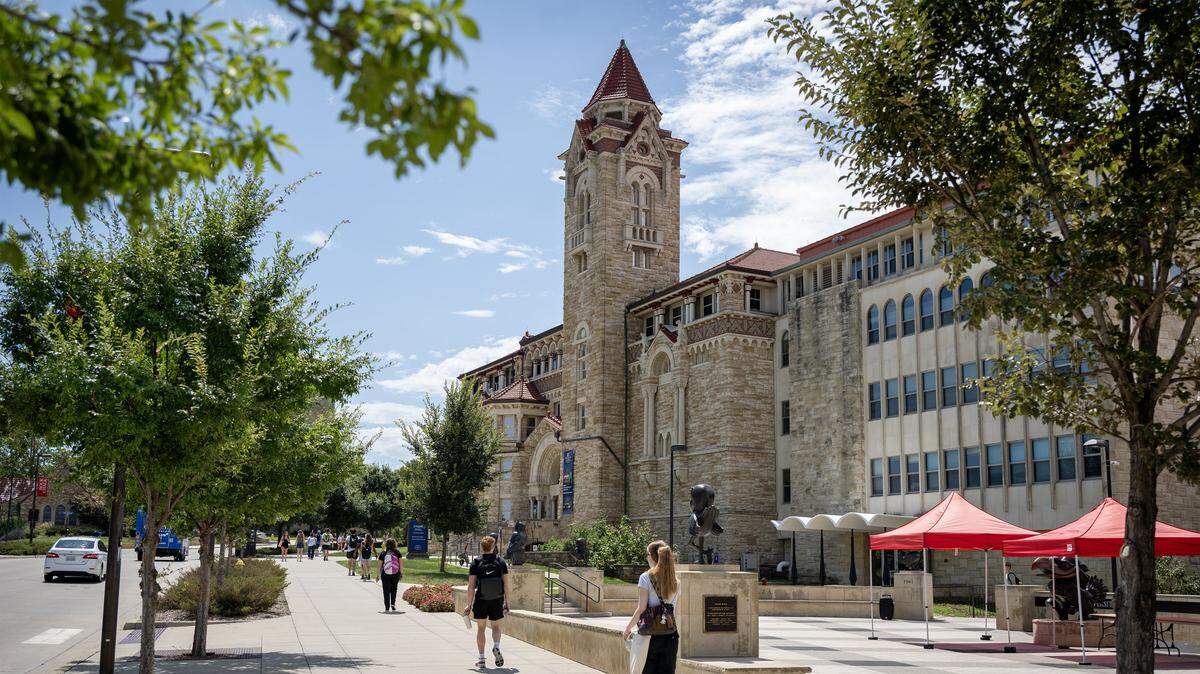
After a prolonged and bitter contract dispute, University of Kansas Chancellor Doug Girod and the faculty union have reached an agreement.
That accord comes after a campus poll in which 80% of respondents, including professors, staff and students, said they had lost confidence in the school’s leadership.
While labor peace at the state’s flagship university is welcome, the problem is that if Girod’s $1 million annual pay package and the faculty’s enhanced compensation actually reflected their job performance, any corporate human resources manager would label them “needs drastic improvement.”
The brutal truth: over the past two decades, KU has suffered a disastrous drop in its national reputation and once proud place in American academia.
In the 2026 U.S. News Best Colleges annual ratings, considered the “gold standard” among such surveys, KU landed at lowly 143rd among Best National Universities.
Girod bragged in a press release that the latest ranking was a seven-point improvement over 2025.
Confirming U.S. News’ low opinion of KU, Forbes magazine, using “outcomes-based” metrics (student career success, alumni salaries, etc.) put 10 of the 16 Big 12 conference schools above KU in its 2026 rankings — KU is below Houston, Texas Christian, Central Florida and the four conference schools in Arizona and Utah.
Worst of all, KU can’t even lay claim to being the best public university in its own neighborhood.
The most important factor in the U.S. News rankings is scholastic quality. In its 2026 scoreboard of national universities U.S. News put KU below the neighboring universities of Oklahoma, Missouri, Colorado, Iowa and Iowa State. Nebraska, Kansas State and Oklahoma State were lower than KU, but not by much.
When I was KU student body president during the 1969-70 academic year, Chancellor Laurence Chalmers showed me a survey in a higher education journal that listed KU as the best state university between Michigan in the East and the University of California at Berkeley in the West. I was pleased but not surprised. Who didn’t know that? KU was often called the “Harvard of the Plains.”
Some history shows what has happened to KU since then.
During the mid-1950s, KU Chancellor Franklin Murphy envisioned greatness for KU, seeing the university as an intellectual and cultural beacon shining across the nation’s heartland. Gov. George Docking, however, had no interest in financing Murphy’s dream and the chancellor eventually left KU to become head of UCLA, where he raised that school’s academic stature considerably.
Fortunately, the seven chancellors following Murphy shared his aspirations and upheld KU’s national standing.
Indeed, when Bernadette Gray-Little became chancellor in 2009, KU ranked 96th among U.S. News “best national universities,” within the so-called Elite 100.
By 2017 when Girod took over Strong Hall, KU had fallen to 118th. The 2026 U.S. News score of 143rd represents a 47-point drop under the last two chancellors.
A likely cause of KU’s academic demotion came in 2014 when the faculty overhauled KU’s traditional, rigorous core curriculum.
Without getting too far into the weeds, KU deep-sixed what was a tightly focused general education curriculum that ensured freshmen and sophomores took solid courses offering exposure to the major academic disciplines, preparing them for more advanced work later.
Instead, KU adopted Core34, which basically offers a smorgasbord of hundreds of courses across six categories. Students, for example, can choose from scores of classes to fulfill the 3-hour U.S. Culture requirement, ranging from the Philosophy of Physical Appearance to the German Transatlantic Experience.
It’s the “free-to-be” consumerist mindset. Yes, according to the KU faculty, 18- and 19-year olds are capable of charting their own path through their early college years. They are supposed to know what they can’t possibly know: Who am I? What is my life about? What should I study? What will I need to know 10 years from now?
The deeper failure of the KU faculty’s abandonment of its time-honored role as molders of young minds and transmitters of society’s ideals is the university’s elimination of its Western Civilization requirement as part of the Core34 project.
For decades, for an hour a week, for two sophomore semesters, the program enabled young minds to engage with their peers in deep — surprisingly, more often than not — discussion and reflection with such diverse figures as Plato, Augustine, Voltaire, Mary Wollstonecraft, Frederick Douglass and Simone de Beauvoir on the formative intellectual, moral and spiritual values of Western society.
Unfortunately, while KU has not maintained elite status among U.S. universities, its faculty has embraced elite academic politics. In a famous 1987 march at Stanford led by Jesse Jackson, “Hey, hey, ho, ho, Western Civ has got to go” was the chant. And so it is gone at KU.
The current college generation faces enormous challenges. The emergence of artificial intelligence calls into question the very nature of consciousness and what it means to be human, not to
Uncertainty over jobs and lifestyles in an increasingly chaotic world are now existential questions. They were at the heart of KU’s now-deleted Western Civ program.
Sadly for KU students, neither their chancellor nor faculty has much interest in teaching what English poet and school reformer Matthew Arnold called “the best that has been known and thought.”
Unless the Kansas Board of Regents, governor, Legislature or — especially — KU alumni demand change, KU will never regain its once-exalted status among the academic elite, continuing instead as the mediocre college on the Kaw.
— David S. Awbrey is a former opinion page editor of The Wichita Eagle and former student body president at KU.
This story was originally published April 4, 2026 at 5:04 AM.