I tried to solve the great gun mystery at the Bloomberg School of Public Health. It didn’t go well | Opinion
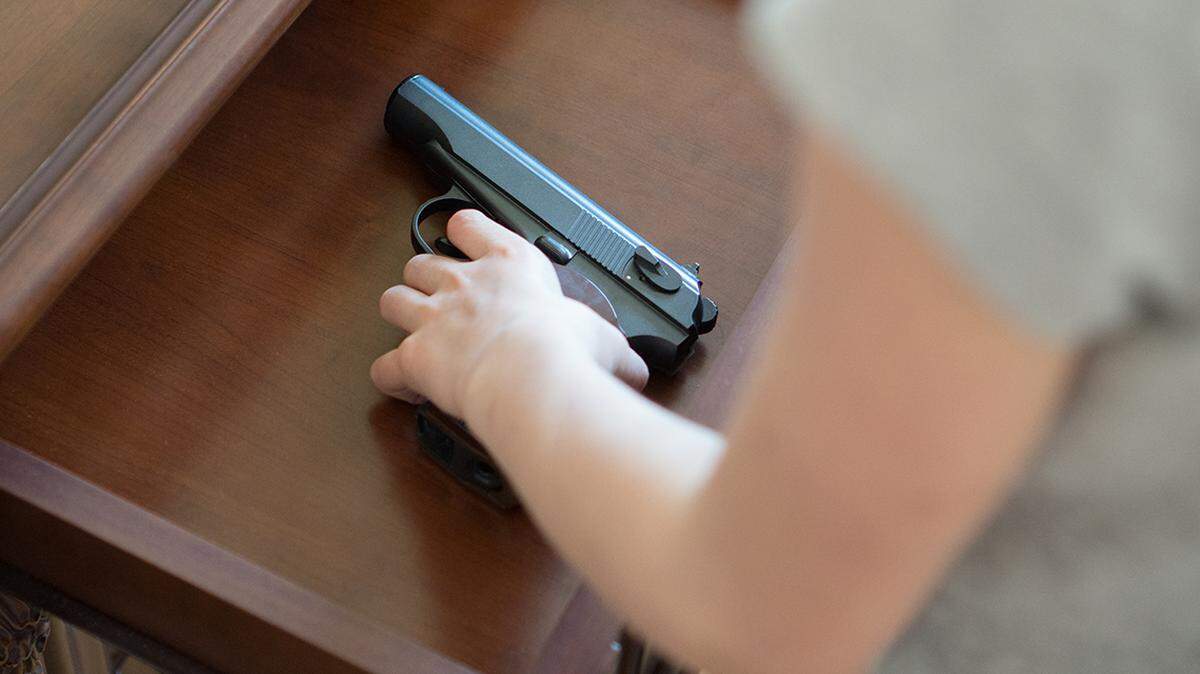
You wouldn’t think it would be hard to get the world’s leading gun violence researchers at the Johns Hopkins Bloomberg School of Public Health to tell you what the leading cause of death is for children. At least, you know, if it actually was firearms.
While the school’s report, Gun Violence in the United States 2022, says over and over again that guns are the leading killer of children and teens age 1-17, it never says what the leading killer of children not including teens is.
It isn’t like they don’t think the results for children are important. You have to wait all the way to the bottom of the first page of the report for them to define what they mean when they say children (age 1-9) and teens (10-17), but they never quite get around to saying what kills those kids age 1-9.
That made me curious, especially when I learned this month that the Ad Council was launching a multimillion-dollar, multiyear public service campaign telling parents that their kids are in danger because guns are the number one killer of children(!) and teens.
This is important. It matters whether what they are going to tell parents is actually true.
Today, according to Ad Council polling, only 26% of Americans know guns are such a danger to kids. But the Ad Council, which brought you the “Smokey Bear” campaign about forest fires and the “Crying Indian” campaign about littering and receives hundreds of millions of dollars in leftover ad space for its nonpartisan efforts every year, wants to fix that low number.
The Ad Council’s educational videos and ads, which you can see on YouTube any time you want, tend to linger on children and teens at the younger end of that scale. The ads include images of children on a playground, young children in doctor offices who still use child safety seats, grade-school kids debating gun violence, a crib wheeling through a hospital hallway and parents planning play dates.
Where does the Ad Council get the idea that guns are mowing down these young children all over the country? Its webpage cites the Bloomberg School of Public Health Center for Gun Violence Solutions over and over.
Answer on first page of report
So as I mentioned, I called and emailed them to get an interview and get clarity about exactly what was killing children ages 1-9. That was a week ago.
The first thing officials did was dispute that they had said anything about children age 1 to 9. “I am not quite sure where the age range you‘re mentioning is coming from,” wrote their PR guy, a former TV journalist. So I told him it was hidden on Page 1 of the 22-page report.
After that, he quickly scheduled a video call the next day with Silvia Villarreal, listed as the first author on the study I was asking about. “Fabulous,” I wrote.
The next day rolled around and the Bloomberg folks canceled the call with Silvia because some other people at the Center for Gun Violence Solutions were unexpectedly “out of the office.” I said I could interview Sylvia “any time next week.” In the meantime, their PR guy promised, “we will get you the data needed for your story this morning.”
Hours passed. I inquired about where the data was. More time passed and then an email came. It included nine bullet points with factoids from the report about children, but not the answer to my simple question: What is killing children ages 1 to 9? Not helpful.
So I tried asking the question again. No response that day or over the weekend or Monday.
I sent an email to the dean of the Bloomberg School of Public Health, Ellen J. MacKenzie, and the co-leaders of the Center for Gun Violence Solutions, Joshua Horwitz and Cassandra Crifasi.
“I have a simple question for the authors of your report Gun Violence in the United States 2022, released in September 2024, yet they have canceled interviews to talk about it and simply refused to answer it,” I wrote them. “It seems to me that this does not meet your standards for academic integrity, transparency and basic honesty.”
No response.
Escorted out by campus security
At this point, I was, well, miffed. It just so happened that I was going to Delaware to visit my wife’s family, so on Tuesday, I got in my rented BMW and drove three hours to the Bloomberg School of Public Health in Baltimore.
When I got there, I emailed the PR guy and the dean and the two gun research directors that I was there and eager to meet with any or all of them to ask my question.
No interview this time either, I was told. “We have to follow our school’s guidelines for media visits to the building,” the PR guy wrote me. “Hadn’t I already done that?” I thought to myself. But as I sat there in the multi-story lobby of the School of Public Health, it turned out I didn’t have time to ruminate. Two very polite and very plump ladies from campus security complete with official looking badges came to escort me from the building.
I headed back to the school’s garage, walking by red banners that said in big white letters, “BLOOMBERG SCHOOL PROUD TO BE IN PUBLIC HEALTH.” This was surely a proud day for the Bloomberg School, I thought.
When I got to the car, I received another email with a dubious offer. If I wait another week, they would give me an interview.
I had another thought. There was somebody else at the Bloomberg School who might know what kills kids ages 1-9. I had asked a different research group, the Center on Injury Research and Policy, earlier in the week. I looked in my email. They had already answered me — and they had done it in a matter of hours.
I’ll give you one guess what the researcher there said. You’re right – not guns. Not even close. Mishaps with things other than guns, such as drownings, falls and car accidents, are the big killers.
Maybe that is why, given a week, the world-renowned experts at the Bloomberg School of Public Health Center for Gun Violence Solutions couldn’t answer a simple question about what is killing our children.
It is not that they didn’t know. It is that they didn’t like their own answer.
This story was originally published June 11, 2025 at 11:36 AM with the headline "I tried to solve the great gun mystery at the Bloomberg School of Public Health. It didn’t go well | Opinion."