
Sedgwick, nearby counties under flood warning; rain expected to end Thursday
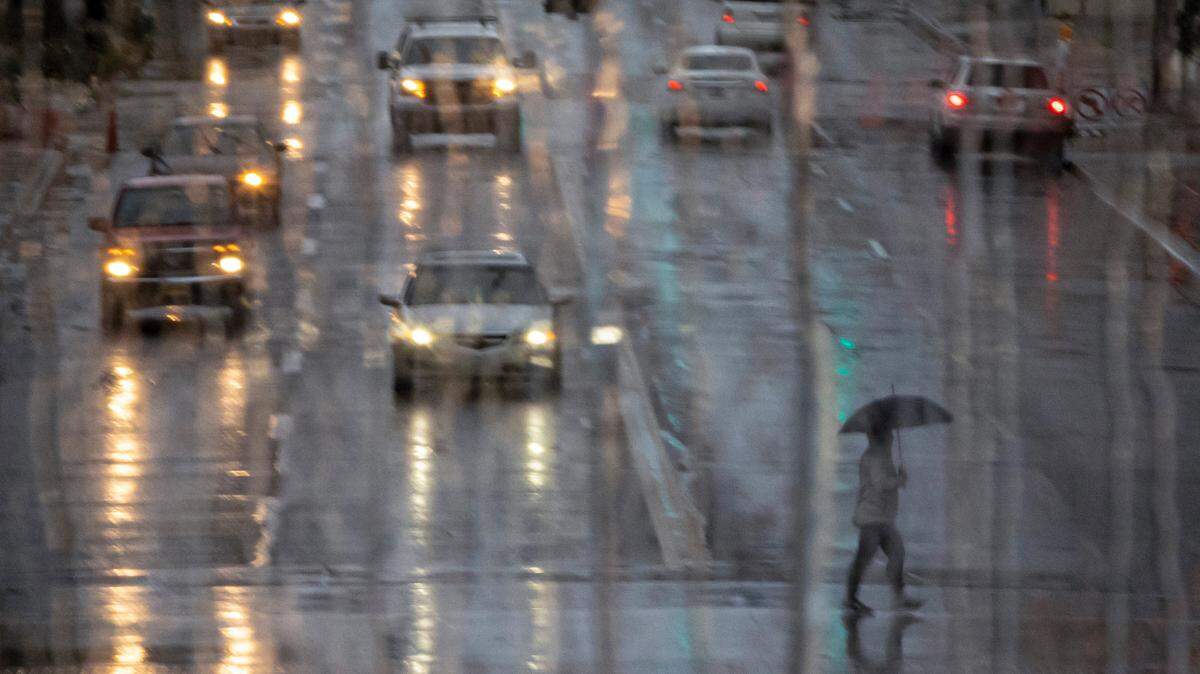
The heavy rain this week raised water levels of creeks and rivers in south-central Kansas, but flood damage has been minimal and should stay that way, according to a National Weather Service meteorologist in Wichita.
According to the United States Geological Survey, only two waterways surpassed the flood level in Kansas: the Chikaskia River in Corbin and Slate Creek, a tributary of the Arkansas River, in Wellington. Both locations are in Sumner County and reached minor flood levels. At 1:30 p.m., Slate Creek was at 21.34 feet, close to the moderate level of flooding at 22 feet. Slate Creek appeared to still be rising; Chikaskia River was already dropping.
Meteorologist James Cuellar said the only reports of damage in Sumner County have been water on paved roads and damage to some dirt roads. Cuellar said water levels in Sumner County shouldn’t rise much higher, if at all.
Harper, Kingman, Sumner and Sedgwick counties were under a flood warning until 10 p.m. Wednesday. In Wichita, the biggest concern has been flooding on roads in low areas, Cuellar said, adding that part of Kellogg had some flooding on Tuesday.
Wichita started to see rain late Monday night, with heavier rains coming Tuesday morning and early afternoon. In all, Wichita had about 3 inches of rain Tuesday, according to measurements taken at the Wichita Dwight D. Eisenhower National Airport. Cuellar said the highest measure taken Tuesday was 7.95 inches in Conway Springs, which is in Sumner County.
Wichita had about 0.30 inches of rain Wednesday as of around 1:45 p.m. The area could see a half-inch to an inch more through the rest of the day. Salina was forecast to see 2 to 3 inches Wednesday. In Wichita, some rain could linger into Thursday but is expected to end by the evening. No rain is forecast for the rest of the week.
Sedgwick, Reno, Kingman, Harper, Barber and Sumner counties and other southeast and central-east Kansas counties have been the recipient of the most rain this week, according to the Kansas Mesonet. The western half of Kansas, which is in differing drought levels, still needs rain, according to the U.S. Drought Monitor.
This story was originally published May 25, 2022 at 2:58 PM.