Want to see the Milky Way from Kansas? Here’s when it will be visible overhead
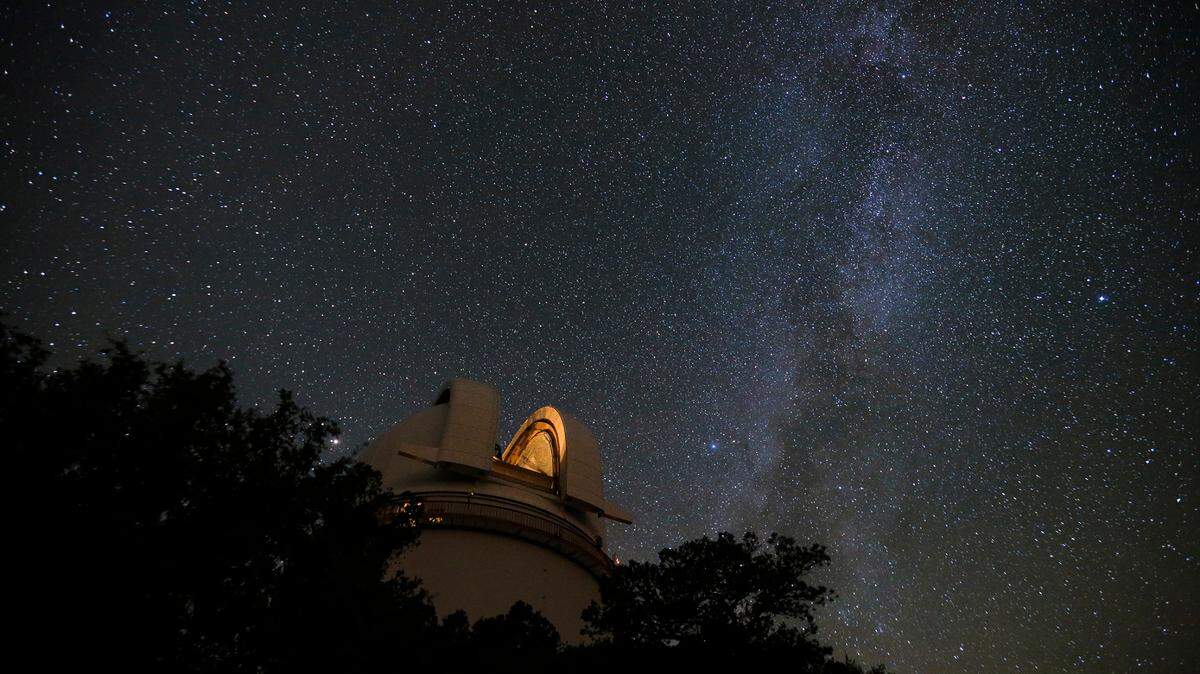
Kansas residents will soon get the chance to see the bright band of the Milky Way Galaxy, which isn’t usually very visible in most of the U.S.
Because of light pollution, 80% of U.S. residents typically can’t see the Milky Way, according to LiveScience.com, a science news publication. The galaxy’s bright core will be easier to see and higher in the sky in May from the Northern Hemisphere, LiveScience.com continued.
The Milky Way is home to an estimated 100 billion to 400 billion stars, as well as Earth, Space.com reports.
“From our perspective on Earth, the Milky Way looks like a faint, milky band of light arcing across the entire sky, which is how it got its name. This feature marks the central disk of our home galaxy seen edge on,” NASA’s website reads.
When’s the best time to see the Milky Way from Kansas?
The best time to see the Milky Way will be between Tuesday, May 20 and Friday, May 30, according to LiveScience.com, as it’s the period between the last quarter moon and the new moon, so the sky will be darker.
You’ll have to brave a late night or an early morning to catch a glimpse, however. LiveScience.com reports your best shot at seeing the Milky Way is between midnight and 5 a.m.
While Wichita does have several stormy days in the immediate forecast, Wednesday night is expected to bring “mostly clear” skies, according to the National Weather Service.
To have the best chance at seeing the Milky Way, you’ll want to head to the darkest skies available to you to limit interference from light pollution.
“Even if you have a clear, moonless night, the viewing window is further restricted by when the galaxy’s bright core rises from your location,” LiveScience.com says.
Identifying the Milky Way is easier if you can find the Summer Triangle, which is made up of three bright stars from different constellations.
“Although every star that you see with the unaided eye is actually a member of our Milky Way galaxy, often the term Milky Way refers to the cross-sectional view of the galactic disk, whereby innumerable far-off suns congregate into a cloudy trail of stars,” astronomy publication EarthSky says.
For those looking to enjoy stargazing with a group, the Kansas Astronomical Observers will host its next monthly meeting from 7:30 to 8:30 p.m. Saturday, June 21 at Lake Afton Public Observatory. The meeting will include announcements and discussion, with a star party afterwards, weather-permitting.