Extreme heat can be deadly in Kansas; here’s how to stay safe and cool this summer
Tornadoes, hurricanes and floods often capture the public’s attention, but it’s the extreme heat that’s deserving of more awareness — it’s the No. 1 weather-related killer.
Wichita is about to hit triple-digit temperatures for the first time this year, with the National Weather Service forecasting highs of 102 degrees on Thursday and Friday. The wind might help you feel a little cooler, with sustained winds of 8-17 mph and gusts of up to 26 mph.
“Sunny and hot,” the forecast read, with the hazardous weather outlook noting heat indices at or above 100 degrees across the region. Normal temperatures in Wichita for this time of year are highs of 88 degrees and lows of 66 degrees, NWS reports show.
Those predicted temperatures are still a few degrees shy of breaking records. The daily NWS Wichita records are highs of 104 degrees on June 17, 1948, and 105 degrees on June 18, 1936.
The Thursday to Friday overnight low, predicted to be around 76 degrees, would also be slightly cooler than existing records. The warmest low records were 77 degrees on June 17, 2016, and 79 degrees on June 18, 1939.
June has been unusually dry, with 0.92 inches of rain recorded at the NWS Wichita office. The normal month-do-date rainfall is 2.55 inches. Wichita has 20-30% chances of rain on Sunday and Monday.
Deadly heat
Excessive heat claimed an average of 138 lives per year in the U.S. from 1990 through 2019, according to the National Weather Service. That’s higher than the average annual death tolls from flooding, 88, tornadoes, 65, and hurricanes or tropical storms, 45, in that 30-year-period.
There have been years where other hazardous weather events eclipsed heat-related deaths. In 2005, for example, as many as 1,800 people died in Hurricane Katrina, according to the Associated Press Stylebook. And in April 2011, an outbreak of tornadoes killed 324 people in the southeast and 158 people in Joplin.
But extreme heat typically takes more lives on a yearly basis.
During the summer, the high temperatures and high humidity can be dangerous in the Midwest. In 2019, 11 Missourians and six Kansans died of excessive heat, according the latest statistics from state health officials.
There are steps you can take to prepare for the heat. The first is being aware of the forecast. The National Weather Service issues excessive heat warnings, watches and advisories.
The general rule of thumb is that warnings are issued when the heat index is expected to be 105 degrees or higher for at least two days and overnight temperatures will not drop below 75 degrees, according to the weather service. Heat indices are not expected to get above 105 degrees in the NWS Wichita service area this week.
Watches are issued when conditions are favorable for an excessive heat event, but its occurrence and timing are uncertain.
Advisories are generally issued when the heat index is expected to be above 100 degrees or higher for at least two days and overnight temperatures will not drop below 75 degrees.
How to stay safe during heat waves
When extreme hits, ready.gov has these tips:
Find air conditioning.
Avoid strenuous activities.
Wear light clothing.
Check on family members and neighbors.
Drink plenty of fluids.
Watch for heat cramps, heat exhaustion and heat stroke.
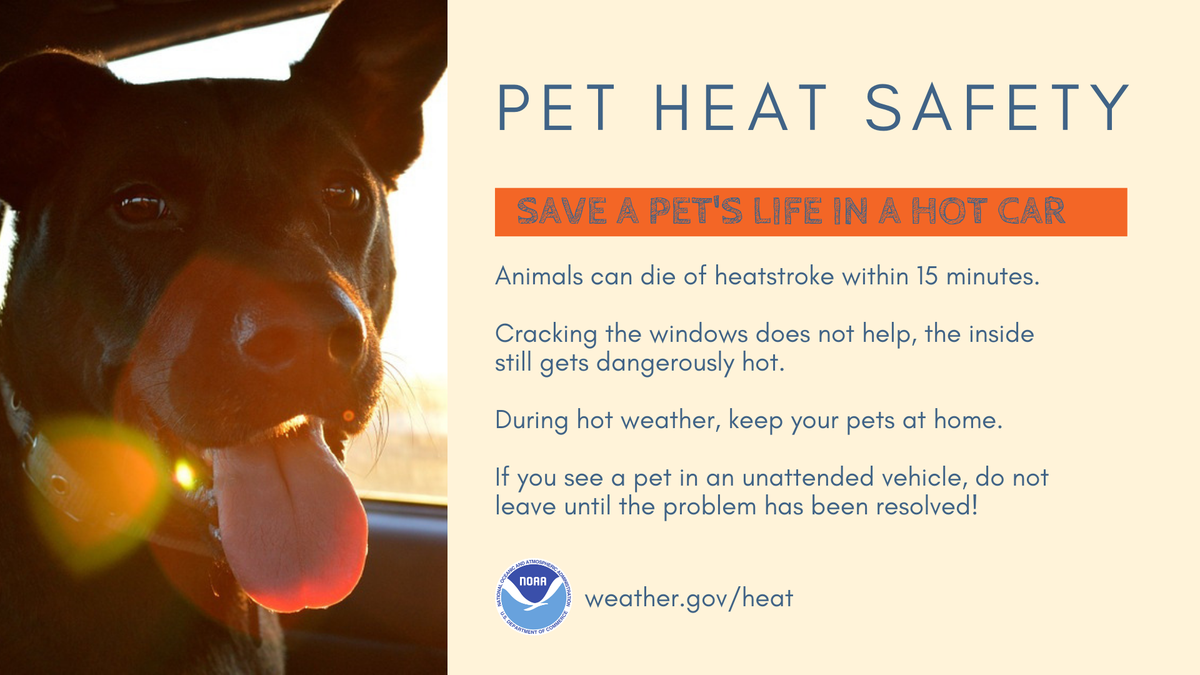
Never leave children, disabled person or pets in a closed car.
While fans are another useful way to find comfort, they have their limitations. When temperatures reach the high 90s, fans will not prevent heat-related illnesses, according to the Centers for Disease Control and Prevention.
Using fans alone when the heat index exceeds 99 degrees can speed up the onset of heat-related illnesses, according to the U.S. Environmental Protection Agency.
“Generally, portable electric fans may not be a practical and safe cooling mechanism during an EHE (extreme heat event) in homes that are already hot and are not air-conditioned; their use should be discouraged unless the fans are bringing in significantly cooler air from outside the dwelling,” the EPA said.
Instead, people should take a cool shower or bath, drink cool nonalcoholic beverages or go to an air-conditioned place, like a shopping mall, public library or community center.
For those who have to work outside in extreme heat, the Occupational Safety and Health Administration had these recommendations:
- Drink water often.
- Rest and cool down in the shade during breaks.
- Gradually increase workload and allow more frequent breaks for new workers or workers who have been away for a week or more.
- Know symptoms, prevention and emergency response to prevent heat-related illness and death.
This story was originally published June 16, 2021 at 1:42 PM.