
Whooping cranes expected to fly in any day now
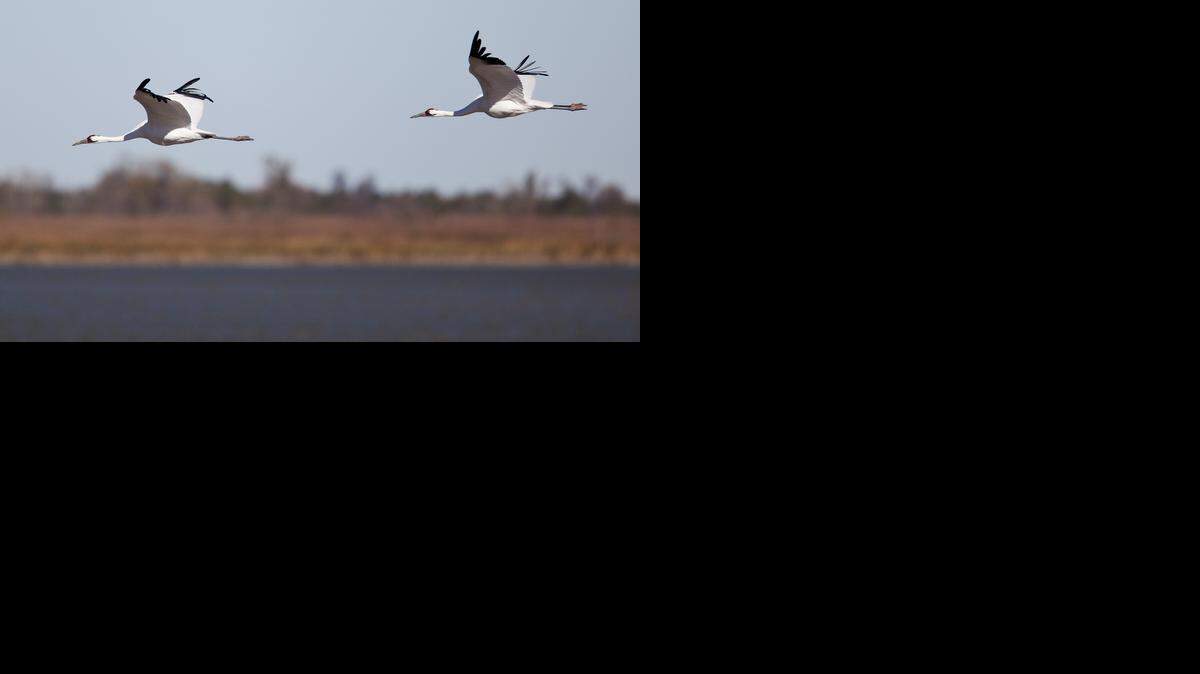
The whooping crane migration is underway and Quivira National Wildlife Refuge officials are encouraging visitors to the Stafford County refuge in the next few weeks to use some bird etiquette as the rare and endangered birds pass through Kansas.
Typically each fall, nearly two dozen of the five-foot tall birds pass through or stop at Quivira and nearby Cheyenne Bottoms in Barton County.
The cranes use the open salt flats and wetlands to roost – and then move on, within a few days.
The best time to see the cranes is at dusk and dawn.
Wildlife officials are asking the public to not go near the cranes.
Keep a half-mile between yourself and the birds and do not try to approach them on foot, said visitor services specialist Barry Jones in a news release issued this week by Quivira National Wildlife Refuge.
Take binoculars and long-lens cameras to view the birds from a vehicle on public roads. Record the specific location, date and time and a physical description of the birds and their behavior and send it to Quivira National Wildlife Refuge, whose staff helps track the birds migration.
In 1942, only about 20 whooping cranes remained. Now, there are currently 145 in the wild, according to the Northern Prairie Wildlife Research Center.
The birds come through Kansas as they migrate from their nesting grounds in northern Canada to their wintering spot at Texas’ Aransas National Wildlife Refuge on the Gulf of Mexico, a distance of about 2,500 miles. It typically takes the birds about three weeks to make the journey, according to Whooping Crane Journey North website.
At Quivira, the best areas to look for them are usually at the south end of the Little Salt Marsh, which offers an observation tower and telescope to scan the marsh and at the west side of the refuge’s Big Salt Marsh, where another telescope is located.
Last year, 65 whooping cranes were observed at Quivira during the fall migration, according to Quivira’s website. The first sighting was on Oct. 24, 2013. The last sighting was Nov. 23, 2013. Thirty cranes were seen on the refuge during the spring migration.
Whooping cranes are white with a dark red cap, dark gray bill and black legs and wing tips. In flight, they hold their necks straight out and their legs extend beyond their tails.
For updates on the birds and refuge hunting, check www.fws.gov/refuge/quivira/ or call 620-486-2393.
This story was originally published October 24, 2014 at 7:19 AM with the headline "Whooping cranes expected to fly in any day now."