Millions of birds are crossing KS each night right now. Look out for these types
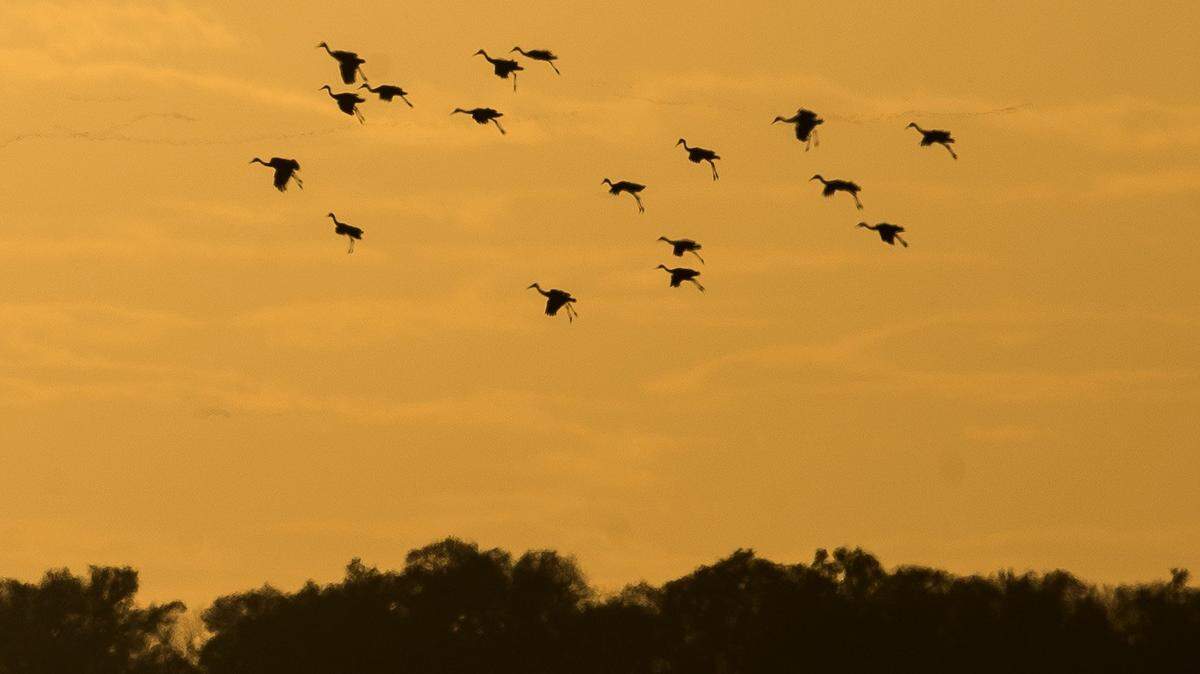
It may be getting colder outside, but that isn’t bad news for Kansas bird-watchers.
In fact, according to Mike Rader, wildlife education supervisor with the Kansas Department of Wildlife and Parks, now is the perfect time to get into the hobby.
“Fall migration ... is when there’s more birds than there ever is any other time of the year,” Rader said.
The migration occurs as warmer-weather birds relocate to find better weather and more abundant food sources. While the state loses some varieties due to the migration, it also gains many fall and winter species.
According to BirdCast, a website that tracks bird migration across the U.S., more than 3 million birds crossed the state of Kansas the night of Oct. 22, and more than 4 million were expected to be in flight during the day Oct. 23. Mid-September seems to be the time with most birds in flight, with an estimated 44 million birds in flight across Kansas in a single night.
Peak migration times can vary, however.
“It depends on which species you’re talking about,” Rader said. “We’re at the tail end of shorebird migration — that’s been going on since late July. So the fall migration from shorebirds starts early, and then we’ll still be seeing some birds through probably this month, and there’ll be a few lingerers in November.”
So, what birds can you see in the fall in Kansas while bird-watching? Here’s a rundown.
Best time to see sparrows in Kansas
Rader said the cooler Kansas weather can mean more sparrows in the area.
“What we are getting is an influx of sparrows. October [and] November is one of the best times to start seeing the wintertime [and] the fall resident sparrows,” Rader said.
One of the most common are Harris’s sparrows.
“They look a little superficial, like a house sparrow [but] a little bit bigger,” Rader described.
The birds are known for their barrel-shaped chest, which “makes their round head look a little small for their body,” All About Birds, a project of the Cornell Lab of Ornithology reads.
Harris’s sparrows are a brown and black color. The juvenile has black spots that are patchy, while adults become solid. The birds have a white stomach, black streaks on their back and a pink bill. They are native to Kansas, Rader said, and can be spotted in backyards and shrubby habitats.
Song sparrows are another bird to look out for.
Described as one of the most familiar sparrows in North America by All About Birds, the song sparrow is a medium-sized bird with a brown, streaky color. The head is a red-brown and gray color. The species is known to visit bird feeders and can be found in almost any habitat.
One of Rader’s favorite sparrows to see are the white-throated and white-crowned sparrows.
“I have an appreciation for those,” Rader said. “Some of the [sparrow] species don’t sit up and give you a very good look, but white crowned, those are the one that typically [do].”
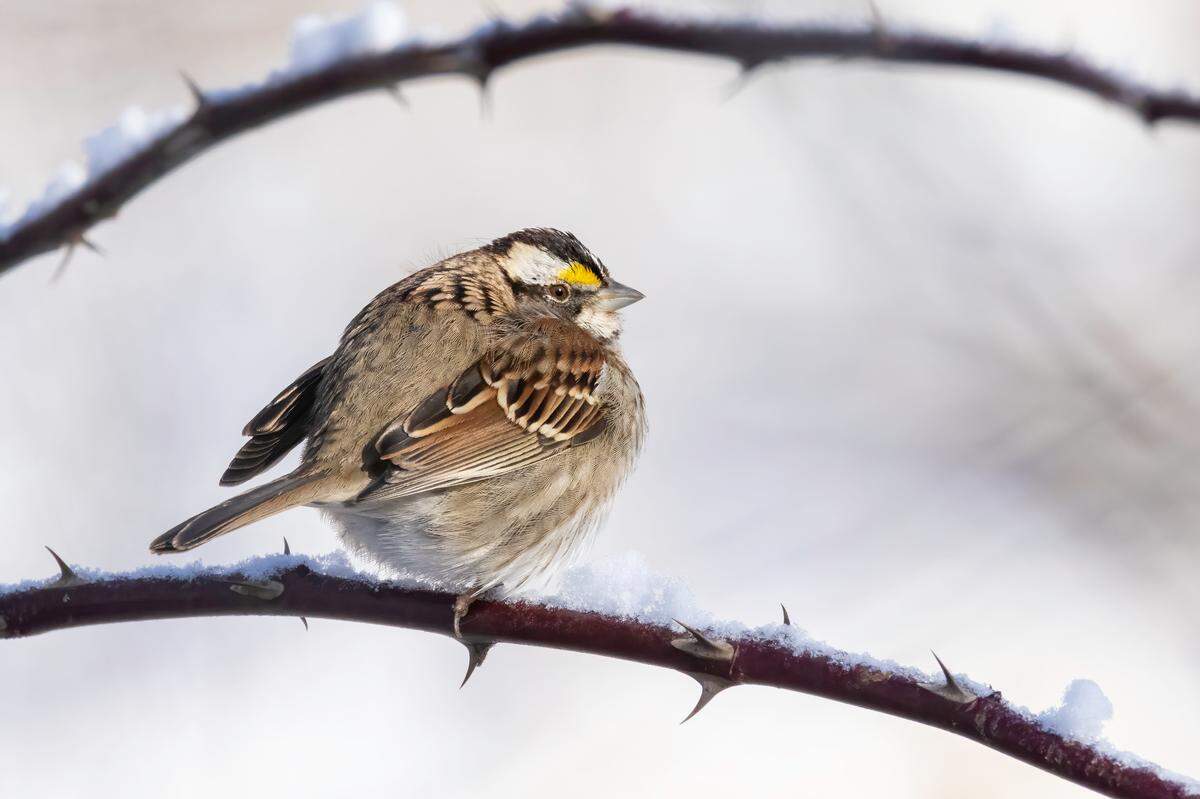
White-throated sparrows are larger with a brown color above, gray below and a patterned head with black-and-white stripes. As the name suggests, they have white throats and a yellow color between the eyes and the bill. These birds can usually be found in woodsy areas.
White-crowned sparrows are also larger sparrows with a long tail and small bill, All About Birds says. They are a pale gray with a black-and-white striped head. They can usually be found in brushy habitats.
Other species to look out for are swamp sparrows, the spotted towhee and dark-eyed juncos, just to name a few.
Cranes migrating through Kansas
Sandhill cranes and whooping cranes are two kinds of cranes that have been spotted in Kansas during fall migrations.
There’s a possibility sandhill cranes will stay through the winter, as well, Rader said.
“Probably the last 10 or 15 years, we’ve had sand hill cranes stay through the winter. They [used to] migrate through, and we would see them for a month or two, then they would go to south Texas and places like that. But as things have changed somewhat. There’s more food availability here, the temperatures and the weather isn’t quite as extreme,” Rader said.
Sandhill cranes are large, tall birds with black legs and a red crown. They can be found in open prairie habitats or wetlands.
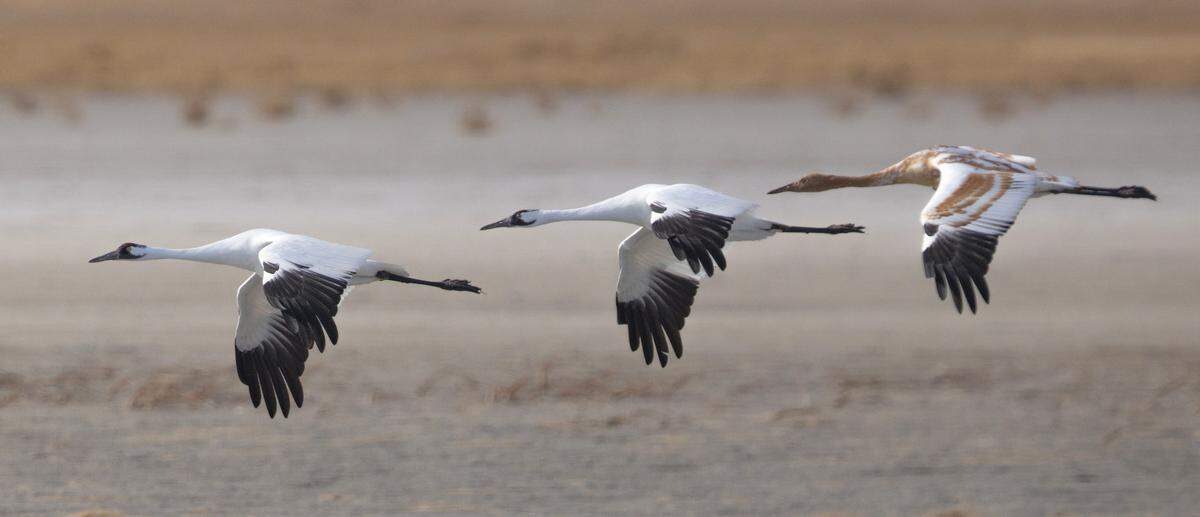
Whooping cranes are another variety that can be seen migrating through during the fall and winter months. There haven’t been any reports so far this year, Rader said, but he said they will come in soon.
The cranes are an endangered species that have reportedly passed through Kansas, specifically in Quivira National Wildlife Refuge. Whooping cranes are tall, white birds with red accents on the head and black legs, bills and wing tips. They can usually be found in wetland habitats.
Kansas is a ‘tremendous’ bird watching spot
Rader’s biggest tip to get into bird-watching is to find a mentor or go with a group.
“It’s good if you can find a group if you’re a little unsure of identification,” Rader said. “The key is to get out and [get] lots of practice. Kansas is a tremendous place to bird-watch.”
eBird, a Cornell resource, can be used to report bird sightings, look at species pictures, as well as range maps. The National Audubon Society also has an online field guide.
But Rader said he still prefers using a physical field guide.
“I’m still kind of old school and like actual physical paper field guides that I can have in my hands and look at,” he said. “Any combinations of those ... will help with identification.”