
Could be 1 in a million: Rare fawn spotted by Kansas game wardens
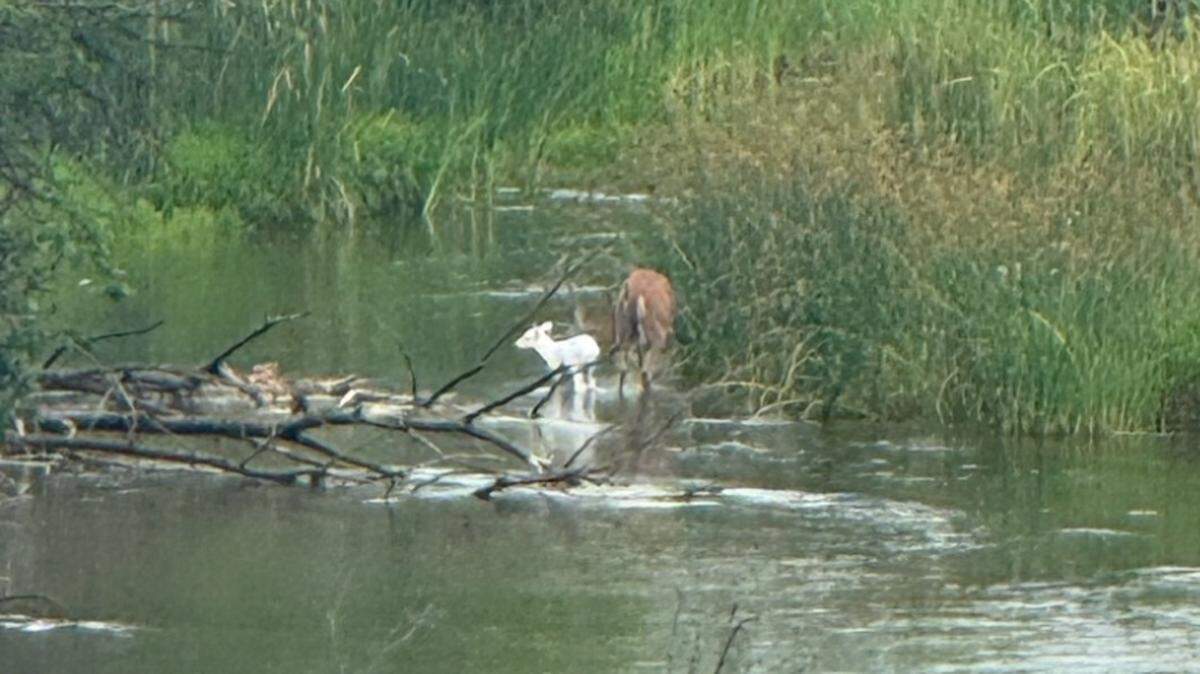
The Kansas wildlife community is buzzing after an uncommon albino critter was spotted by game wardens. The Kansas Department of Wildlife & Parks shared a photo last week of an albino fawn captured on camera by an employee in one of the agency’s five regions.
According to the post, which has since garnered more than 6,000 likes and hundreds of shares and comments, the odds of albinism occurring in wild deer is between 1 in 30,000 to 1 in 1,000,000.
Some commenters, however, speculated the fawn actually has piebaldism or leucism, which are partial losses of pigmentation and melanin. Albinism, conversely, is a genetic mutation that results in a complete lack of melanin and telltale red eyes.
While Wildlife & Parks did not disclose the location of the spotting in order to protect the fawn, several commenters pleaded with the department to take action and relocate the fawn and its mother to a no-hunting area. In Kansas, albino and white deer are subject to the same hunting regulations as other deer, which means no special protections exist to prevent rare discolored deer from being hunted.
“Collect mama and baby and relocated where baby can grow up in safe NO HUNTING area,” one commented. “Right now, it wears an easy target.”
Albino deer, like other albino animals, often have shorter lifespans compared to their pigmented peers. Increased visibility to predators, desirability by hunters as well as health issues linked to the mutated albino gene make it uncommon for albino deer to reach maturity.
Some commenters criticized the post, pointing out that the circulation of an albino fawn photo could drive hunters to seek it out as a trophy prize.
Kansas Wildlife & Parks did not respond to requests for comment.
Most commenters, however, shared the details of their own albino sightings throughout Kansas, the Midwest and the country and admired the rare creature’s beauty.
“OMG I wish I was there to take the photo myself,” one commented. “Some people don’t truly understand the nature that surrounds us all. Thank you so much for sharing this photo for all of us.”