Trump signs order to defund NPR, PBS. What does it mean for Kansas affiliates?
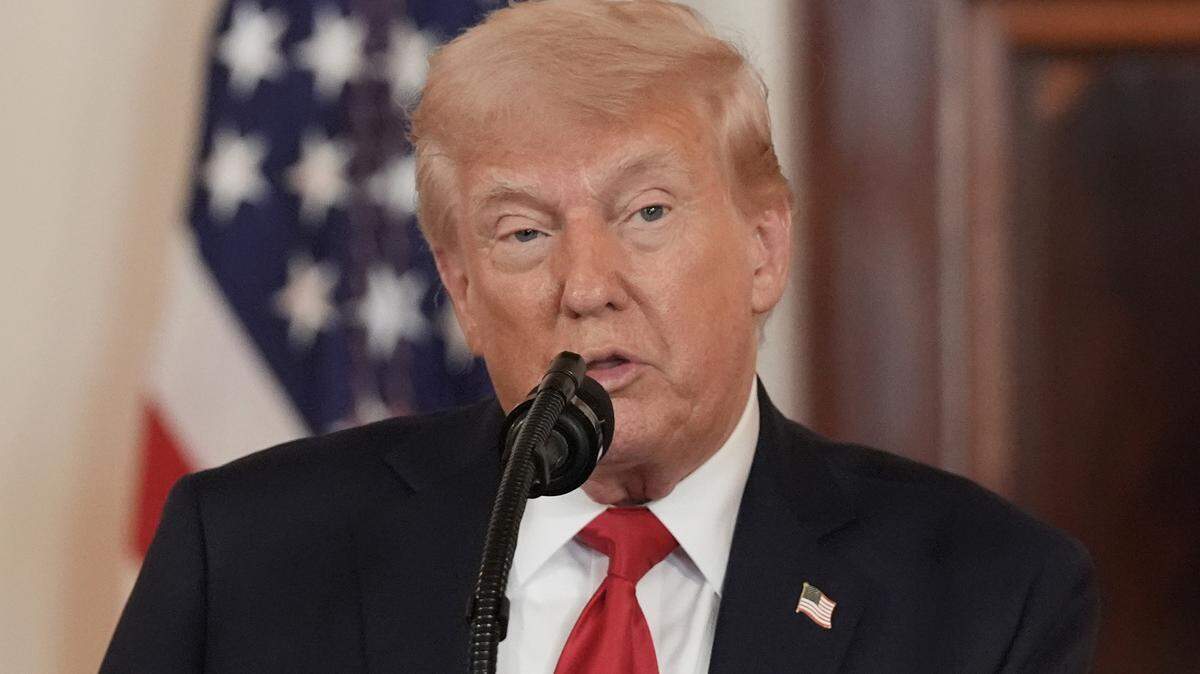
President Donald Trump’s latest executive order could mean cuts to local Kansas radio and TV stations.
Trump signed an order Thursday directing the Corporation for Public Broadcasting’s board to end federal funding for National Public Radio and Public Broadcasting Service.
“The CPB Board shall cancel existing direct funding to the maximum extent allowed by law and shall decline to provide future funding,” the executive order reads.
The order follows funding cuts to many agencies as part of Trump’s plan to substantially slash the federal budget and downsize the government. NPR has been a frequent target of right-wing and conservative calls for defunding, and Trump recently called NPR and PBS “radical left ‘monsters’” on social platform TruthSocial.
What does the latest executive order mean for Kansas radio and TV stations? Here’s what we know so far.
What could Trump’s cuts mean for Wichita and Kansas public broadcasters?
KMUW, Wichita’s NPR affiliate, told The Eagle federal funding accounts for about 7% of their budget.
While that may seem like a small number, funding from the Corporation of Public Broadcasting goes to vital resources, specifically music rights and the satellite infrastructure, allowing stations to broadcast programs from across the country.
“What this executive order today says is we’re prohibited from using ... any federal money to pay, directly or indirectly, for NPR [and] PBS, and that would and could have a significant impact on what we’re able to do,” Debra Fraser, the station’s general manager, said.
Fraser said following the executive order, everything the station does is “in question.” Compared to other smaller radio stations, however, the impact to KMUW could be dampened.
“[Rural stations] all receive more federal funding than we do, which likely means they’re all more dependent than we are,” Fraser said.
When asked what KMUW’s next steps without federal funding, Fraser said the station would lean on its listeners more than ever.
KCUR, Kansas City’s NPR affiliate, released a carousel on Instagram Friday detailing the executive order and concluding it is still unclear what the impact could be to that station.
“While it is not yet known what direct impacts this order may have on NPR and PBS affiliates, it is clear that the threat to public media remains,” KCUR’s general manager Sarah Morris, who is also on NPR’s board of directors, said in the Instagram post.
In a Friday release, Kansas Public Radio, based in Lawrence, said if implemented, the executive order would “eliminate critical federal funding that sustains public media’s educational and cultural programming.”
“These are dollars that help provide programs that support local artists, and allow stations like KPR to spotlight stories and sounds that reflect the full richness of the public radio station’s broadcast area in Kansas,” the release continues.
In a phone interview Friday, PBS Kansas President and CEO Victor Hogstrom encouraged listeners to reach out to their representatives and show support for public programming. He said federal funds account for nearly 25% of the station’s budget.
“Our president should not be doing what he did,” he told The Eagle, “but if it were to happen, federal funding cannot be replaced at PBS Kansas. We need it.”
PBS Kansas sent out a press release in April, when the executive order was first drafted, urging people to reach out to their local representatives.
“Public media is a vital source of trusted news, educational children’s programming, emergency alerts, and cultural content that serves everyone — regardless of income or background,” the press release read.
High Plains Public Radio, an NPR affiliate in Garden City, about three and a half hours from Wichita, told The Eagle they didn’t have enough information on the order as of Friday to comment.
The Eagle also called KRPS, an NPR affiliate in Pittsburg, and is waiting for a call back from both. A representative of Radio Kansas in Hutchinson declined to comment Friday afternoon.
There are questions surrounding the legality of Trump’s executive order, with the CPB noting when Congress created the corporation, it “expressly forbade ‘any department, agency, officer, or employee of the United States to exercise any direction, supervision, or control over educational television or radio broadcasting, or over [CPB] or any of its grantees or contractors.”
The American Coalition for Public Radio and America’s Public Television Stations have launched ProtectMyPublicMedia.org, where people can sign a petition, send letters to Congress and share their public media experiences and stories.
This is a developing story.
Lindsay Smith previously worked as a reporting intern with KMUW from August to December 2022.
This story was originally published May 2, 2025 at 3:47 PM.