
Proposed solar project strains the bonds that unite a rural Kansas community
In rural places in our divided land we can’t just pick sides and trash each other. But if we do, somebody — a friend, a loved one, or even a sometime enemy — might tug on our sleeves and remind us about the better angels of our nature.
At a public meeting last year, Joe Schlessiger’s farmland neighbors were arguing once again. Joe stood himself up, all 6 feet, 6 inches of Kansas farmer.
The topic once again: Spanish energy company Acciona’s proposal to build a solar energy array near Barton County’s Cheyenne Bottoms.
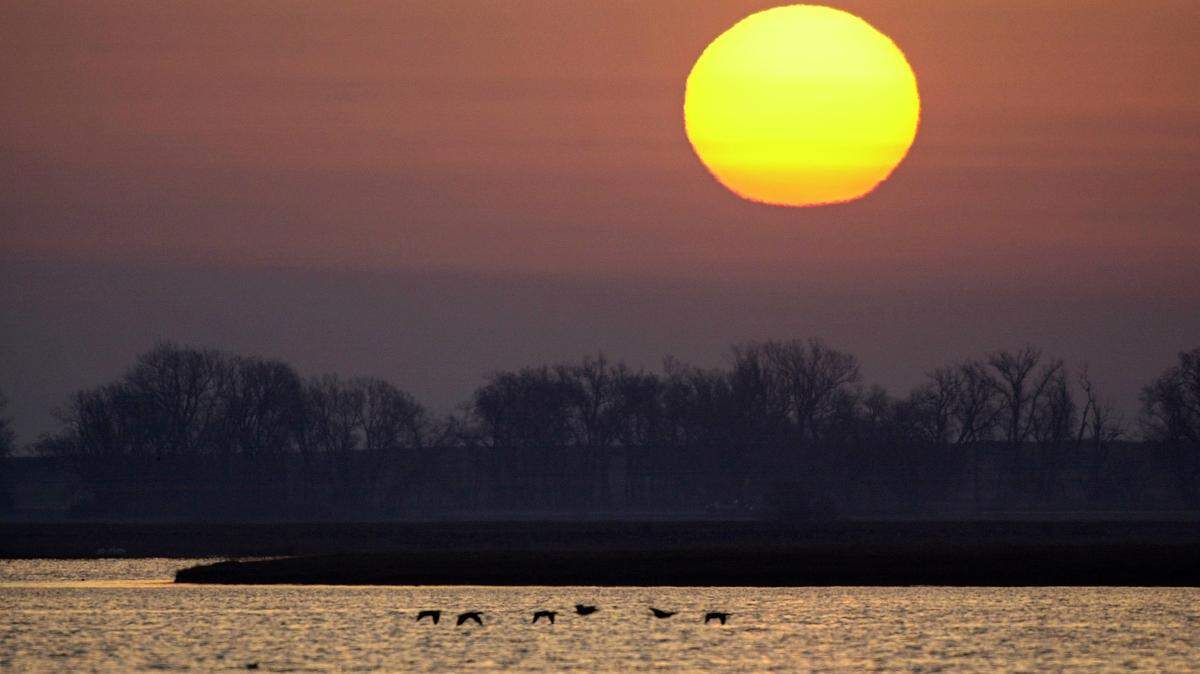
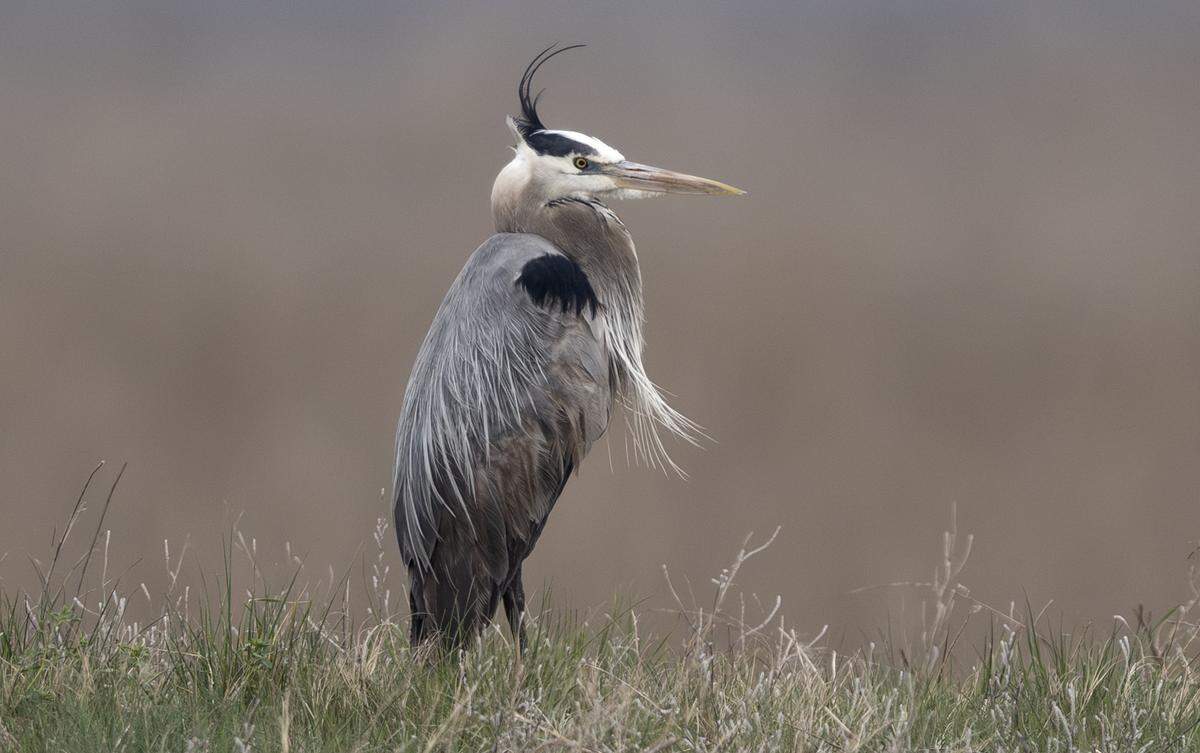
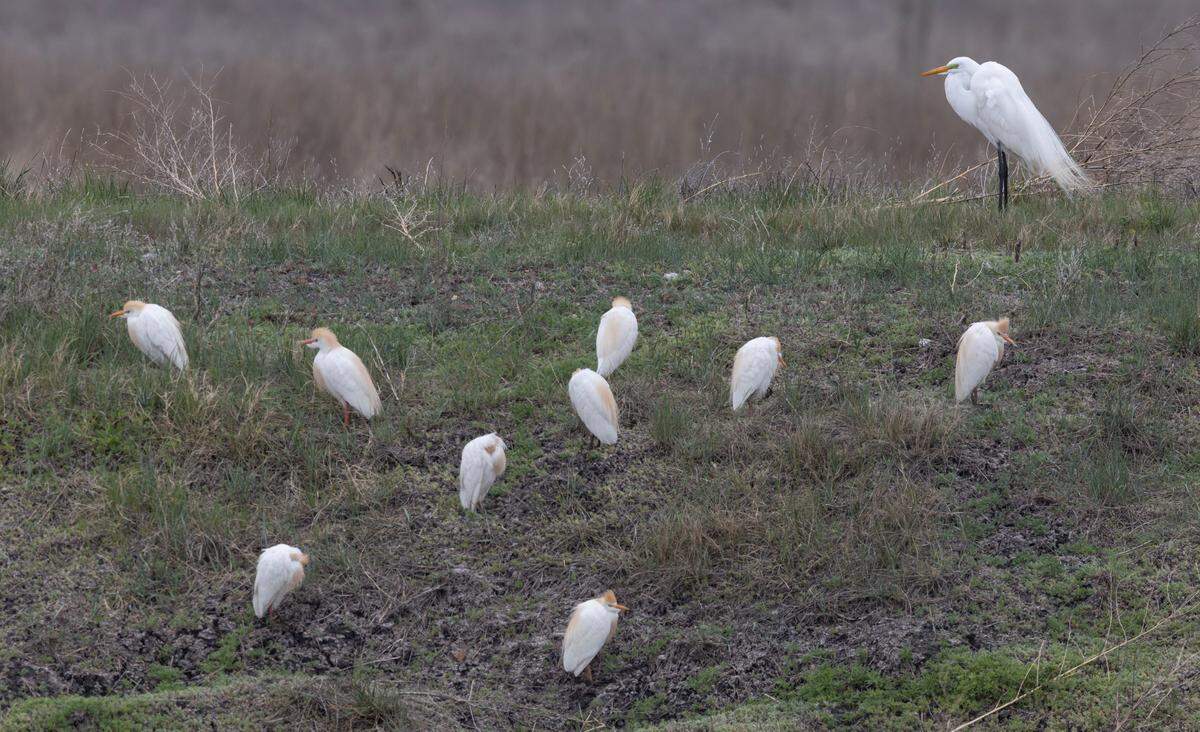
The Bottoms are enthralling to those who love nature — 41,000 acres of the largest inland wetland in the United States. It’s a migration stopover for roughly two million birds every year — everything from white-faced ibis dancing on long stick legs to endangered whooping cranes that make pit stops there in spring and fall. The birds prance, squawk and swell the cloud storage of wildlife photographers.
Joe had listened as one neighbor after another trashed Acciona’s plan.
Dr. Dan Witt, a retired doctor with a serrated tongue and panhandle Texas drawl, had said solar panels could kill birds and that farmers leasing land to the company were greedy. And that if county commissioners like Joe’s wife, Tricia, approved the plan “We might as well raise a black Spanish flag over the courthouse.”
Joe gripped the podium and told them he and Tricia leased no land to Acciona, “But I came here to stand with farmers.”
Joe said farmers struggle: Shocking price increases for parts and fertilizer. Post-COVID supply-chain worries. Inflation. “Lease money might save farms.”
Joe didn’t say what everybody already knew: Acciona money would be a windfall for schools, the county, the townships.
“Do we have the right to use our property as we want? Or do we not? Where do you draw the line?”
Joe saw some listeners disliking what he said, but some privately cheering. Most from both sides had known Joe since he was far younger than 52.
He looked out at Doc, Acciona’s local arch-nemesis — that burr in the boot of Acciona’s farmer supporters.
As one farmer, Chris Clasen, put it later, Doc had repeatedly violated a sacred rural taboo: He denounced his neighbors. “You just don’t do that out here,” Clasen said. “Never.”
Joe locked eyes with Doc. And though you cannot easily see it in the county commission public video: Joe’s shoulders shifted. Tears welled up.
“Now,” Joe said, his voice a tad unsteady:
“Nobody loves Doc Witt any more than I love Doc Witt. I owe my son’s life to Doc Witt.”
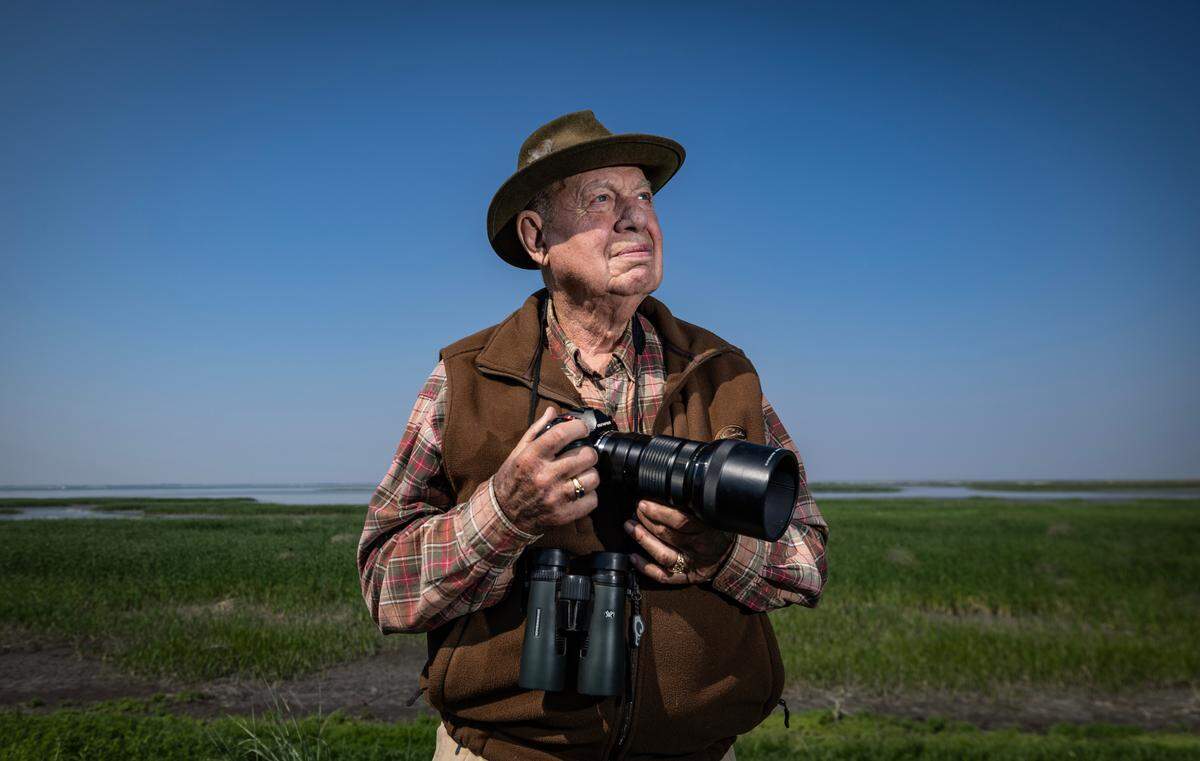
Doc saved the Schlessigers’ 5-year-old son years back, and they have loved him since, like someone akin to a hero. They admired Doc as a nature photographer, big game hunter, fisherman, gardener, bow hunter (hunting is a secular ritual here) and as a generous friend to many. People admired him that way for 30 years.
Many still do.
But not all. Not anymore.
“That foreign company”
Doc’s act of heroism took place 17 years before he said farmers were greedy.
Some farmers here could earn sizable bucks by leasing land to Acciona, pronounced “Axe-ee-ona.” The company wants to build in a particular area of Barton County — close to nearby transmission lines.
Doc, for his part, wants to “save Cheyenne Bottoms from the bastards trying to ruin the Bottoms. That foreign company.”
“I adore Tricia,” Doc said. “She’s a Schlessiger and there are no bad Schlessigers.” But he said Commissioner Tricia, that stepmother to the boy he saved, might be aiding and abetting Acciona to enrich her farmer constituents.
“Farmers think they are going to make millions,” Doc has said, rolling the vowels with his drawl. “But they’ll do it atop the corpses of millions of murdered birds.”
Doc backers have shown up at the public meetings where this thing has been argued out for a year and a half. There are dozens of blunt speakers on each side.
“If they put one of those solar things outside Yellowstone Park,” said John Miorandi, a retired business owner, “People up there would look for the nearest tree to hang them from.” (The park website says they now get 57% of their electric power from renewable energy).
Acciona says there is no evidence that solar panels harm birds. And several naturalists who work at the Bottoms, and who are longtime friends or admirers of Doc, took no stand for or against.
Some of Doc’s own admirers say that some “facts” he touts against Acciona are “embellished, even cringeworthy.”
“That’s true,” Doc said. “But Acciona has millions backing them. And all I got is words.”
Those words have stung.
“Greedy?” said Clasen, that farmer and mother who leases land to Acciona. “You just don’t talk like that to people out here, where memories and hurt can last generations.”
Arguers here have known each other since dirt was young, as rurals sometimes say. They don’t argue the way some city dwellers do, because the neighbor making you mad today might drive you home tomorrow after he pulls you out of a ditch.
Doc volunteers that he has little to no filter when animated. “In my long life I’ve had to apologize, or send flowers, or buy dinners for people,” he said. “What flies into my head flies out my mouth.”
But when I first called Doc in March and said I wanted to get both sides, he offered to drive me to the doorsteps of farmers mad at him.
“How could you do that?” I asked.
“Because we know each other as only rural people can. We’ve been through things; we are as close as human beings can ever get, and not only because as their urologist I probably put my finger up their butts any number of times.”
He laughed. “Good people. You would like all of them.”
‘Wait, what?’
The community argument started — then blew up — shortly after Acciona’s Adam Stratton first appeared in Barton County last year, where he paid a courtesy call to the County Commission. Tricia was there with the four other commissioners.
The project intrigued Tricia from the get-go. The key reason her husband had urged her to run for the commission was that commissioners for years had been town people, not farmers. Joe thought farmers got left out.
Stratton is Acciona’s development director for the U.S. and Canada: Polite, athletic in bearing. Even Doc says “Adam is a truly impressive person.” His LinkedIn bio impressed Doc: Stratton used to lead guided tours climbing rock walls and ice sheets.
Stratton told commissioners that Acciona proposed a utility-scale solar array generating huge amounts of energy for decades. Taxes paid, over time, would be a windfall for local schools, townships and county government.
Stratton would later tell me he’s puzzled about why people didn’t embrace this; it would mean “they’d get millions for doing nothing.”
But while Tricia was intrigued, things took several turns at that commission meeting.
Stratton told them that Acciona — and Tenaska, an energy company Acciona took over from months previous — had acquired land leases from local farmers since 2018, five years before.
“Wait, what?” Tricia thought. “We had heard nothing about this.”
And: Farmers had signed non-disclosure agreements (NDA’s). They could tell no one anything.
“They’d been doing this on the quiet,” Tricia said.
And then….
Judy Goreham, the county planning chief, asked where the thing would get built.
Stratton showed them a county map with what Tricia later called “the elusive red mystery rectangle” in the middle. It showed red for 25,000 acres.
The size startled everyone. (That size was an innocent mistake, Stratton later said — meant to show the general area Acciona was interested in. The actual array would be 2,000 acres).
And then….
Everyone saw that the red patch lay next to the southeast corner of Cheyenne Bottoms. “That was quite a moment,” Tricia said.
And finally, this:
Someone asked: “How might this project affect Cheyenne Bottoms?”
Stratton hesitated for only a second.
And then he asked, politely: “What’s Cheyenne Bottoms?”
“You could have heard a pin drop,” Tricia said.
In spite of
Doc wasn’t there that day. But Doc ended up as the opposition leader.
Before this, Doc was mostly an intriguing local character.
At age 84 he walks 4 miles a day, “out of fear,” he said with a laugh.
While bow-hunting the Rockies years back, Doc killed a mountain goat, he said, then wrecked an ankle backpacking goat flesh 2.4 miles off a boulder-strewn snow-covered mountainside.
He killed big game with a bow and arrow in Africa during five trips there, and brought back horned and stuffed kudus and impalas. He mounted those big beasts in his home. The mountain goat is in there too.
The last time Doc married, he and his bride, Sandra, were 10 feet under water, sucking air out of scuba gear off a St. Thomas coastline. The boat captain who married them called himself Captain Nemo.
As a urologist he healed the sick for three decades out here. He takes hundreds of lustrous Bottoms photos every year and posts them in “Marsh Musings,” his column in The Great Bend Tribune.
He photographs sports games and gives the photos free to kids’ families. People call or text to ask for medical advice 13 years after he retired. (Including the Schlessigers). He turkey-hunted Jack and Joe Schlessiger’s land for years with his bow and arrows.
But Barton County is also where farmers like Chris Clasen call Doc, a 30-year Barton County fixture, “an outsider.” “He might be a good doctor. But he’s from somewhere else.”
Opponents
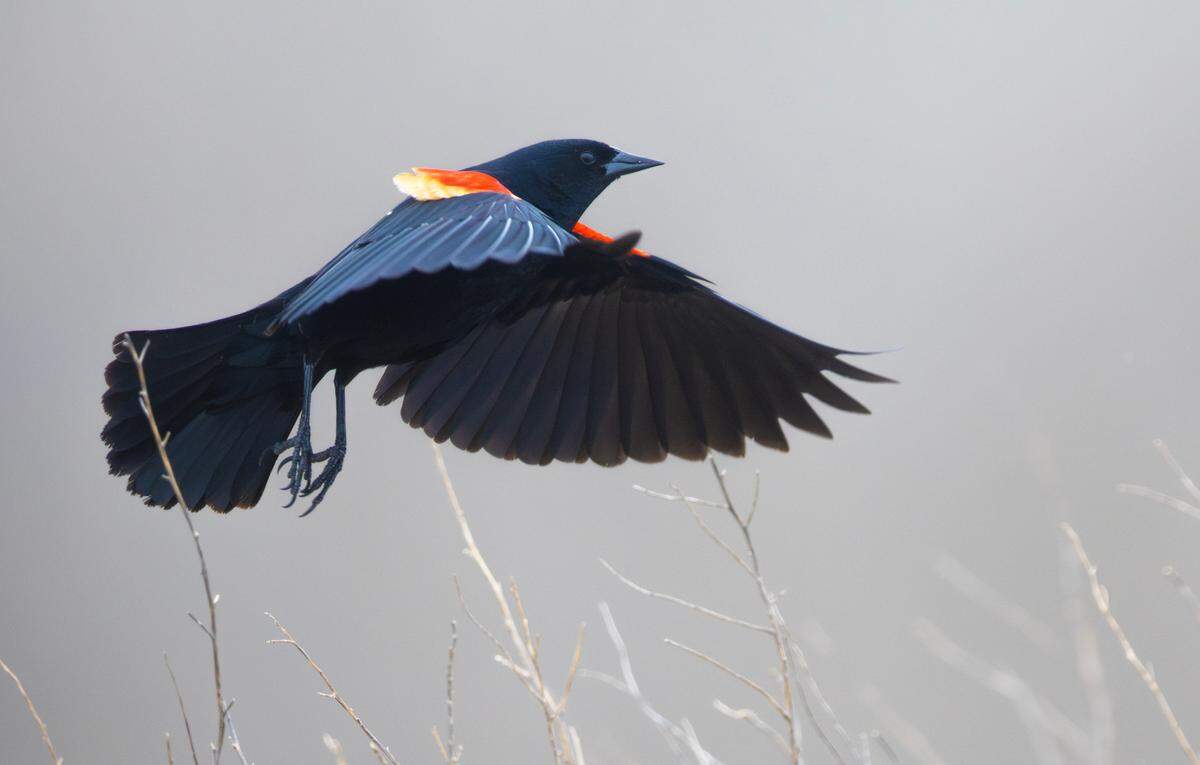
Acciona’s power lines will horsecollar flying birds, Doc said. Or solar panels will create a “lake effect” where birds will get tricked into skidding into the gray, water-like sheen of panels. “Acciona lies about all of this,” he told me.
Miorandi, one of Doc’s vocal allies, said the disagreements have broken friendships. One former Miorandi friend “told me that if the leases come through, he’d never have to work another day in his life, and neither would the next two generations of his family.” The friend cut him off after Miorandi lashed out at the project.
One Kansas naturalist, who is otherwise a supporter of solar power, dislikes how close Acciona’s proposed site is to the Bottoms.
“Some migrating birds cannot take off from anything but water, so if they land on the panels, it would not be good,” said Jackie Augustine, director of Audubon Kansas.
“There are only 600 whooping cranes left in the world,” she said. “We’ve lost three billion birds since 1970 — 25% of all birds in North America.”
(Jason Wagner, the public lands manager at the Bottoms, didn’t dispute that, but said they have counted no decline in migrator populations).
Most Acciona opponents are not opposed to renewables, Doc said. “And I’m not opposed to solar.”
But when Stratton told him the company needs to locate near the Bottoms for the convenience of nearby transmission lines, Doc told him: “If you move that thing anywhere local that isn’t in the bird flyway, I’ll buy you the most expensive bottle of Spanish wine I can find.”
“I said what I said.”
A Canadian, Stratton lives in Toronto, works from Chicago and develops projects all over the world. His current role for Acciona means “I handle projects — wind, storage, solar, hydrogen — in all the United States and all the Canadian provinces.
I met him at a Great Bend Starbucks. Stratton made no excuses about saying “What’s Cheyenne Bottoms?” at the fateful meeting.
“I said what I said. It was not meant to sound pejorative. We obviously take environmental situations seriously.”
Shortly after that county meeting, Stratton decided to move the planned array further from the Bottoms, though not far enough away to satisfy Doc and the other opponents.
And he reached out to Doc, his nemesis.
They spent hours swapping stories as Doc drove him around the Bottoms. When Doc gives tours he says things like “The Bottoms are so purty it’ll put your eyes out.” Stratton started his pro-Acciona pitch; Doc told him: “Don’t even try it.” But even as he denounces “those Acciona bastards,” he says Stratton is “a good, honest man.”
The new face
Doc became worried though. Acciona had a new spokesman to help Stratton: Josh Svaty: a former governor candidate, former legislator, a longtime farmer from nearby Ellsworth who spoke the cultural language of farmers fluently. Svaty had served as Kansas secretary of agriculture from 2009 to 2011.
“A little charismatic,” Goreman called Svaty. “A polished speaker,” Tricia said. “Savvy.”
Doc differs. “That guy is an excellent orator and a slimy bastard,” Doc said. “He cannot utter a sentence without telling a lie.”
But Svaty lifted Acciona’s cause, Tricia said. “No offense to Adam, but Josh can relate a lot better to farmers than Adam does.”
A windfall
Farmers, some of them struggling, all of them feeling protective of property rights, have felt bewildered by Doc, Tricia Schlessiger said: “They might get a windfall out of this.”
Stratton would not say how much their leases-per-acre payments go for. But there are solar advice websites that say landowners leasing to solar can make from $500 to $2,000 an acre annually. If those numbers are near the ballpark in Barton County, and if a farmer leases, say, 100 acres, that could mean $50,000 to $200,000 a year. Over ten years: $500,000 to $2 million.
And if you leased, say, 500 acres?
Multiple diving catches
Doc kept raising questions about Commissioner Schlessiger’s motivations, and she and her family had to think about their friendship with him.
But the memories of his heroism were rooted deep.
Doc got that frightening call, 17 years ago, from Jack Schlessiger, a farmer and one of Doc’s close friends. Jack said his grandson James, age 5, had spent the night at his house and was suffering from a serious and sudden affliction. “Get him to me, Jack,” Doc said. “Fast.”
I heard the rest of the story from Jack’s son, Joe Schlessiger, that 6-foot-6 father of the boy and now husband to Tricia, the county commissioner that Doc would later line up his crosshairs on.
Joe watched as Doc first did a quick, intrusive fix that staved off looming catastrophe. Then, as a rural country doctor, Doc made what Joe described as a needle-in-a-haystack diagnosis, pinpointing the identification, and therefore the treatment, of what specialists later said was an extremely rare disease.
“We’ll never forget what Doc did,” Joe said.
James is 23 now and farms with his dad: Tall and skinny, he wears reflecting sunglasses, a billed cap and a farmer’s tan. James sat next to me in his dad’s machine shop when Joe described what Doc did.
We won’t name James’ affliction. “Please leave it out,” he said. “I’m not concerned about privacy as much as how I don’t want to relive that day. I don’t remember it, but once I found out how bad it was, it was hard to get my head around it.”
Doc said what he did was partly luck: He had sat through a physician seminar two months before, where the disease was described.
“But luck doesn’t cover it,” Joe said. “If it weren’t for him….”
Joe kept that in mind years later, as he listened to Doc take after his fellow farmers. And his wife.
Backlash
Clasen, that farmer and mother, has spoken often at the meetings; both Tricia Schlessiger and planning chief Goreham say Clasen is good with facts and storytelling eloquence.
She and Doc (separately) give a good summary of what each side says. I will juxtapose them here:
Clasen: “He’s hypocritical. He’s a duck hunter, along with duck hunters who come here every year and shoot thousands of the birds that he now says he’s protecting. He doesn’t talk about how he’s part of a hunting culture that’s now mostly about out-of-town out-fitter companies bringing in out-of-state hunters, who take up hunting leases that used to go to locals. Those wealthy people don’t pay nearly enough in one hunting weekend a year to benefit our towns — and not nearly what I pay in taxes here.”
Doc: “Hunting and the money it generates with licenses and other things is what makes protected places like Cheyenne Bottoms possible.”
Clasen: “This is oil country, right? Oil derricks pumping night and day all around. If he’s so concerned about protecting birds, how come he doesn’t mention that there are dozens of oil rigs pumping inside Cheyenne Bottoms, going on 70 years?” (Clasen is correct, in part. No oil pumps work the 20,000 acres of the state-protected wildlife area, Wagner said. But the Nature Conservancy’s Ben Postlethwaite and Brian Obermeyer said oil pumps work inside Conservancy land, though the Conservancy earns nothing from those).
Doc: “If there was a spill it could be contained. But if we had a tornado or hailstorm, blowing broken panels into 500 or 800 acres of the Bottoms, that’s material so toxic that not even a landfill would accept it.”
Clasen: “Nobody on his side talks about the landfill the county put right next to the Bottoms. Couldn’t that be a threat to birds?” (She’s correct about the location, Tricia Schlessiger said; it’s a short drive from one to the other).
Doc: “We did oppose the landfill location. We were really upset.”
Clasen: “My ancestors, six generations ago, pioneered what had never been tried: They turned a huge grassland into a vast farming system. And who is to say that I and other landowners, when we lease land in this changing world, are not the pioneers of sustainable farming today — and for the next 150 years?”
Doc: “If her ancestors knew what she was doing to wreck her own land, they’d roll over in their graves.”
A new process
Stratton is frustrated, especially since late March, when Tricia and fellow commissioners voted, with Tricia in the majority — not to approve Acciona’s plans, or to kill them — but to install a permit process dozens of pages long. They also created a permit rule that no solar array could get built closer than 2 miles from the Bottoms.
“Tricia surprised me,” Doc said. “I thought she was going to give greedy landowners what they wanted.”
The permit process is laced with unfair demands and unnecessary rules, Stratton said.
He said power lines from the solar array will be buried “which is actually more cost-effective.” And about those non-disclosure agreements?
No wind, solar or oil company that buys leases, “or more accurately, options on land” ever contacts local governments when buying them, he said. They don’t reveal a landowner’s private business.
But he also said Barton County could have learned about the options/leases as early as 2018 from their own register of deeds office.
Energy companies, Stratton said, are required to file public documents about every option, naming the landholders and the amount of acreage leased, though not reporting payment amounts. Acciona, and the first company on the scene, Tenaska, filed every such document with Barton County’s deeds office. If Barton County wasn’t paying attention, that’s not a concern for any energy company.
The permitting process will be a grind, Stratton said. “But it’s like this in every community where energy companies propose deals.”
“You want the community to benefit as well. You need both sides to win.”
The machine shop
I started work on this story in March. Six months later not much has changed, with one exception: Joe’s father, Jack Schlessiger, also Doc’s close friend, died on July 7, age 80.
“Jack leaves a huge hole in my heart,” Doc said. And then Doc said this:
“The Schlessigers are the best example of America. They work to live and live to work. They fiercely protect their families. They are the first to help in a crisis and don’t leave until it’s safe. They like church and a beer.”
People are still arguing about Acciona in Barton County.
Tricia might vote to approve Acciona’s proposal if they meet the permit requirements.
She and Joe created a blended family when they married; she’s stepmother to his four, and brought two children of her own to their marriage. She sometimes drives trucks during harvests “But only when Joe is desperate for help.” They manage 4,000 or more cattle every year. They’ve brought vulnerable newborn calves into their house to warm and feed them in winter, putting them temporarily in the empty bathtub. Tricia does the books. They laugh at the antics of three horned fainting goats they keep in the farmyard.
If Acciona builds that solar array, Joe said, many neighbors “will take a lot of the money they earn and give it to others,” through church or other means. “That’s the way people are out here.”
I asked Joe and Tricia about Doc calling farmers greedy. Does this bother them?
Joe and Tricia grinned.
Joe: “It doesn‘t matter. Not a bit.”
Tricia: “He’s excitable about the Bottoms.”
Joe: “He’s passionate about what he believes in. Ya gotta admire that.
“It doesn’t matter at all.”
Finding compromise
Josh Svaty still talks up Acciona.
A company approached his grandfather in the 1970s, Svaty said. They wanted to pay good money to lease farmland to build three 600-foot-tall communications towers, near the intersection of Highways 156 and 14 in Ellsworth County.
“My grandfather said no, because he didn’t want to look at that thing every day. But the company went across the road, leased land from a neighbor, and put up a tower that my grandfather had to look at every day. And he knew how much money he’d missed out on.”
Politics has become a zero-sum game today. There’s no longer much compromise in a country designed to operate from compromise.
But Tricia and the other commissioners didn’t do zero-sum regarding Acciona: They compromised when they worked out a permit plan that frustrates Stratton but creates the possibility that both sides might feel fairly treated.
But that’s not all this story reveals.
We should try to see all people clearly, Tricia said: No matter what they say. When you do that, Tricia said, you might learn things that you did not know.
The Schlessigers say they see Doc clearly.
Here’s one more reason why:
‘I don’t have a son anymore’
In 1997 Doc’s son Jonathan, 36, took a motorboat out from Boynton Beach, on the east coast of South Florida, for a solo cruise to the Bahamas. Jonathan and his boat were never seen again.
Years later, Doc had a friend plant a limestone post into the Bottoms, with the carved letters JDW, Jonathan’s initials.
Doc by then had bow-hunted turkey and deer on Schlessiger land for years. He had come to think of James and his family as more than friends.
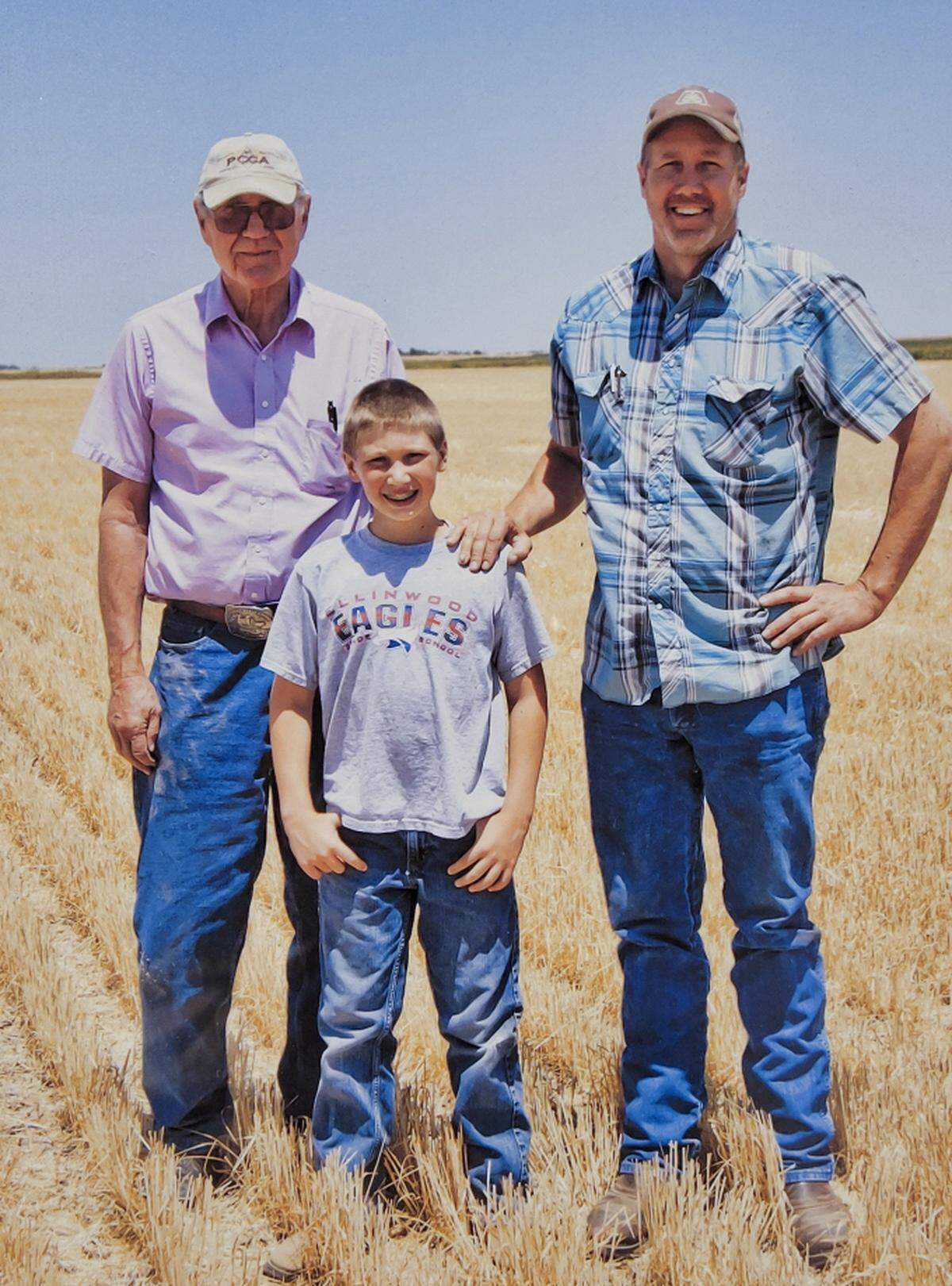
Tricia sent me an old photo. It sheds light on that friendship. In it, the boy James, roughly 8 or 9 by that day, stands in a freshly cut golden wheat field. James is flanked by Jack and Joe Schlessiger. All three smile at the photographer on a bright summer day.
The photographer was Doc Witt.
In 2019, Doc showed up at the Schlessiger farmyard carrying a shotgun, a Witt family heirloom. He handed it to James. In Kansas hunting culture, this struck a deep chord.
Doc gets upset while telling this anecdote because it doesn’t have a tidy ending.
Sometime after Doc gave the shotgun to James, members of Doc’s family said they wanted that family heirloom back.
“I couldn’t say no to my own kin.” Doc, mortified, called Jack and got the gun back from James.
But what matters to the Schlessigers is what Doc did before the take-back. “What matters was Doc’s intent,” Tricia said.
It helps explain why Joe and Tricia don’t get mad when Doc calls farmers names, or when he implies that Tricia is boosting landowner chances while endangering the Bottoms.
“He came to us that day,” Joe said.
“He had that shotgun.
“He gave it to James.
“And he said: ‘I don’t have a son anymore.
“‘But you are my son.’”
This story was originally published September 15, 2024 at 5:32 AM.