
After fire scorched Paradise, Kansas ranchers are rebuilding fences and livelihoods
The bright green grass sprouting up is a welcome sight amid swaths of burned earth.
It means, ranchers hope, an end to loose dirt flying in the wind. It means that cattle once again will be able to graze on the land, which was charred in a fast-moving wildfire in December.
It’s a fresh start for the land in north-central Kansas and for ranching families who lost cattle and fences, their homes and their livelihood.
“Just gotta hang in there and rebuild,” said one of those ranchers, Brett Thompson. “It’s the only thing I know you can do.”
Some of them, like Thompson, just escaped with their lives.
‘Like midnight’ in the afternoon
It started Dec. 15 with the wind, which measured 100 mph at the airport in Russell, around 20 miles from the small ranching community of Paradise in Russell County.
Those winds propelled fires and embers across bone-dry western Kansas. The largest by far, and one of the biggest in state history, was the Four County Fire, which burned more than 121,000 acres in Ellis, Osborne, Rooks and Russell counties. One person died in Ellis County.
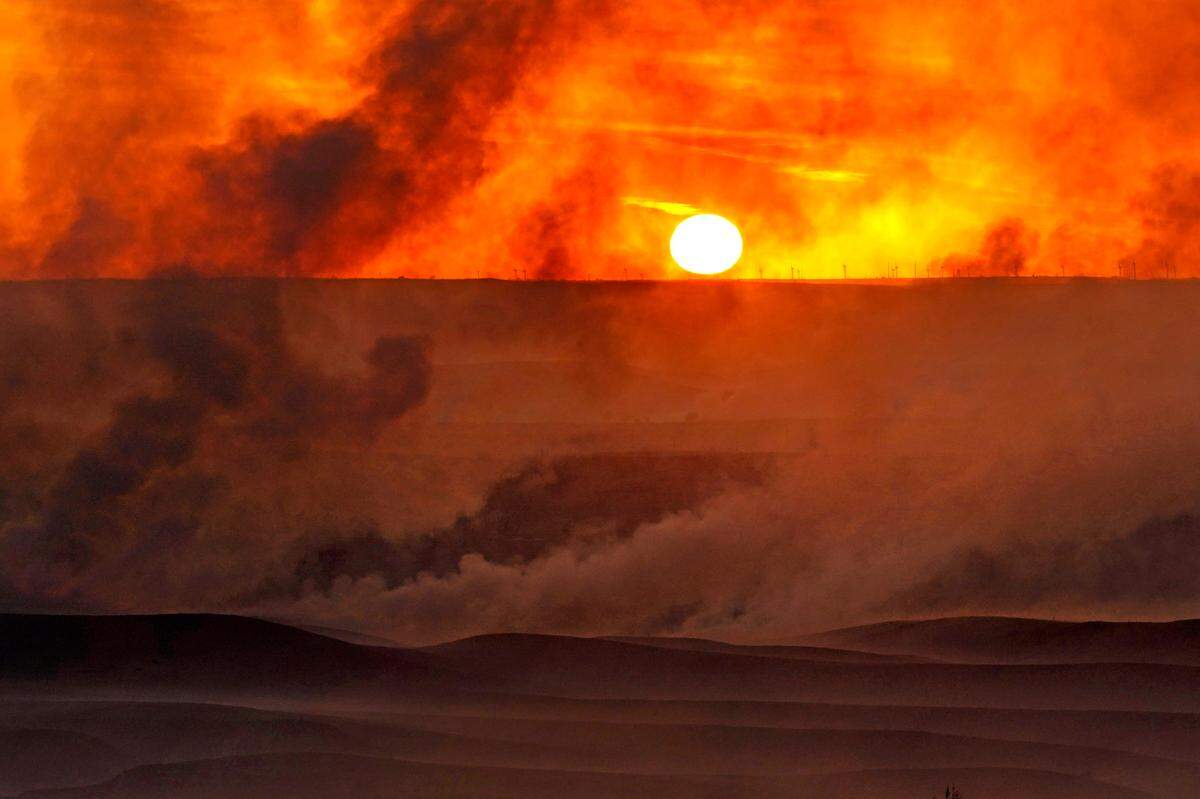
Thompson was in Paradise, near his home on the edge of town, as the storm pushed across the state. He wanted to check on his cattle, several miles from town, and open a gate so they could move around and increase their chance of survival. He never made it to the gate.
“It’s a wonder I got out of there alive,” the 58-year-old said.
The smoke, flying gravel and dirt reduced visibility.
“It was like midnight on the darkest of nights with no stars or moon or anything,” said Chris Pelton, another rancher. “Just pitch black and this was at 4 o’clock in the afternoon.”
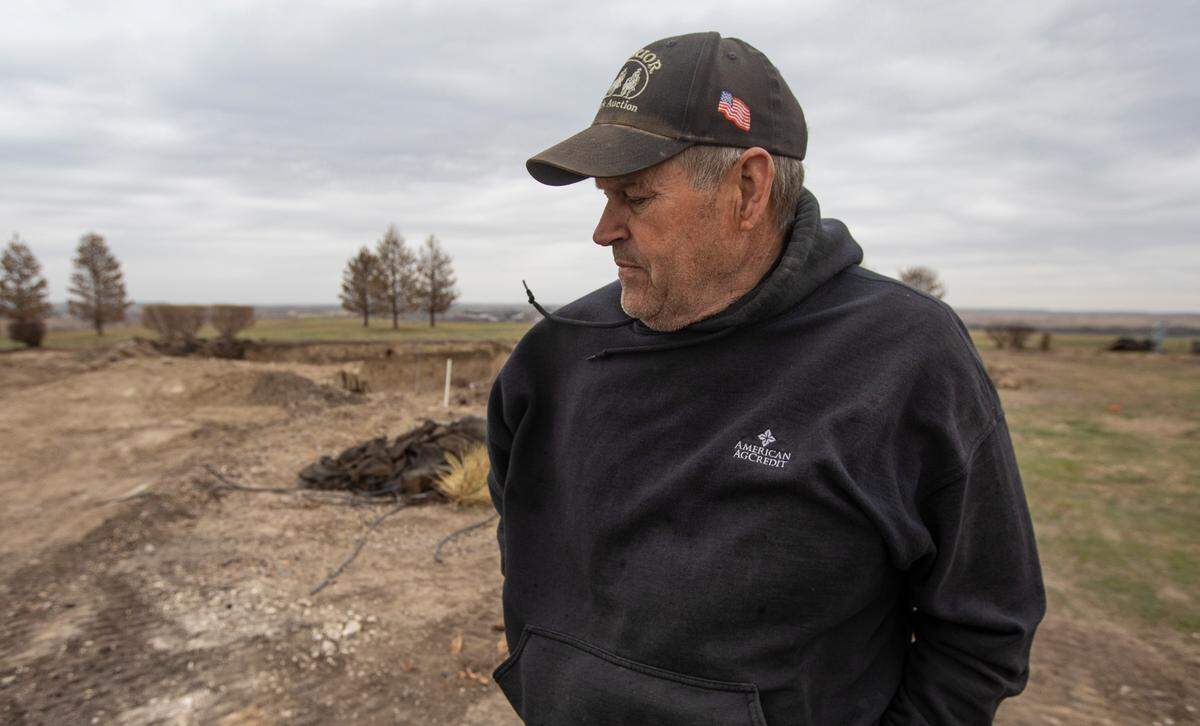
As Thompson drove, the wind shifts caused his surroundings to go from light to dark. Soon, the flames closed in on him.
Visibility was low, but he managed to make it to an area where hay had been cut before crashing into a ditch. He figured that area, which had less fuel for the flames, would be his best chance to survive.
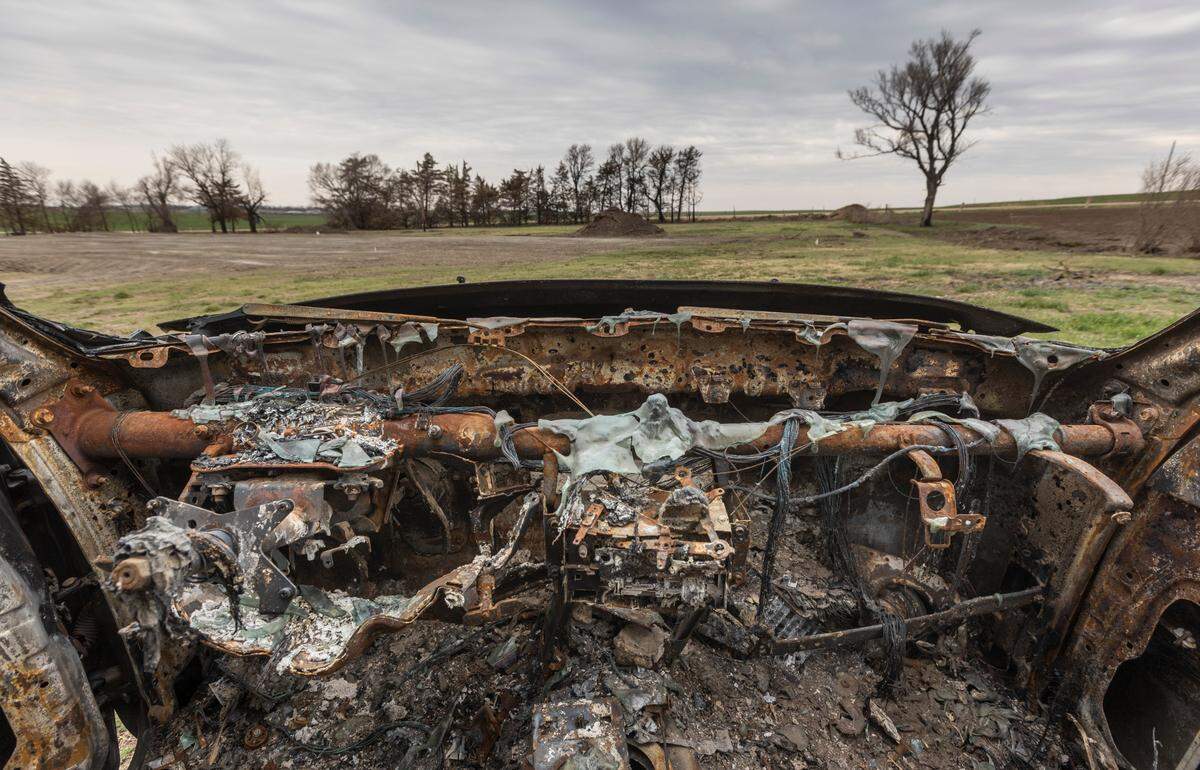
He prayed as he felt the heat and saw the flames pass over the truck. Debris knocked out the back window, but the speed of the passing fire left the rest of the truck intact.
In a panic, Thompson left his truck and laid down in the ditch.
Embers kept catching his clothes on fire, leaving him with small burns all over his body. He called his daughter, who alerted firefighters. A rural fire crew saved him.
“It was like I was getting sandblasted there,” he said. “It was pure hell.”
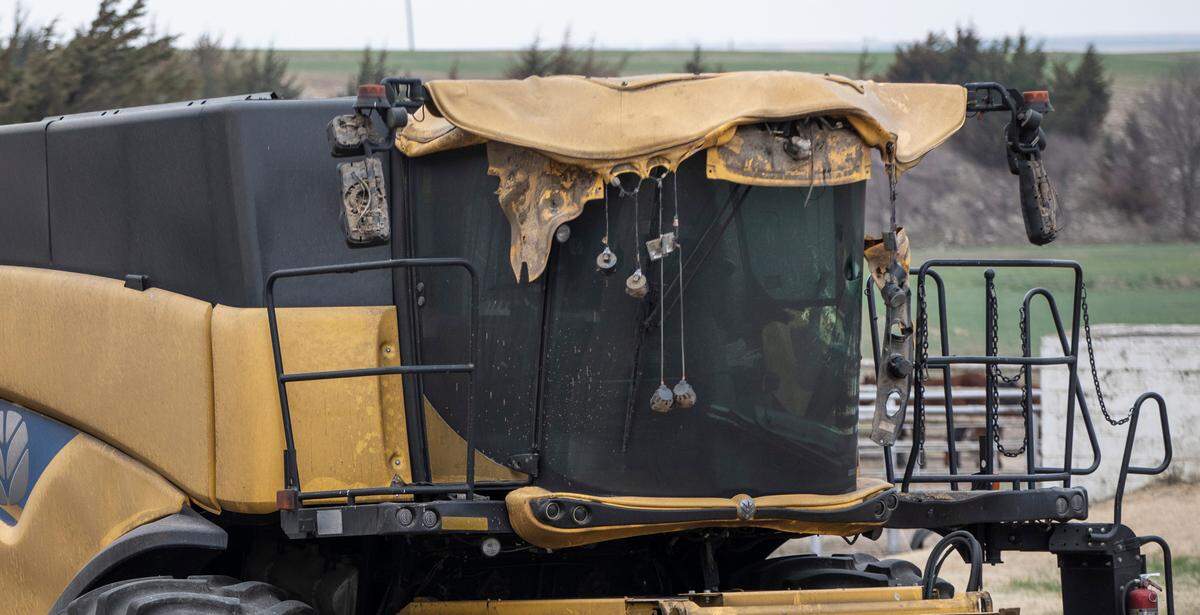
Quentin Maupin, the rural volunteer fire chief, was driving in a 30,000-pound pumper truck when a truck ahead of him turned around and whipped past him. Then he saw flames. He was trapped.
Flames engulfed the truck and the interior grew hotter.
“It was a pretty spooky two or three minutes,” the husband and father of two boys said. “Things were poppin and crackin. For a minute or two, I thought this was it.”
But it wasn’t the end. The $600,000 vehicle was totaled, with burned brake lines and melted lights. He was able to make it back to town, though it took 15 minutes to go a mile because the brakes kept locking up.
He would later learn his parents’ home burned. Their family ranch lost more than half of their 600 cattle.
Thompson lost about 200 cattle, roughly half his herd. He also lost his home – the only one in Paradise to burn, he said, after embers were sucked into the attic. A playground out back and a limestone “Thompson” sign just feet from the home survived.
Thompson couldn’t see for about a week because of the gravel and dirt that blasted into his eyes. He spent time in Ascension Via Christi’s burn unit in Wichita.
‘Like a black desert’
Gene Angel was in Minnesota when the fire happened.
The 73-year-old arrived home two days later on a small plane flown by his son. They were able to see the fire’s aftermath while flying into the Russell airport.
“It looked like a desert,” the longtime accountant said. “It looked like a black … desert in all the lush green hills.”
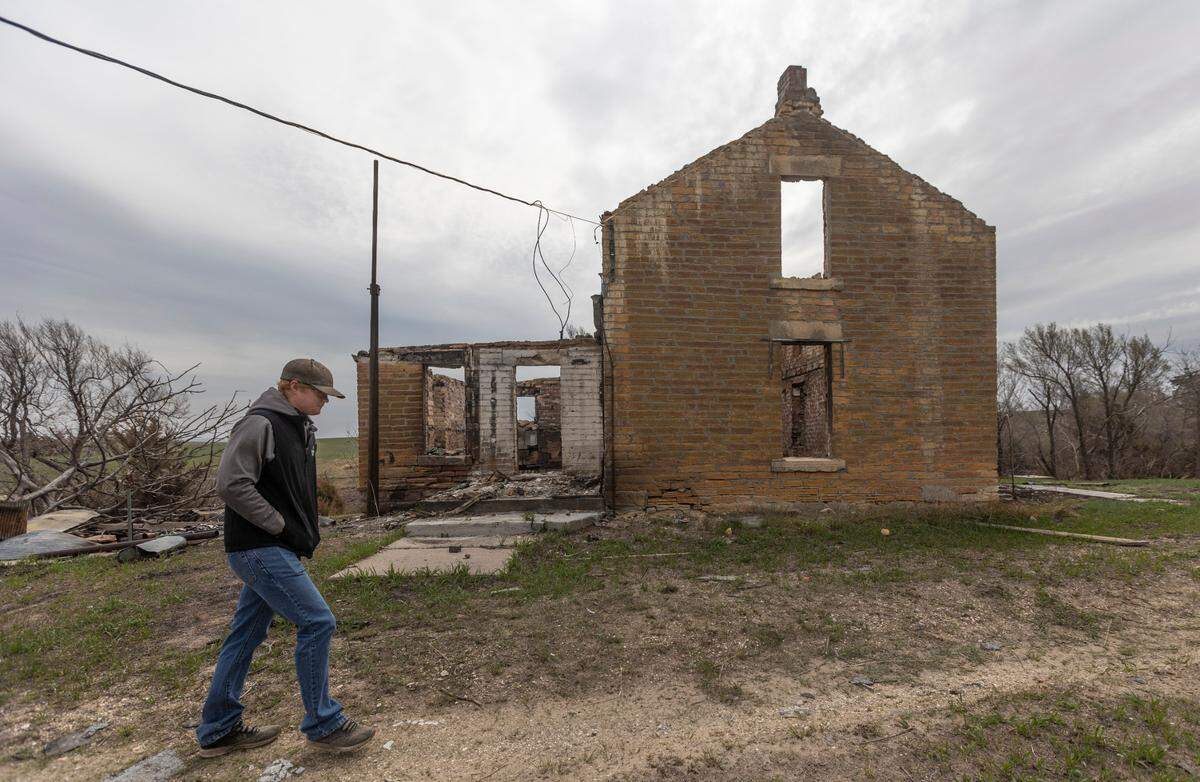
The original 1906 home on the property, built by his great grandfather, burned in the fire. Angel can’t mention the house without talking about its beauty: the scrollwork and picturesque stairwell inside, 200-year-old oak trees outside.
“It was like a masterpiece,” he said. “It was really so neat in how they did it.”
His stepson had been renovating the home after flooding from a nearby creek.
Thanks to the efforts of a neighbor, Angel’s home, horses, 19 heifers and bull survived on the only small sliver of their 2,100 acres that didn’t burn. Angel said his neighbor, Kirk Koelling, quickly disced around that area, thwarting the flames.
The surviving cattle will be the “seed crop, I guess you’d say” to regrow their cattle operation, Angel said.
Angel and his wife, Lynn, had raised their cattle from birth and named some after their grandmothers. The cows would follow them in to feed or into a new field.
There was Anna, Josephine (Jose for short), Ula and Ada.
Jose died in the fire, along with many other cattle. The Angels lost roughly 160 cows and calves and a few bulls.
Truckloads of help
The Angels didn’t have to clean up alone.
When they arrived home, neighbors John Clark, Darren Rubottom and Nathan Smith had already brought over farm equipment and had been putting down wounded cattle that wouldn’t survive and burying them with the others that died in the fire.
Semis of hay and water and other farming equipment arrived to the area soon after that, brought by volunteers.
No one has tallied those supplies or the volunteer efforts to help ranchers, farmers and others affected by the fire.
Donations and state and federal funding, where figures are available, topped $14 million. It won’t cover all that was lost.
About 2,000 people from 41 states gave $2 million that funneled through the Kansas Livestock Association to 94 families who applied for assistance. Those families lost around 2,100 cattle and 750 miles of fence.
“... I think if you are in the ag industry you see it as a family,” said KLA vice president of communications Scarlett Hagins. “And when something like this happens, whether it’s in your state or not, people reach out and try to help each other.”
The federal Farm Service Agency will pay out $10.2 million for fencing, $1.58 million for cattle and $580,000 for feed to victims of the Four County Fire. More than 70% of that aid will go to Russell County.
The dollars for fencing and the cattle dollars won’t fully cover the loss. It’s meant to keep the ranchers in business, said Dennis McKinney, state executive director for the agency.
“It’s not good for our communities and it’s not good for agriculture” to lose ranchers, he said.
‘A fresh start’
Grady Dickerson is a sixth-generation rancher. The 23-year-old was away at Fort Hays State University, finishing up work to become a high school science teacher, when the fire hit. He put his last semester on hold to help around the ranch.
His family lost two homes, a show barn, farming equipment and about 200 of their 900 cattle.
The day after the fire, cowboys and veterinarians were at Bar S Ranch helping them take care of the dead and wounded cattle and round up the remaining scattered cows.
The fire rolled by the ranch headquarters, just missing an office that is filled with 4-H banners acquired over the years and a neighboring pen that was filled with cattle. Some of those cattle had minor problems because of the smoke. The fire took the original homestead, built around 1900, just a couple hundred feet from the pen.
Now a massive stack of hay sits beside the headquarters.
Dickerson said the hay will be enough to get them through the year. That’s important, since there won’t be enough greenery for cattle to graze on.
The Dickersons have about 25 percent of their surviving cattle on the ranch. The rest were sent to Nebraska and Greenwood County while they waited for the grass to come back.
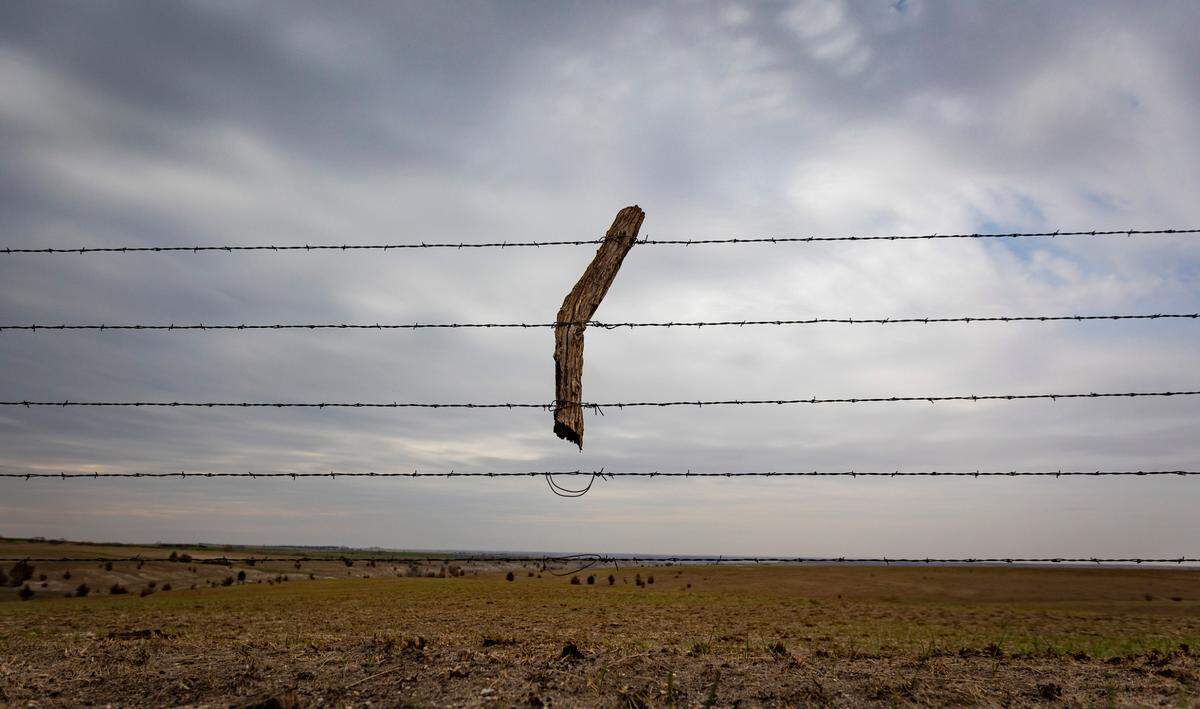
They plan to start slowly bringing their cattle back, but they can’t let them graze as hard as past years.
Kansas State University’s agricultural research center in Ellis County lost roughly 40 cattle and three-fourths of its land in the fire. KSU range scientist Keith Harmoney estimates the land will support half as much this year as it does in normal years, 75 percent next year and be back to full capacity the year after that.
The fire has reset the area, to a time when Native Americans would burn the land to attract game to the new grass.
Some of the area affected by the Four County Fire would have once burned years apart, not decades like this time around. Some areas hadn’t burned in more than 50 years, Harmoney said. The fire helped burn off invasive cedar trees, which soak up large amounts of water and increase a fire’s threat: The sap that heats up launches burning embers.
“Some of these rangelands did need to have a fire on the landscape to basically reset the system,” he said. “To get rid of trees, to get rid of old growth of the vegetation and basically to almost give it a fresh start.”
‘It’s getting kind of pretty again’
The big headache now is replacing the fencing, Dickerson said.
The FSA dollars allow ranchers to replace the 100-year-old limestone fencing posts with steel posts. The steel is much more resilient to heat.
The locally hewn posts are beautiful, but a pain to fence around and prone to erosion. The limestone can also explode under extreme heat. The porous rock traps water that turns to an exploding gas under extreme heat.
The Dickersons have been stacking up mounds of the limestone posts in fields, with the green grass starting to flourish around them.
The ranchers are planning how they will replace their homes as well.
Dickerson said his parents are adding a fire-resistant tornado shelter to the home they are rebuilding. Thompson and Pelton said they both plan to add metal roofs, which are less flammable.
Pelton is going to rebuild smaller now that his children are grown. He is also considering a sprinkler system, though he’s unsure whether a fire like that is possible again.
“That’s a once in a, I say 100 years,” he said, adding that in the 16 years since he built the house he’s seen other once-in-a-century events: a tornado at the corner of the property and six feet of snow in a week. “Then again, it’s Kansas.”
Pelton watched his home with a scenic view on top of a hill in the country burn after he evacuated and looked back from the town of Paradise. His barn and shop also burned, along with 120 cattle. About 200, including his premiere group of about 90 Black Angus, survived.
All 2,200 acres the Peltons own around their home burned.
From a distance, an Eagle photographer thought the trees and shrubbery that surrounds where the Pelton home used to be was a cemetery. At the top of the long, steep driveway is the landscaping, a ceramic decoration with the letter “P” made from salvaged tile, a basketball hoop laying on the ground with a charred net and a hole in the ground where their home once stood.
Pelton’s shop and barn, which he has combined, are close to being finished. But when the home will be built is hard to predict. Builders are supposed to start in June and be done in eight months, but there are no certainties with the current supply chain issues, Susan Pelton said.
The Dickersons have already done the dirt work for their parents’ home, but will also be captive to supply chain issues.
Maupin’s parents should have the shortest turnaround. Their new basement has been poured; the old had to be torn out because of fire damage. They’ve purchased a premade house made in Inman and are awaiting delivery. They could be in their finished home this month or next.
Angel’s stepson is still trying to decide what to do after losing the 1906 home along with all the money he had poured into renovating it after a May 2021 flood.
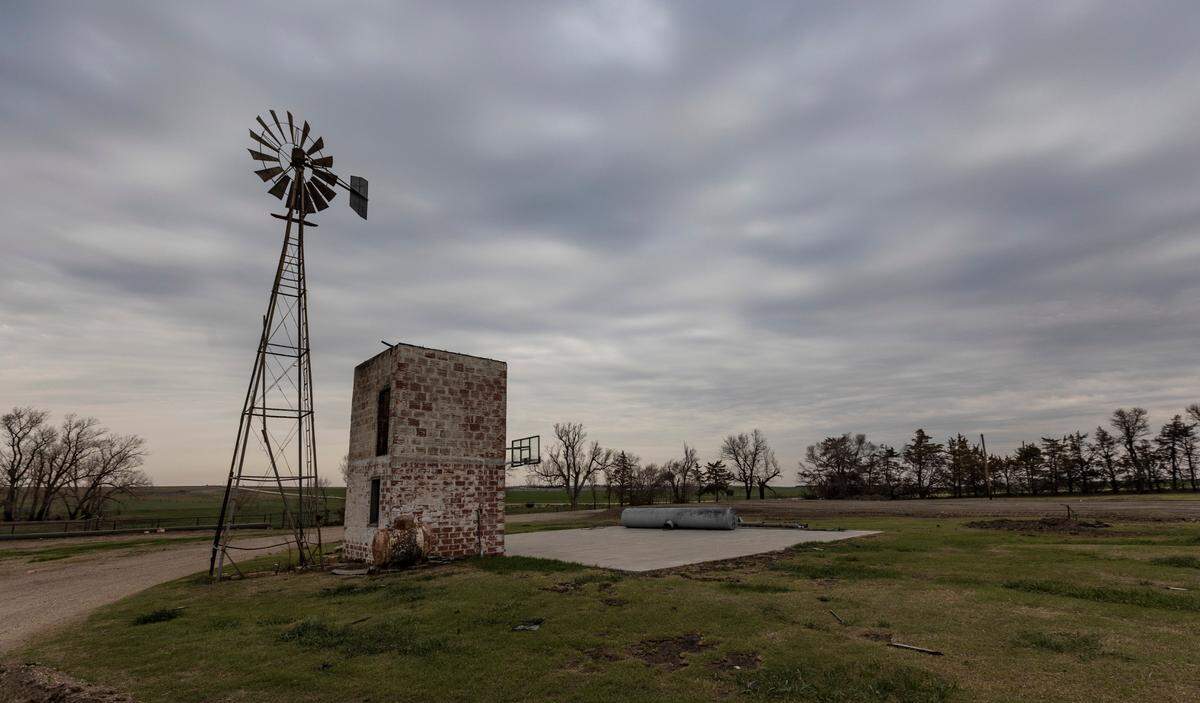
Somehow, the chickens in a coup less than 100 feet from the home survived. The coup was rebuilt on stilts after a flood in the late 1800s. The Angels now call them their “God bless chickens.”
The longstanding oak trees around the house all burned, but the 200-year-old ones by the creek survived.
After some rain, the green grass is starting to flourish around where the home once was.
“It’s getting kind of pretty again,” he said.
This story was originally published June 2, 2022 at 5:00 AM.