
How to save and restore Kansas’ prairie, acre by acre
Lorna Harder moves carefully through the dewy prairie grass in her Kansas backyard, avoiding the flowering plants. It’s early in the morning, and the land is bathed in blue light. On either side of her, tall, thin strands of big bluestem, a grass species native to the Great Plains, arch more than a foot above her head.
“This is why we are here,” she says, holding a stem. Beneath the ground, the roots of the big bluestem will stretch nearly 12 feet deep, leaving deposits that enrich the soil and anchor it against the strong Kansas winds. “This is what made our soils strong enough that we could live here.”
Grasslands can seem barren and uninhabited. But the low, constant choir of insects and the occasional solo of a songbird confirm what Harder already knows: This land teems with life. It’s hard to understand that by looking out the window of a speeding car or from the seat of a plane. Prairies must be experienced up close.
The health of the prairie is vital. It maintains the state’s watersheds and supports two major agricultural exports: beef and the wheat that becomes the nation’s bread. Prairie grasses fatten the nation’s cattle each year, and thousands of years of deposits have provided rich soil for the wheat.
Once North America’s largest ecosystem, the prairie now is rapidly shrinking: Less than 4% of the tallgrass prairie remains, according to the National Park Service, with most of it in Kansas, a state with very little public land.
That means conserving the prairie is up to private landowners like Harder, along with farmers and ranchers. Harder and her husband, Bob, have made conservation their life’s mission, spending the past 30 years cutting trees, burning the land and spreading native seed across their property to transform 40 of their more than 100 acres in south-central Kansas into a native prairie preserve.
Biology students visit their property to learn about prairie flora, and the local arboretum, Dyck Arboretum of the Plains, depended on Harder’s donated native seed when it transformed 12 of its acres into a prairie ecosystem.
“Few if any prairie plantings in the state have been fully restored using local ecotype seed,” says Brad Guhr, head of prairie restoration and education at the arboretum.
Harder regularly volunteers at the arboretum, after retiring in 2014 from 25 years of teaching environmental science and biology at nearby Hesston College. In front of the 12-acre prairie addition at the arboretum, a piece of fired ceramic clay hangs with a quote from her: “When I first started seeing the prairie, it was like seeing a crowd of strangers,” the inscription reads. “But now I know a few faces in the crowd, and it has changed my whole experience and perception of the prairie.”
Before Harder and her husband bought their 100 acres, they rented their home and a couple of acres of the property. The rest was leased to a local farmer.
“We watched the land those eight years before we bought the farm and we weren’t able to do anything,” Harder says. “It was overstocked with cattle. There was no tree removal. It was grazed down to the nub.”
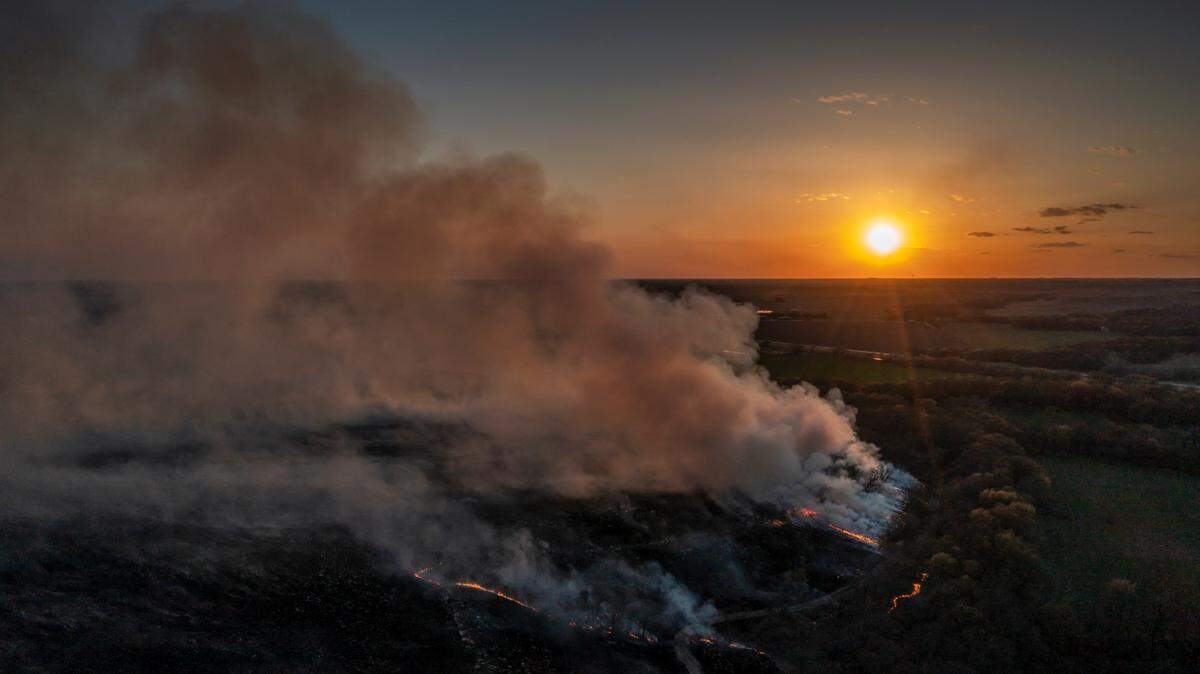
Once they bought the entire acreage, they began building up the prairie. It was a time-consuming process: They cut trees and other nonnative plants from the never-cultivated ground and used fire to clear spaces so that sunlight could reach the native plants that remained. With the open space and adequate sunlight that a prairie demands, the plants grew from there.
Conservation on private lands
Private conservation efforts like Harder’s are key, says Drew Bennett, a professor at the University of Wyoming who researches how conservation, private land ownership and agriculture can work together. The division of conservation and private lands creates “artificial silos,” says Bennett. “You can’t have conservation in Kansas without private lands.”
Politics has often interfered in conservation issues, but Bennett sees that changing.
“It wasn’t so long ago that if I brought up climate change to a rancher, I’d be run off the property,” he says. “Now I hear about climate change from a number of landowners who are on the conservative side. They see it. They recognize the issue and they’re working for solutions.”
Researchers at Kansas State University realized 25 years ago that if conservation was going to happen in their state, it would be at the hands of rural landowners. Through research funded by state and federal agencies, they began teaching farmers and ranchers how to practice conservation.
Stewardship has ballooned in the hands of Kansas landowners and farmers. For Daniel Devlin, director of KSU’s Kansas Center for Agricultural Research and Environment, it’s been amazing.
“If you look at just some of these individual landowners, they may have never made any profit out of those practices,” Devlin says. “It was really about the next generation. It’s about protecting the land resource.”
But it’s a large burden for landowners to protect the prairie.
Does the government have a role?
Some think it’s past time for the government to step in as a conservation leader, even if it’s an unpopular decision.
“It’s scary when just about anything can happen on private land,” says Jason Schmidt, owner of Grazing Plains Farm, a small dairy and cheese creamery in south-central Kansas. He’s a board member of the Kansas Farmers Union and one of the growing number of conservation-minded Kansas farmers and ranchers. He’s also a former student of Harder’s environmental science class at Hesston College. “There needs to be coalitions built between private landowners and federal agencies.”
But investing in conservation lands comes with a price. When farmers and ranchers already operate on small margins, without federal and state incentives, some landowners can’t afford to take on the projects, even if they’d like to.
“Farmers have not been paid to be great environmental stewards. That’s been left out of commodity food production,” Schmidt says.
As a state, Kansas has had a long tradition of rejecting federal intervention in conservation. In fact, the only national park in Kansas and the largest swath of tallgrass prairie is privately owned by The Nature Conservancy and only jointly operated by the National Park Service.
There has been talk of federal involvement in the Tallgrass Prairie since the 1930s, but the land was already overwhelmingly privately owned, says Tony Capizzo, Flint Hills initiative manager for The Nature Conservancy.
“There was concern about the ability of the federal government to come into a place it hadn’t had a footprint in and didn’t necessarily know to be an effective land manager and a good neighbor,” Capizzo says.
Weighing the future — and the past
But as the debate rages on, the prairie shrinks.
As she works to breathe new life into the prairie, Harder fears she’s running out of time and is determined to pass on her knowledge. Each year, she opens her property to Hesston students, who use it as a living lab to understand the importance and appreciate the diversity of the prairie.
Their professor, Marelby Mosquera, took Harder’s environmental science class 18 years ago. Now, she teaches the same classes Harder taught.
“You don’t need to be a conservation expert,” Mosquera says. “You don’t need to have millions of dollars. But you need to have the desire to learn about what is around you and what your role is in conserving what is around you.”
“We think of land in terms of possession, as if it is ours to do with as we please, instead of thinking of it as if it’s ours to steward for the future,” Harder says. Yet her mission is not just to conserve the prairie for future generations but also to honor the generations before her.
Less than 150 years ago, the Kanza people of the Kaw Nation — who are not recognized as an official tribe by the state named after them — lived here and cared for the land. In 2019, a local retired Mennonite pastor paid reparations to the Kanza Heritage Society. Harder now plans to do the same, leaving reparations in her will to help the Kanza Heritage Society preserve historic sites in Kansas.
The Nation has purchased nearly 150 acres so far.
“We preserve so that we don’t become invisible,” says Pauline Sharp, secretary and treasurer of the Kanza Heritage Society. “So that people are aware of our culture and our story and how it relates to Kansas history.”
All of this gives Harder a greater sense of responsibility to care for the land.
“It’s one way we can honor them,” she says. “We destroyed the land. Caring for it is a form of reparations.”
This story was originally published December 2, 2021 at 5:00 AM.