How NASA is using a robot airplane in Kansas to study climate change
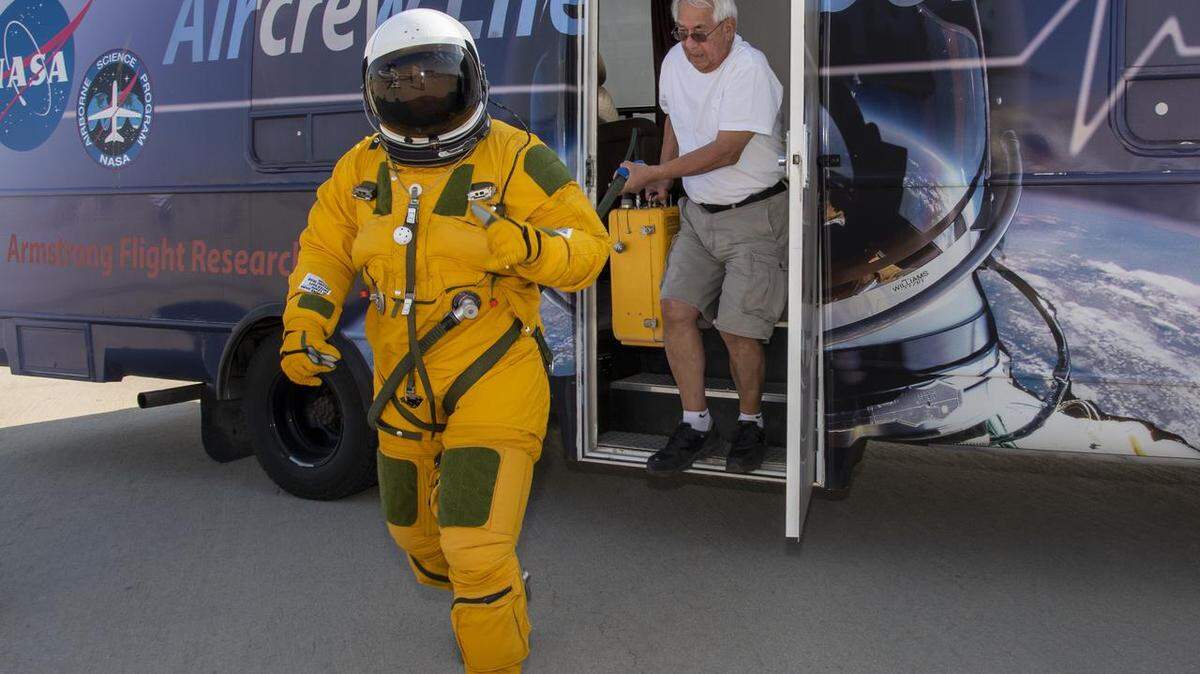
During this summer and next, Salina will be home to an airplane outfitted with robotic instruments and a team of 50 scientists and researchers studying how thunderstorms contribute to climate change.
“These severe storms are becoming more frequent as the climate is changing,” said David Wilmouth, Harvard University scientist and one of the researchers. “It’s hard to say that any particular weather event is directly related to climate change, but the expectation is certainly that these severe thunderstorms will simply progress as a result of the (activity) in the stratosphere, which will become more significant as climate continues to change.”
The team will use NASA’s ER-2 aircraft, which will carry 12 robotic scientific instruments up to 45,000 and 70,000 feet high for 5-8 hours, collecting data and air samples.
“Our climate is changing and it is quite easy for us to make measurements at ground level,” said Dan Cziczo, professor and department head of Earth and atmospheric sciences at Purdue. “We also have satellites taking measurements from above. What the ER-2 is able to do is give us these amazing profiles of the atmosphere, especially at altitudes that are not commonly kept by other aircraft.”
Part of NASA’s Earth Science division, the project will study how thunderstorm systems interact with the ozone layer and inject water vapor into the stratosphere, the layer of the atmosphere above the troposphere where humans live. Water vapor is the largest greenhouse gas.
“Over the last decade, we’ve learned that these overshooting storms are more common than we previously thought,” said Kenneth Bowman, principal investigator for this mission and professor at Texas A&M University. “By far the greatest collection of these storms are right in the center of the U.S., in the plains and Salina is close to the middle of that.”
The team will also be looking for particle matter, to study how their size and how they interact with the climate.
“In the last few weeks, we learned about the wildfires burning in the West, Pacific Northwest and Canada that had a huge impact on air quality and human health,” Cziczo said. “People with cardiopulmonary health issues had negative impacts because of the particulate matter, because especially when it’s in high concentrations, it causes a lot of premature deaths around the world.”
The team has already completed four flights and will continue flying through late August. They’ll return March 2022 and finish the project at the end of June.
“Unless we understand the chemistry of these small particles, we won’t understand what’s happening to our atmosphere,” Cziczo added.
This story was originally published July 30, 2021 at 4:09 AM.