Kansas firefighters rally to help fire crews fighting climate change-charged wildfires
It was 2017, and the Peekaboo fire, then one of the largest wildfires in Colorado, was blazing out of control. Bryce Haverkamp, a Kansas Forest Service management officer for the northeast part of the state, was sent to aid in controlling the fire.
They were five hours into a tricky burn and were burning patches so the wildfire wouldn’t have any fuel to move forward. Haverkamp remembers thinking, “Hey, this is a piece of cake.”
Then, the smoke column collapsed.
“We built so much smoke and soot up in the air that it couldn’t hold on the vertical anymore and it came crashing down,” Haverkamp said.
As the column crashed down, it started more fires. As they were trying to stop those fires from spreading, Haverkamp remembers looking over to see a wall of fire.
“We had to drop line and bail. It melted some stuff on the truck,” Haverkamp said. “We went from complacency, where we were relaxed, like, ‘Hey we got this,’ and the next thing you know, we’re running for our lives and helicopters are dumping buckets of water right next to us, trying to make sure we don’t get burned up.”
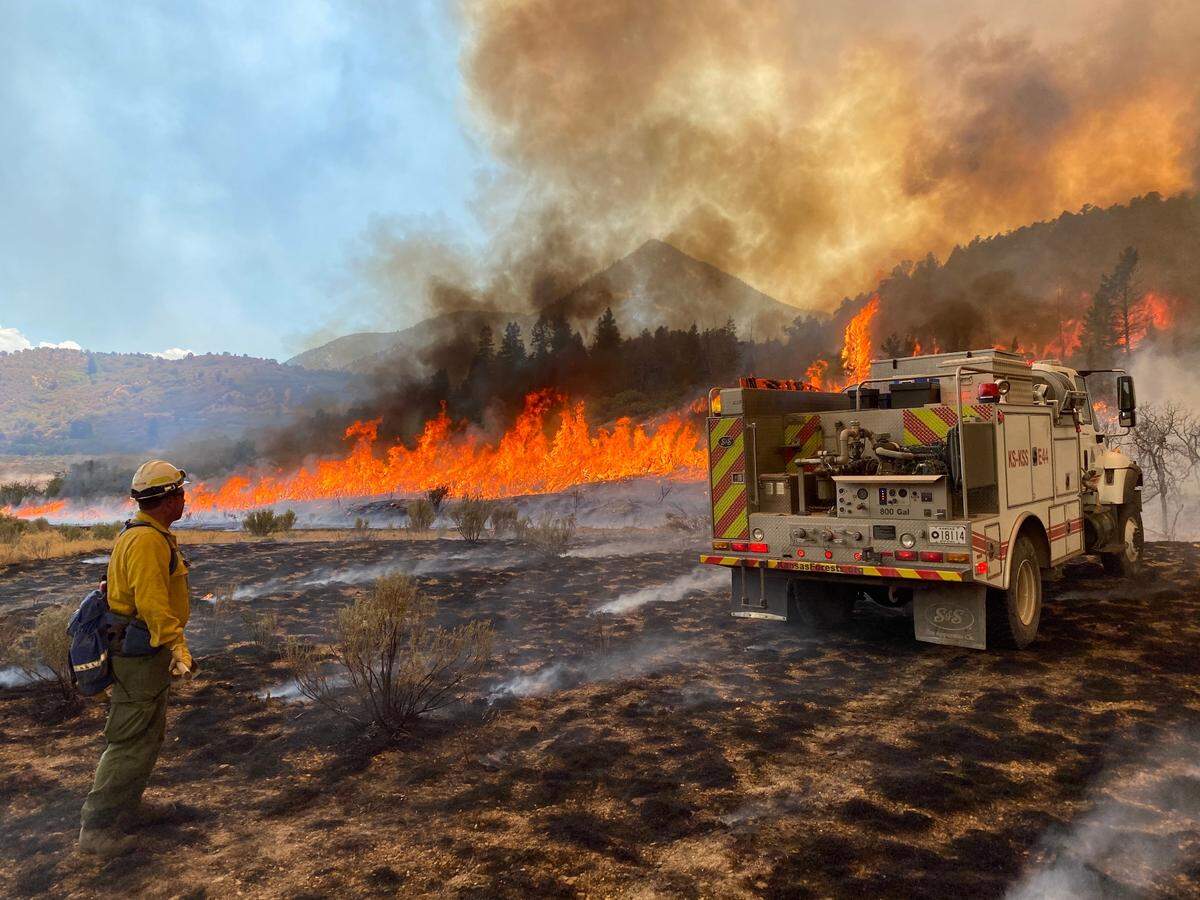
Haverkamp is part of a group of Kansas firefighters who not only risk their lives fighting fires in the state but have signed up to fight fires in other parts of the country.
Record smashing extreme heat spurred by climate change has elevated wildfire risk throughout the West, as the region is simultaneously experiencing extreme drought and the nation is wrapped in smoke. These extreme conditions are likely caused by unusual, natural weather patterns that have grown extreme under man-made climate change.
Sending Kansans out west
Kansas sent its first firefighter to assist another state in the early 2000s. Now, they have nearly 45 Kansas Forest Service fire protection specialists who are called out each year.
“Our wildfire season isn’t in the summer, which is what allows us to go out of the state,” Haverkamp said, adding that each firefighter has an obligation to their home state first before they can help anyone else.
Kansas’ central location makes the state a prime hub for firefighters being sent out across the country. The farthest Chris Hanson has seen a Kansas firefighter go was Alaska. Hanson is fire management officer in the Northwest District of the Kansas Forest Service.
“Individuals go available for whatever they’re qualified in,’” Hanson said. “It’s not uncommon to see firefighters from Maine go way out in the western part of the United States when resources run thin. That’s the whole purpose of this ordering system. They can see who all is available and can request them as needed.”
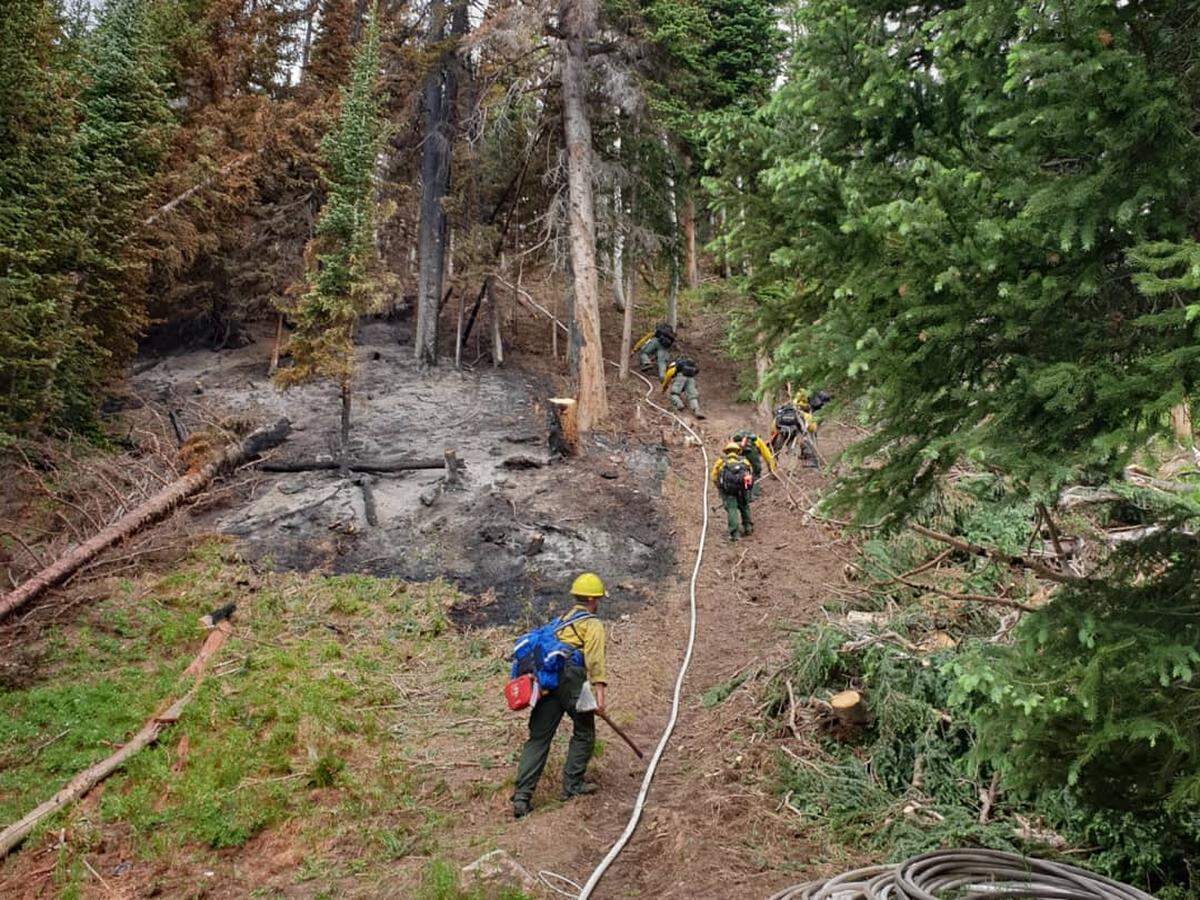
The standard tour is 14 days, which can get extended up to 21. After a tour, you have to take a mandatory two days off, and then you can go “back on the boards.”
For some, it’s a full-time job, and they’ll spend more than 100 days in other states during the summer. But once the firefighters arrive in base camp, they’re greeted by a mini-city full of other firefighters, medical, finance and operation personnel.
“Usually these fires are in remote locations so we build our own cities. We’ll take over a fairground or somebody’s pasture land and we’ll build a fire city,” Haverkamp said. “We’ll have showers, medicine trailers, caterers come in. We’ll have tools, equipment, water, Gatorade, machine parts, you name it.”
Climate change is increasing the need
Across the nation, 79 large fires have burned nearly 1.5 million acres across 13 states, as of July 22, according to the National Interagency Fire Center. With more than 27,700 people assigned to fighting fires, the U.S. has entered a Level 5 state of preparation, where most firefighting resources are committed due to the high number of fires.
“When you start getting into that PL4, PL5, that’s when firefighters and overhead from Maine and places you never think you’d get wildland firefighters from, start coming out, because they’re trying to grab what resources they can to manage these resources safely and efficiently,” Hanson said.
Currently, there are 15 Kansans and two engines fighting blazes in the Western states.. A Johnson County engine is fighting the Harris Fire in Montana, and Hutchinson firefighters are in Idaho fighting the Tumbledown Fire.
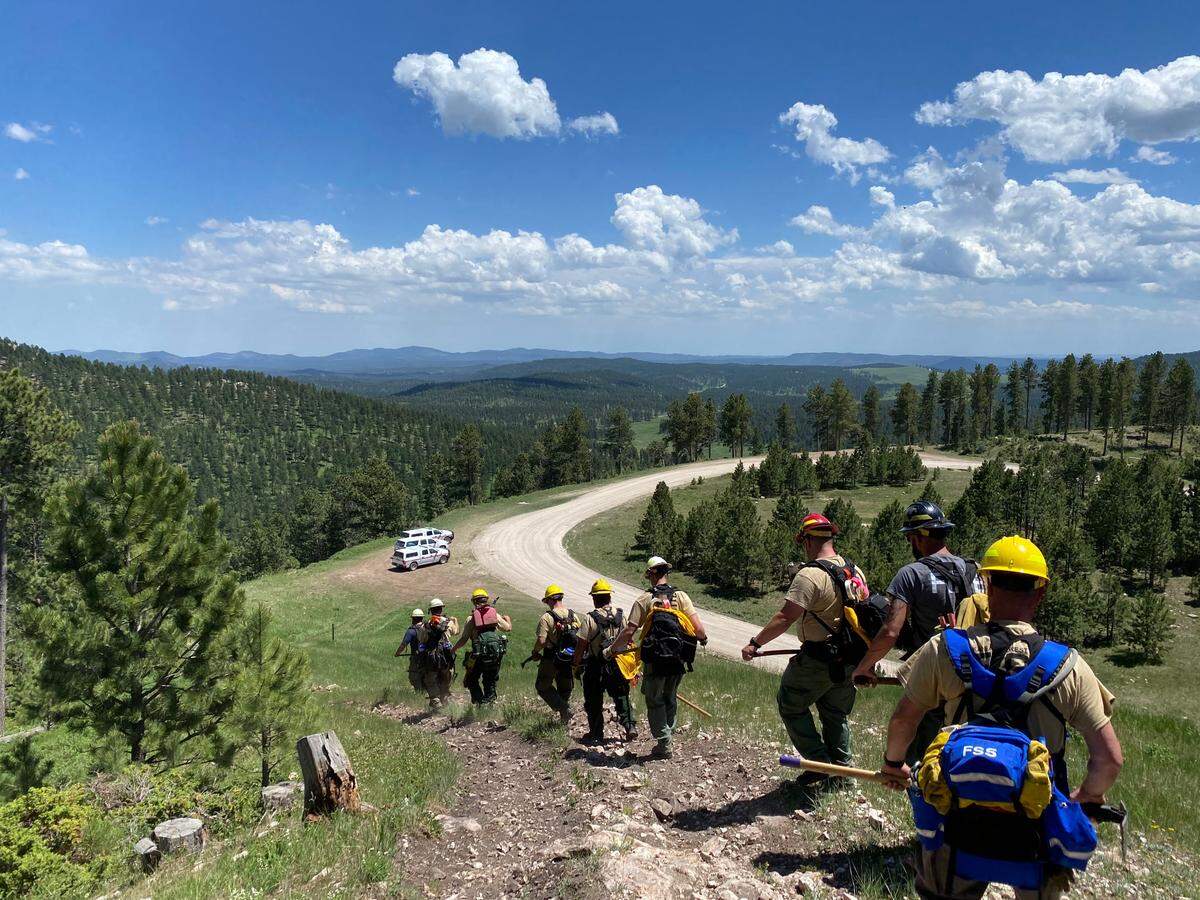
Operations continue to expand, and for the first time, the Kansas Forest Service sent a 10-person wildland fire suppression group to South Dakota last month to work in the Black Hills National Forest. Hanson led the group as they removed plants and practiced other preventative measures in anticipation of favorable wildfire conditions caused by above-average temperatures, high winds and low humidity.
“There’s a job for about anyone out there who’s willing to do the work. It’s not always glamorous,” Haverkamp said. “We’re usually sleeping on the ground, going weeks without showering, but it’s really rewarding work and it’s a lot of fun.”
Kansas wildfire season is changing
While Kansas can experience fires any time of the year, the Sunflower State usually experiences between 3,000 and 7,500 wildfires, most of them in the spring. However, once summer rolls around and the state starts experiencing its trademark high humidity, wildfires have difficulty spreading.
“I think most people, if you asked them how many wildfires we have in Kansas, they’d say two or three, not knowing that [we have] thousands of them a year,” said Mark Neely, Kansas Forest Service State fire management officer.
However, because of climate change’s effects on the weather, Kansas’ wildfire season is elongating.
“What we’re seeing now is that season has crept back on both sides of that time frame,” Neely said. “We can see stuff from January until May, and now we’ve started having a second season in the fall that usually occurs 10-15 days after the killing frost. Our seasons have just grown.”
Meanwhile, other states, especially in the West, start their fire season just as Kansas ends. The number of wildfires and the acres burned has increased exponentially over the past decade, coinciding with years with peak warmer temperatures caused by climate change.
“We send people, year-round, to fires,” Neely said. “During this summer season, when we don’t have the issues here, we can afford to send people wherever the fires are at the time, and assist other agencies in their goal to suppress wildfires. That has become a year-round job, nationwide.”
Bringing the lessons back to Kansas
Fire training requires hands-on experience, so once Kansas firefighters travel to other states and learn different techniques, they can return and train firefighters here.
“In Kansas, our large fires are a one- to two-day duration. It really helps us to work on that management side of fires and dealing with the stress of making quick, safe tactical decisions and looking at risk management,” Haverkamp said. “You can sit in training and go through scenarios all the time, but the real deal is completely different. You can’t simulate seeing real homes burn and learn to make good safe decisions on top of that.”
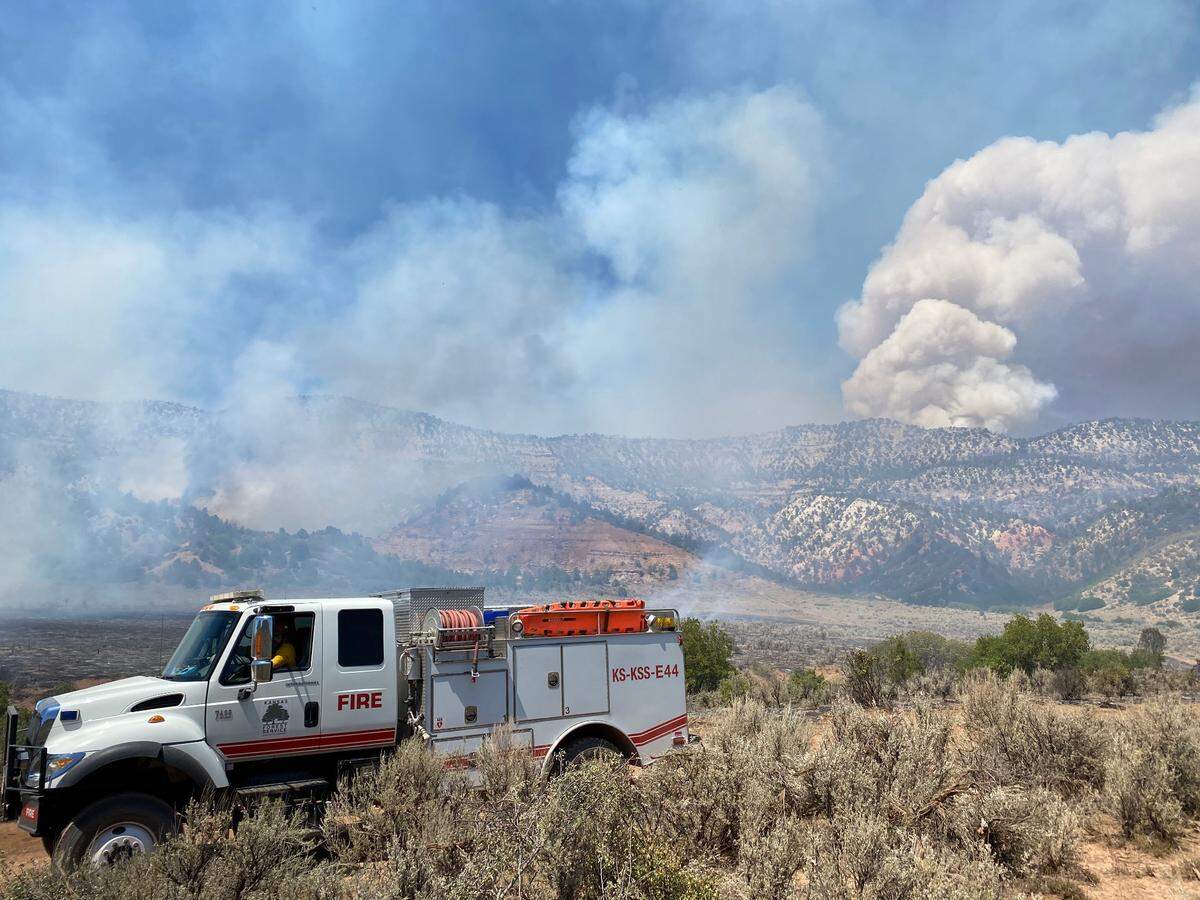
Austin Gilliam, a full-time firefighter with the Emporia Police Department, joined the Kansas Forest Service as a fire protection specialist in 2019. Since then, he’s fought fires in Colorado, Arizona, California and Montana.
A self-described outdoorsman, Gilliam jumped at the opportunity to learn more about firefighting techniques in different places.
“For me, to have the opportunity for somebody to send me out and play in the woods and the dirt for a couple weeks is an ideal situation for me,” Gilliam said. “It’s a very different skill set to be able to do those wildland fires, especially being from Kansas, we’re not really raised with that, so it’s something we have to go out of our way to be proficient in.”
But the lessons learned in other states can go beyond understanding fire management and fighting tactics, as Mark and Bailey Penner, a father and son firefighting duo, have learned.
Mark Penner, the father, has been the fire chief in Peabody, Kansas for 14 years and has been in the department for 17. When his son Bailey turned 18, he recruited him.
Now they both fight fires around the country.
“We’re used to being able to drive up to places with a truck and squirt water on it and put it out,” Mark Penner said. “You don’t just run right in the middle of the forest and try to put it out because you can get in trouble real quick.”
During their times in other states, the Penners learned different ways to fight fires, such as developing a plan, using hand tools, and hiking to remote places to deal with the fire.
“You develop a plan and you work at it and you’re always constantly checking the plan, every 15 to 30 minutes, to make sure it’s working. If it’s not, you need to fall back and regroup and change it,” Mark Penner said. “ Otherwise, you can get in trouble real quick if you don’t know what you’re doing. Whereas in Kansas, you jump in your truck and drive away from it. It’s different out there.”
Bailey Penner uses his firefighting paychecks to pay for college. He is pursuing a master’s degree in psychology at Emporia State to become a clinical psychologist and help firefighters with post traumatic stress disorder. Research has shown that more firefighters die by suicide than in the line of duty.
“A lot of firefighters, you’ve always been told to suck it up, and then they realized there’s a problem out there,” Mark Penner said. “They’re really trying to make an effort out there to get guys and girls to open up so they can be helped.”
This, along with observing firsthand how often volunteer firefighters see tragedy, made Bailey Penner realize that firefighters need help and that he wanted to serve the community as a psychologist.
“There’s an old unspoken rule with firefighters that you don’t talk to anybody who hasn’t been in your shoes before,” Bailey Penner said. “A lot of firefighters go unhelped because they believe, personally, that clinical psychologists wouldn’t understand what they’re going through because they haven’t been through it themselves.”
Bailey Penner hopes that his experience as a firefighter will make him more approachable as a counselor.
“I was hoping to take a different approach to that and come from an angle where I have seen those things, maybe not as much as the next guy, but I understand some of the emotions that goes into that process and some of the negativity that comes with the things that we see,” Bailey Penner said.
Kansas has a growing reputation
Between the state’s central location and firefighters’ availability during the summer months, the Kansas Forest Service has built a national reputation for its work on other states’ fires.
“When you get out and do a good job, word quickly spreads about your performance and people will want to call you more if they know you’re doing a good job,” said Bailey Penner. “Our agency has done a really good job of being professional, getting out there and working hard and it’s gotten us a lot of assignments over the last few years.”
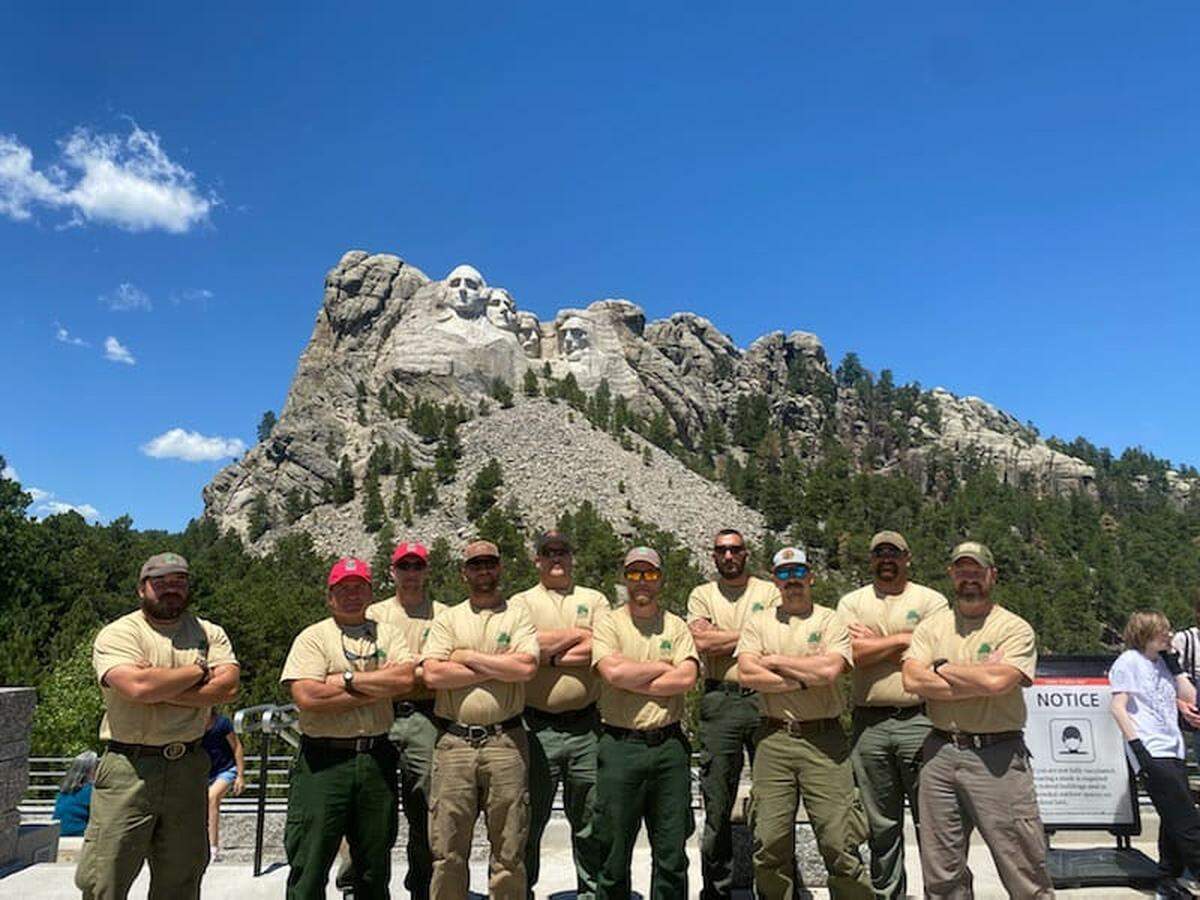
But, as one might imagine any interaction with a close-knit group of people from different states, the Kansas Forest Service workers are familiar with the pleasant ribbing that comes from situations of close camaraderie.
“We basically get three questions when we go out on a call,” said Bailey Penner. “Where are the trees in Kansas? Where’s Toto? And another question related to ‘The Wizard of Oz,’ as there are endless amounts of questions.”
Some people are even surprised that Kansas has a forest service, much less any forests.
“We’ve taken a lot of ribbing when we go out west. We went out to Wyoming and this guy said, ‘There’s more elevation on an IHOP pancake than the whole state of Kansas,’” Mark Penner said. “We showed that we’re a part of the team and it’s fun. It’s a good bunch of people.”