
Brief shutdown of Wolf Creek plant to fix sensor would be costly
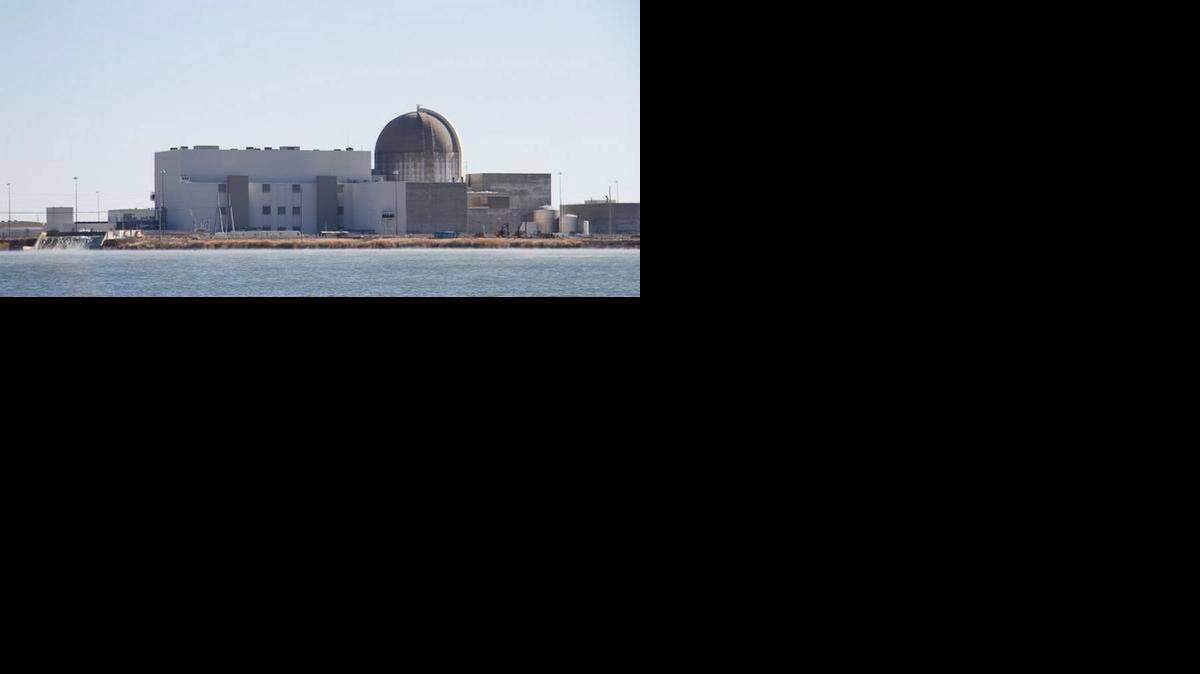
Hoping to prevent a costly shutdown of the Wolf Creek nuclear power plant, its operating company is asking government regulators for more time to fix a faulty sensor unit that provides an early warning of reactor coolant leaks.
If federal regulators don’t grant the request, it means Wolf Creek would have to be shut down for two to three days, which would likely cost Kansas utilities, and eventually their customers, more than $1 million.
The sensor unit, called an instrument tunnel sump level transmitter, began to fail on Aug. 31, providing false indications of a leak. After operators reset it five times in three days, it quit altogether on Sept. 3, according to a public notice filed by the federal Nuclear Regulatory Commission.
Wolf Creek’s operating permit gives plant operators 30 days to replace the faulty leak detector.
But the plant has to be shut down to do it, because the sump tunnel is directly underneath the reactor containment vessel and radiation levels are too high for workers to go in there, even in protective suits, when the reactor is running, said plant spokesman Terry Young.
The Wolf Creek Nuclear Operating Corp., which runs the plant near Burlington for three Kansas utilities, is asking the NRC to extend the deadline and allow the sensor to be replaced during a scheduled shutdown at the end of February.
The company takes the plant off line for four to eight weeks every 18 months to replace the uranium fuel rods that provide the power and make any repairs or modifications that are needed.
Young said plant operators are currently developing two plans for fixing the sensor, depending on how the NRC rules on its request.
He said it’s safe to run the reactor without the sump tunnel leak detector because of the redundancy built into the safety systems of all nuclear plants.
The sump is inside the reactor building, which is constantly monitored for temperature, radiation and atmospheric moisture. A leak in the coolant system would set off warnings on those sensors, he said.
‘Check engine light’
Mark Trump, associate director of operations at the Breazeale Nuclear Reactor at Pennsylvania State University, reviewed Wolf Creek’s documentation and said he didn’t see a problem with letting the plant run, as long as the other leak detection systems are operational.
Before Penn State, Trump worked in commercial nuclear plants for 25 years. He said he worked for one plant that is very similar to Wolf Creek that didn’t even have a sump tunnel level transmitter.
He likened it to the check engine light in a car – it can tell you something’s wrong, but not really what’s wrong.
The sump tunnel sensor might help operators locate a leak in the area under the reactor, but it wouldn’t change their overall response, he said.
Trump said all leaks have to be tracked down, but a certain amount of identified leakage, as much as a gallon a minute, is expected and acceptable under the rules governing plant safety.
The response to leaks largely depends on what’s leaking. A hole in a pipe or a welded joint needs a faster response because it will quickly get worse, while a leaky valve will generally degrade slowly, Trump said.
Shutdown costly
Shutting down the plant to repair the sump tunnel transmitter is an expensive proposition.
The plant is jointly owned by Westar Energy, Kansas City Power & Light and Kansas Electric Power Cooperative.
Westar and KCP&L each own 47 percent and are entitled to that percentage of the power Wolf Creek generates. The electric cooperative owns 6 percent and gets that much of the power.
When Wolf Creek is out of service, the utilities have to meet the demand for electricity by increasing power output – and fuel use – at their coal and gas-fired generating plants; or they have to buy power from other utilities.
Either option costs money.
Westar estimated that shutting down Wolf Creek increases its costs by about $280,000 a day, spokeswoman Gina Penzig said.
At the electric cooperative, the cost is about $35,000 a day, said company spokesman Phil Wages.
KCP&L would not provide an estimate. Assuming costs similar to the other utilities, shutting down Wolf Creek for two to three days would likely top $1 million overall.
In Kansas, the bulk of that cost would fall on consumers, said Niki Christopher, staff attorney for the Citizens’ Utility Ratepayer Board, the state agency that represents residential and small-business customers.
The additional cost would show up on customers’ bills through the Retail Energy Cost Adjustment, a variable monthly charge that compensates the power company for its spending on fuel and purchased power, Christopher said.
Reach Dion Lefler at 316-268-6527 or dlefler@wichitaeagle.com.
This story was originally published September 27, 2014 at 12:05 PM with the headline "Brief shutdown of Wolf Creek plant to fix sensor would be costly."