
Voter guide: What City Council District 3 candidates want to do in south Wichita
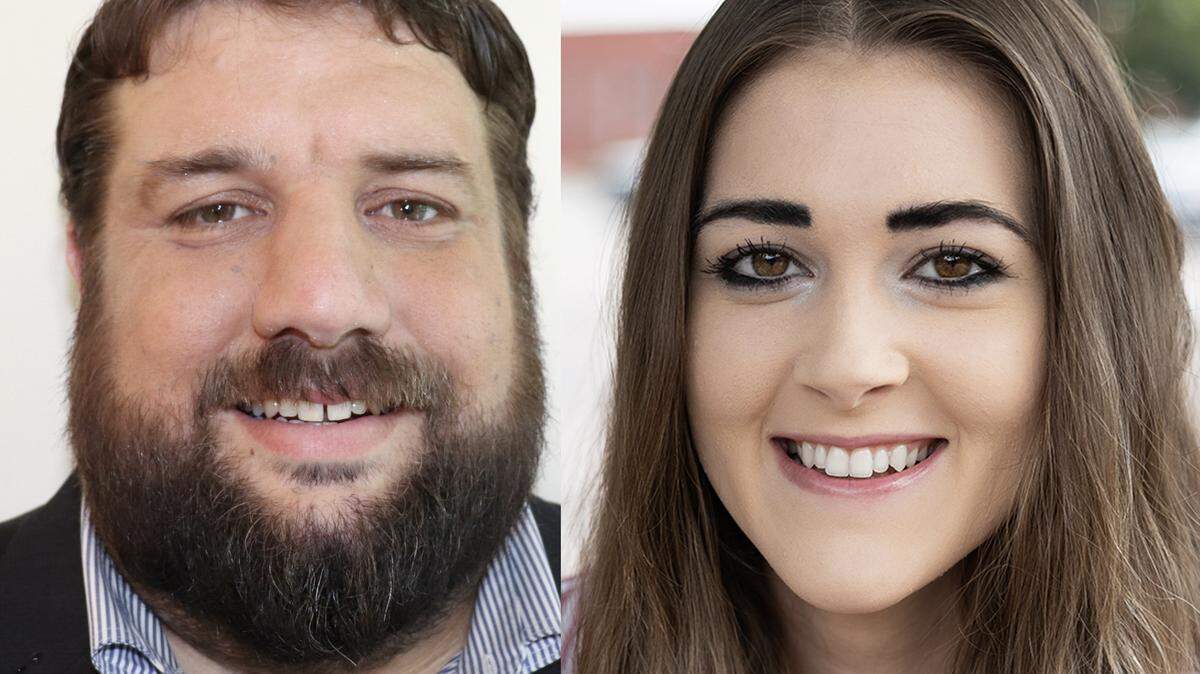
Homelessness and its effect on south Wichita is a top issue for the two candidates seeking the District 3 seat on the Wichita City Council.
Incumbent council member Mike Hoheisel faces first-time candidate Genevieve Howerton. Hoheisel narrowly won the seat over an appointed incumbent in 2021.
Both candidates have relatives in the state Legislature. Hoheisel’s brother is Republican Rep. Nick Hoheisel. Howerton’s mother is Republican Rep. Cyndi Howerton.
District 3 encompasses south-central and southeast Wichita. It stretches south of Kellogg roughly between Seneca and the Kansas Turnpike.
City Council races are nonpartisan, meaning parties do not hold primaries or caucuses and party affiliation does not appear on the ballot. Members are elected for four-year terms by district. Council member pay was recently raised to $57,985.20 a year.
The election is Nov. 4. Advance voting by mail is open now. Request a ballot here by Tuesday, Oct. 28. Advance voting in person starts Monday, Oct. 20 at the Sedgwick County Election Office, 510 N. Main, Suite 101, in Wichita. Go here for details and information on satellite sites opening Thursday, Oct. 30.
To help readers learn about the candidates, The Eagle sent a questionnaire asking each to respond to a set of questions. Here is what the District 3 candidates said. Their responses have not been edited.
Mike Hoheisel
Age: 42
Occupation: City Councilmember
Campaign phone: 316-259-8714
Campaign email: blueblooddonkey@yahoo.com
Website: hoheiselforwichita.com
Why should voters consider you the most qualified candidate? What is your overall vision? I’ve had the honor of serving as the District 3 Councilmember over the past 4 years, and addressed many issues my district faces, including odor control improvements at the sewage treatment plant (completed next year), policies to crack down on illegal dumping in our city, and increasing the number of officers on the street. I will continue to work to improve quality of life and infrastructure equality for South Wichita.
What is your top priority and what specifically would you do to address it? Homelessness comes in many forms, with many underlying issues affecting why a person falls into it. We’ve made strides to address this issue, including the opening of the shelter with wrap around services, increased addiction and mental health services, but we can’t ignore the affordable housing aspect of it. We need a comprehensive plan to address the increasing housing prices and rent across the city, not just for those on the verge of homelessness, but for all families feeling the pinch.
How do the needs of your district differ from the rest of the city? How would you advocate for the district’s unique needs? South Wichita has been left behind when it comes to infrastructure. Over the past 4 years I’ve worked to catch us up, investing $2 million in additional funding in residential roads in the core of the city, quality of life improvements such as the playground at Clapp park, and the odor control improvements at the sewage treatment plant. There’s still a long way to go, but we’re on the right track.
The city lowered its property tax mill levy slightly this year for the first time in nearly 40 years. Would you advocate to raise or lower the mill levy in the future? How would you balance that with funding city services? I did vote to lower property taxes, mainly due to the rise in assessments, which went up 8.6%, far above the average South Wichitans wage or social security increases. I’m tired of nickel and diming people to death, which is why I also voted against paid parking downtown. There are better ways to address tax relief, included targeted tax breaks, such as matching the states homestead tax rebate for senior citizens and disabled veterans, which I pushed for, and would like to see in the future.
If you had to cut city services because of a lowered mill levy, what would you cut? Is there anything you wouldn’t cut? We have looked at government efficiencies in the past few years, eliminating open positions and administrative overhead among other areas of spending. We have also made our buildings more efficient, cutting down on operating costs. I will continue to look for these efficiencies and improved processes, as well as work with our colleagues at the County to collaborate and cut down on administrative costs.
Is there a particular city service that you think needs more resources? If so, how would you pay for that? Dead tree removal and the Animal Shelter are two areas that we must focus more resources on in the future. We have used savings in the past few years to hire contractors to try to catch up on dead tree removal, but the storms over this past year have put a kink in that plan. We should direct any revenue increases in the next few years to these two pivotal areas.
Genevieve Howerton

Age: 24
Occupation: Real Estate
Campaign phone: 316-252-9677
Campaign email: howertongenevieve@gmail.com
Website: https://howertonforwichita.com
Why should voters consider you the most qualified candidate? What is your overall vision? I’ve lived in District 3 since 2007 in three areas. During that time I’ve seen the decline in our neighborhoods firsthand. From increasing crime, growing homeless encampments, and higher taxes without visible improvements I decided I wanted to run because District 3 can be strong again. I want families to feel safe, neighborhoods to be maintained and residents to see real results.
What is your top priority and what specifically would you do to address it? Growing homelessness in our community Needs to be addressed. Encampments in and around public parks, near schools, or along our streets shouldn’t be allowed. We need to connect individuals to existing resources, shelters, and mental health services while keeping our parks and neighborhoods clean, safe, and welcoming. I’d work to strengthen existing ordinances, coordinate with law enforcement and outreach organizations, and ensure that taxpayer dollars are focused on compassion and accountability
How do the needs of your district differ from the rest of the city? How would you advocate for the district’s unique needs? New Development, lower housing costs, better roads, food deserts, crime, and homeless encampments are all issues that need to be addressed and tackled! These aren’t just issues to continue speaking about, they’re problems that need to be handled now!
The city lowered its property tax mill levy slightly this year for the first time in nearly 40 years. Would you advocate to raise or lower the mill levy in the future? How would you balance that with funding city services? I would be cautious about raising the mill levy. We need to keep taxes as low as possible while ensuring essential services are funded. Before considering an increase, I’d look for ways to make city government more efficient. Cutting waste, eliminating redundant programs, and focusing resources on public safety, infrastructure, and neighborhoods. If, in the future, a clear need arose that directly affected public safety or essential infrastructure, I’d be open to reviewing all options
If you had to cut city services because of a lowered mill levy, what would you cut? Is there anything you wouldn’t cut?
When revenues decline, we have to make careful, responsible decisions about what services are essential and which can be scaled back. I’d look first at administrative overhead, duplicative programs, and nonessential projects. We should protect core services while finding efficiencies in how the city operates. My priority would be maintaining safety and reliability while making government more efficient and accountable with taxpayer dollars.
Is there a particular city service that you think needs more resources? If so, how would you pay for that? Mental Health and Homeless Outreach, Public Safety, Roads and Infrastructure. Addressing these areas directly impacts the quality of life and safety of our community.
Rather than increasing taxes or inflow, I would start by taking an in-depth look at the city budget to identify areas where cuts or restructuring can be made. Often, inefficiencies and outdated allocations exist within large budgets, and by redirecting those funds, we can strengthen essential services without burdening taxpayers.
This story was originally published October 16, 2025 at 8:04 PM.