
Kansas judge issues injunction temporarily blocking repeal of voters’ 3-day grace period
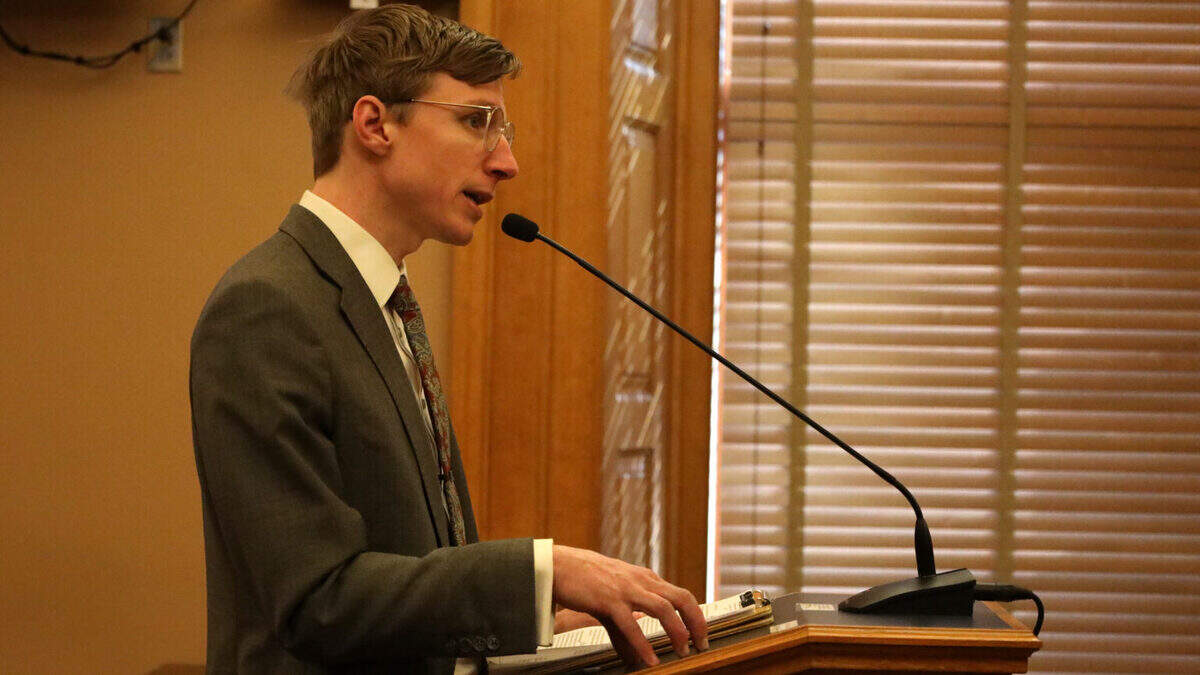
A Douglas County District Court judge issued a temporary injunction Thursday keeping in place a 2017 state law allowing the counting of advance mail ballots postmarked by Election Day but arriving at county offices up to three days after polls closed.
Judge Carl Folsom’s order placed a hold on a 2025 law that required rejection of advance mail-in ballots not received by county election officials by 7 p.m. on Election Day.
The lawsuit by Kansas Appleseed, Loud Light, the Disability Rights Center of Kansas and three Kansas voters asserted repeal of the three-day grace period was a “deliberate and unconstitutional assault on Kansans’ fundamental right to vote.” The plaintiffs filed the suit against Secretary of State Scott Schwab and Douglas County Clerk Jamie Shew.
“After considering the extensive briefing and evidence submitted on this issue, the court grants the temporary injunction requested by plaintiffs,” the judge’s order says. “The deadline for the receipt by mail of the advance voting ballots by the office of the county election officer shall be the last delivery of mail by the United States Postal Service on the third day following the date of the election.”
Folsom said in the written order that the “plaintiffs are substantially likely to prevail on each of their claims” outlined in the lawsuit.
Attorney General Kris Kobach responded to the injunction by declaring his intent to file an expedited appeal with the Kansas Supreme Court. He alleged Folsom could have issued a decision on the injunction long ago, “April at the latest,” before advance ballots were sent to voters.
“This judge has issued an unprecedented, poorly reasoned decision that completely upsets the election process after absentee voting has already begun,” Kobach said. “His decision will cause massive confusion for voters.”
The lawsuit filed in May 2025 contended Senate Bill 4 violated equal protection, due process and right to vote sections of the Kansas Constitution because ballots that were timely voted and mailed could be rejected under the new law because of arbitrary factors beyond control of voters.
Folsom said the injunction wasn’t a final determination of claims in the lawsuit. His order temporarily retained the three-day grace period in upcoming Kansas elections, including the August primary, to prevent “plaintiffs from suffering irreparable injury during the pendency of this lawsuit.”
The statute repealing the grace period was adopted by Republican majorities in the House and Senate and was drafted to apply to Kansas elections after Jan. 1. It was championed by legislators and lobbyists who argued change was necessary to address potential election fraud.
Democratic Gov. Laura Kelly vetoed the bill because of her apprehension it would disenfranchise voters, but the Legislature voted to override the governor.
If the 2025 law had been in place in November 2024, more than 2,100 ballots that arrived at county offices in Kansas during the three-day period would have been disqualified.
In Johnson County elections held in March lawmakers eliminated the grace period, Kansas Appleseed alleged that one in 30 mail ballots were rejected for arriving after Election Day.
“When lawmakers should be empowering the next generation of civic leaders, they chose to undermine their constitutional freedom to vote by requiring legitimate ballots to be thrown out,” said Davis Hammet, president of Loud Light. “We are grateful that the court has blocked this legislation from doing any further damage before the August 4 election.”
Folsom, who was a recent finalist for a vacancy on the Kansas Supreme Court, said in the 54-page order that advance voting by mail was a “powerful tool that can facilitate broader voter engagement, not only among voters who may otherwise struggle to vote due to disabilities or geography, but also by increasing turnout among underrepresented and underserved populations.”
He said the heart of the lawsuit drew upon undisputed evidence that voters who accepted Kansas’ invitation to use and return advance ballots by mail and to exercise their right to vote were at risk of having those ballots rejected because of delivery delays by the U.S. Postal Service.
“Kansas voters who submit their lawful advance ballots by mail, who do their part and vote and timely return it, should be able to trust that their ballot will be counted,” Folsom’s order said.
In 2017, Kobach was a proponent of legislation establishing the three-day grace period for mail ballots. He was secretary of state at that time, but later was elected attorney general. In April 2017, House Bill 2158 was passed 123-1 in the House and 40-0 in the Senate. The grace period became state law July 1, 2017, after Republican Gov. Sam Brownback signed the bipartisan legislation.
Folsom said legislative testimony regarding the bill repealing the three-day window indicated the U.S. Postal Service’s ability to promptly deliver mail ballots had deteriorated since Kansas adopted the mail-in ballot deadline nearly a decade ago.
In 2024, a federal audit of the U.S. Postal Service found the Kansas-Missouri district’s on-time mail delivery rate had fallen to the fourth worst in the nation.
Schwab, the state’s top election official and a defendant in the lawsuit, said two years ago that the U.S. Postal Service had become so slow the “Pony Express is more efficient.”
“If SB 4 were in place for the past three major general elections, tens of thousands of lawful voters would have had their ballots disregarded and not counted,” Folsom said in the court order. “The grace period did what it was designed to do, saving thousands of ballots from rejection that were postmarked before Election Day, but arrived sometime in the three days thereafter. Without the grace period, all of these voters would have been disenfranchised.”
This story first appeared on Kansas Reflector, a nonpartisan, nonprofit news organization covering state government, politics and policy.