
Is this tax relief? Sedgwick County Commission candidates weigh in on sales tax proposal
As voters cast their primary ballots, Sedgwick County officials have ignited a debate over which government services are core to the county’s mission and deserving of property tax dollars.
The county’s 2025 recommended budget calls for significant cuts to the zoo, Exploration Place and the county parks department. Funding for those organizations and other quality of life programming now comes from property taxes.
But county commissioners are moving forward with a proposal to ask voters if they would prefer a sales tax to pay for arts, culture and recreation. Switching to a sales tax would allow the county to lower its property tax mill levy by between 2.5 and 3 mills, according to County Manager Tom Stolz.
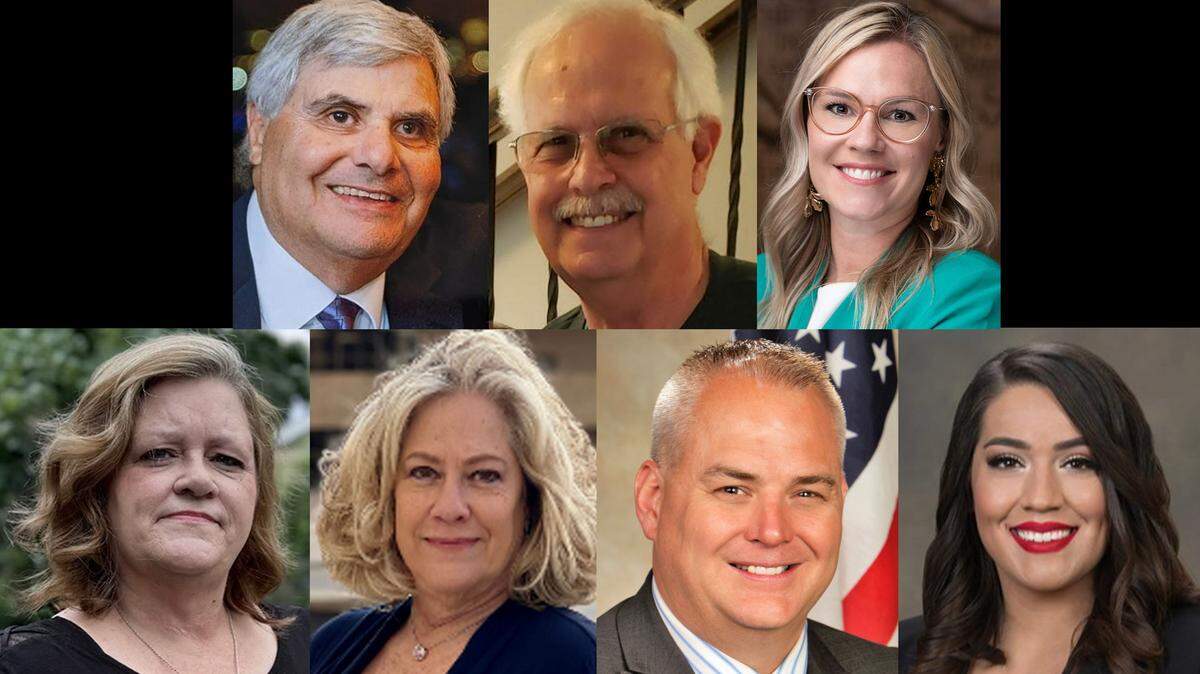
The Eagle asked candidates running for County Commission to weigh in on the nascent sales tax proposal and share their thoughts about what tax reform and the future of quality of life amenities should look like in Sedgwick County.
Here’s what they had to say:
District 3 Republican primary
Greg Ferris
Ferris, a former Wichita City Council member and current local government lobbyist, told The Eagle he sees major upside in doing away with property tax funding for arts, culture and recreation in favor of a sales tax alternative. Ultimately, he said, it should be up to the voters to decide.
“There are some very important benefits of a sales tax,” Ferris said. “First, sales taxes are also paid by people who visit the county. As a hub for economic activity for the area, a sales tax would mean that people outside of the County would pay around 20 percent of the taxes. This would represent true tax relief for citizens.”
That statement contradicts a mailer sent to District 3 primary voters and paid for by the Sedgwick County Conservatives PAC, a Wisconsin-based group spending on Ferris’ behalf. The mailer states that, “Unlike his opponent, Greg Ferris recognizes that holding your property taxes level just to turn around and hike up your sales tax is not real tax relief.” It also claims that if elected, Ferris would “stop sales tax hikes by greedy career politicians” and “cut local property taxes.”
Ferris told The Eagle he was not previously aware of the mailer and said it mischaracterizes his position on the proposal.
Alan Reichert
Reichert, a Spirit AeroSystems financial analyst, said he has some reservations about increasing the sales tax and lowering the mill levy.
“The only problem I have with sales tax is it gets levied on everybody who’s spending money, from the poorest to the wealthiest, so it ends up taking a higher percentage of the poorer people’s money and the elderly who are on fixed income,” Reichert said.
But he does see an opportunity to capitalize on the state rescinding sales tax on food bought at grocery stores. Reichert said the county could potentially impose its own sin tax on candy and soft drinks.
“I don’t know what the legal logistics of it are, whether we’ll get legal pushback from the state or what, but to earmark the taxing of candy and soft drinks to make up some of the funding we need for maybe some areas like Comcare,” Reichert said.
“People enjoy eating candy and soft drinks, and if we have any revenue left over from taxing that, maybe we can steer some of that towards the zoo and Exploration Place.”
Stephanie Wise
Wise, a commercial real estate broker, said she’s optimistic about the county’s efforts to bring city leaders together and coordinate a more comprehensive tax relief plan.
“It’s going to take more than just the county participating in tax relief,” Wise said. “When I talk about tax reform and functional consolidation, that’s exactly what I’m talking about — the taxing authorities or entities talking to each other. We all serve the same constituents. We need to be working together to actually relieve the tax burden and not just shuffle it around from one side to the other.”
Under a sales tax funding model, if the tax produced more revenue than expected, it would be split among organizations. Likewise, if it generated less than expected, budgets would have to be trimmed the next year. Wise said she’s confident a sales tax would provide sustainable funding for quality of life amenities.
“We’ve gone through 2020 and COVID-19. I think our economy, though we say that it’s terrible, I’m not sure that it is,” Wise said. “Everybody’s still spending and everybody’s still doing life.”
She said if elected, she would never vote to raise the mill levy or capture 100% of the additional revenue generated by higher property appraisals.
District 3 Democratic primary
AlmaAnn Jones
Jones, a trauma advocate and criminal justice activist, said the sales tax proposal could be beneficial for the community if done right.
“Sales tax helps us capture that money coming in from outside the county, but we want to be careful we don’t let the shift from property tax to sales tax mean these assets aren’t a top priority,” Jones said.
“Continued investment in the things that attract people from outside of Sedgwick County grows our revenue without putting it all on the backs of the residents of Sedgwick County.”
Jones said she sees other opportunities for the county to modernize how it does business, including following Johnson County’s lead by allowing the county manager to appoint a clerk, treasurer and register of deeds instead of directly electing each official.
“Everyone who has had to deal with paying for their tags in Sedgwick County wishes we had accountability over those offices more than at election time,” Jones said. “Those offices have entire independent budgets that are controlled by the elected official and the commission has no way to direct how that budget is spent or use excess funds in one office to make up for a need in another. It also creates an atmosphere for jobs in those offices to be handed out as political favors to supporters and friends.”
Celeste Racette
Racette, a former fraud investigator, said the county should look for efficiencies and eliminate wasteful spending before levying a new sales tax.
“I’ve been talking for four years about the waste in the city’s budget. How do we know there’s not waste in the county’s budget?” Racette said. “So until I get in there and talk to the other department heads and take a fine-toothed comb to the budget, I don’t want to assume that our solution is raising taxes.”
Sitting commissioners have repeatedly said that the tax reform proposal would not amount to a tax increase, but the county has not yet published any analysis showing the impact that it would have on residents.
“It would be [a tax increase] though,” Racette said. “I mean, the net effect is it’s coming out of taxpayers’ pockets. Whatever you call it. You call it a sales tax, you call it a property tax, you call it an income tax . . . The tax comes out of taxpayers’ pockets, so I just feel like we’re playing a shell game.”
She said state lawmakers in Topeka could deliver tax relief by expanding Medicaid. A spokesperson for the department of corrections said last year that expansion would provide $3.6 million in annual prison savings for taxpayers who currently cover some medical costs for inmates.
District 2
There is no primary in this race.
Jeff Blubaugh
Blubaugh, a Republican and former Wichita City Council member, said he doesn’t see property tax dollars as a sustainable source of funding for arts, culture and recreation programming.
“Quality of life spending within Sedgwick County has grown significantly within the last four years with the addition of new projects and increased tax dollar contributions to nonprofit entities,” Blubaugh said.
“Right now, you don’t see many non-government subsidized recreational businesses increasing their spending. So, maybe it’s not the best time to be taking on so much new tax dollar spending.”
He said despite the commission’s focus on public safety spending in next year’s recommended budget, the county has improperly prioritized non-core services in recent years.
“Quality of life project spending increased while core functions of County Government have suffered,” Blubaugh said. “Sedgwick County 911 Dispatchers were only operating at a rate of 60% employment while funding was increased for park, cultural and art.”
Sarah Lopez
Lopez, a Democrat who was elected in 2020, said she agrees with her Republican colleagues on the commission that property tax dollars should only be used to fund public safety and other core administrative functions.
“The way government is currently being run with Sedgwick County and then we have 20 cities, it’s just not feasible to continue the way it’s always been,” Lopez said. “So any kind of reform we can find, whether it’s shifting those [quality of life amenities] to sales tax instead of property tax, or if it’s a way we can functionally consolidate certain departments with the city of Wichita or other cities — we at least owe it to the taxbase to look into it further.”
Ultimately, she said, quality of life programming is essential to recruiting and retaining young talent, and moving away from a property tax model could be beneficial to organizations that often find their funding heavily politicized.
“I think it’s really important that whatever we do kind of takes it out of the political realm and makes it easier for them to budget going forward.”