
Wichita anti-abortion activist sues to block use of ballot drop boxes across Kansas
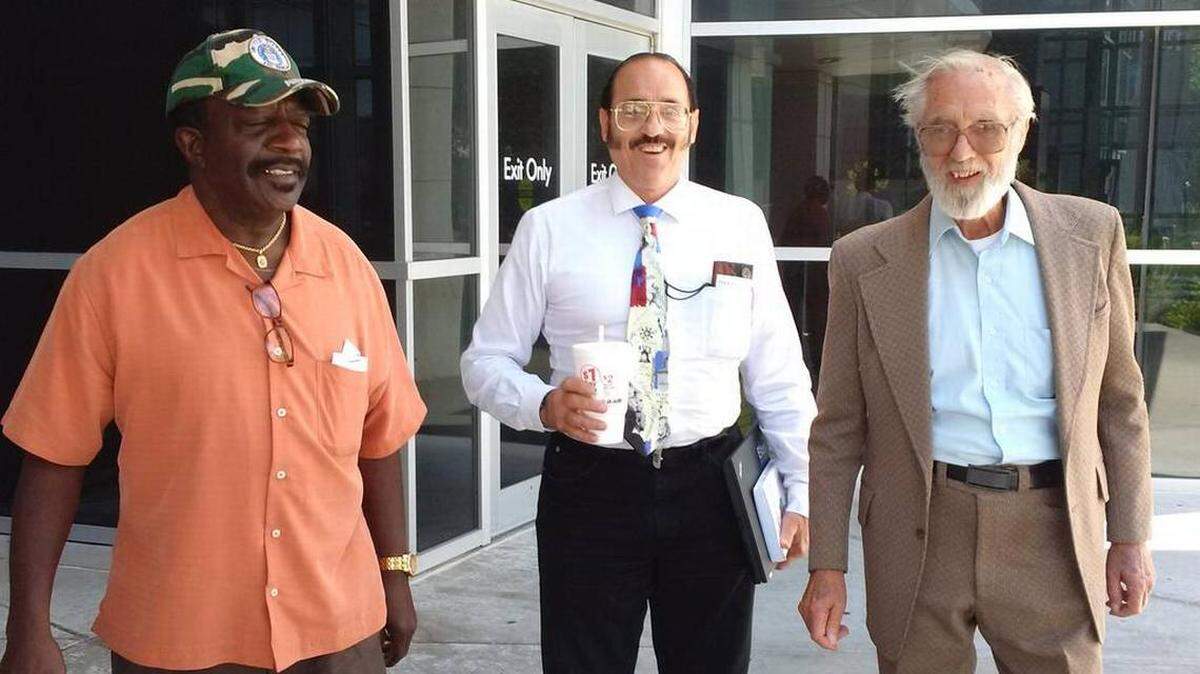
A longtime Wichita anti-abortion activist is suing to block the use of ballot drop boxes across Kansas in the nation’s first post-Roe referendum on abortion rights, which is already underway.
Mark Gietzen — a Wichita abortion opponent, director of the Kansas Coalition for Life and president of the Kansas Republican Assembly — said Kansas Secretary of State Scott Schwab, an Kansas City Republican, has failed to enforce a new law aimed at limiting the number of ballots someone can deliver for someone else.
Gietzen is suing Schwab and Sedgwick County Election Commissioner Angela Caudillo, who has refused to cave to the demands of abortion opponents who have been calling for her to remove 14 drop boxes in and around Wichita.
Gietzen, who is acting as his own lawyer, is asking a Sedgwick County District Court judge to bar use of ballot drop boxes statewide until the Secretary of State’s Office can “come up with a meaningful method of actually limiting ballot harvesters” in the Aug. 2 election, which could decide whether or not abortion rights remain in the Kansas Constitution.
State law limits ballot collection at 10. It requires anyone dropping off a ballot for someone else to sign a sworn statement attesting that they have not delivered more than 10 advance-voting ballots on behalf of other people during the election in which the ballot is being cast.
Anyone caught violating the law could be charged with a felony.
Gietzen said that without constant in-person monitoring of the ballot drop boxes and other means to ensure no one breaks the law, the sworn statement is an “ill-conceived honor system.” He said it allows people to skirt the law by using fictitious names such as Donald Duck, Indiana Jones or Mickey Mouse.
Gietzen acknowledged in an interview with The Eagle that he has no evidence of voting fraud or anyone using fictitious names at Kansas ballot drop boxes.
But Gietzen has seen the election conspiracy film “2000 Mules.” He said it convinced him that ballot harvesters have rigged the Aug. 2 Kansas election and are casting fraudulent votes against the Value Them Both amendment in ballot boxes.
The movie presents no evidence of voter fraud and instead uses misleading cell phone data and surveillance video to further claims that the 2020 election was stolen from President Donald Trump through a vast network of nonprofits that paid “mules” to stuff ballot drop boxes with thousands of phony votes for Joe Biden.
“I know enough about it to know that it’s going to be used on Value Them Both, or already has been used, because we’ve had the ballot boxes out,” Gietzen said in a phone interview. “And I think it’s enough that it could swing the election.”
Gietzen said that commissioners for the state’s 105 counties should overrule Schwab’s office and county election officers, who are in charge of administering and regulating elections in Kansas, and order the drop boxes removed.
“If the county commissioners around the state don’t take charge, we stand a real possibility that the election would have to be declared null and void,” Gietzen told The Eagle.
Gietzen’s petition is part of a larger movement by Wichita anti-abortion activists to restrict voting ahead of Election Day. Donna Lippoldt of Culture Shield earlier this month organized an unsuccessful pressure campaign on Sedgwick County officials in an attempt to get them to remove the drop boxes. Gietzen and Lippoldt were both involved in the 1991 Summer of Mercy protests in front of Wichita abortion clinics that drew national attention and hundreds of arrests.
Schwab and Caudillo declined to comment for this story.
In a court filing responding to Gietzen’s “Petition for Control of Ballot Drop-boxes within State Law,” Caudillo said Gietzen’s allegations are “factually and legally incorrect.”
Caudillo, as a county election commissioner, is not empowered by state law to “promulgate new voting regulations or serve as a law enforcement official,” the filing says.
“As such, any and all claims founded in forcing her to develop some sort of ‘meaningful method’ or requiring her to prohibit an authorized method of ballot delivery should be dismissed,” the filing says.
She did not reveal how the ballot drop boxes are monitored, saying “measures regarding ballot box monitoring and security are not disclosed as a means of insuring voting integrity.” She has previously said all 14 of the county’s drop boxes are under 24/7 video surveillance.
Schwab’s office has not filed a response, according to court records and a Secretary of State spokesperson.
Gietzen’s lawsuit is scheduled for a hearing Thursday morning in Wichita.
Sharon Brett, legal director at the ACLU of Kansas, said Gietzen’s lawsuit lacks any basis in the law and will likely fail.
“The Legislature put some limitations on how many ballots an individual can return on behalf of others and caps that at 10 during a recent legislative session, and they did so in response to unsubstantiated reports and fear mongering about so-called ballot harvesting,” Brett said. “It appears that those concerns and conspiracy theories are sort of regurgitated in (Gietzen’s) complaint.”
Brett said there is nothing inherently nefarious or illegal about turning in ballots for other people, and no proof that it has been used in the past to cast fraudulent ballots. But that hasn’t stopped legislatures across the country from adopting more restrictive voting laws.
The Kansas Legislature passed the new ballot-harvesting law last year as part of a national wave of GOP-backed voting restrictions aimed at preventing voting fraud after Trump and his supporters began spreading lies about a massive conspiracy involving widespread fraud.
“People are inventing problems here,” Brett said. “We don’t have any evidence of this type of voter fraud actually occurring. It’s a false narrative, and it’s a dangerous one that threatens access to the polls for people who really need it.”
Brett said ballot collection and delivery to drop boxes helps give voting access to some of the most underprivileged people, from those lacking access to transportation to residents at assisted-living centers or nursing homes. She said it’s also popular for multi-generational families that live in a single home.
“Let’s say there’s parents and then one set of grandparents, so that’s four people. And maybe there’s four kids, so there’s eight people of voting age living in a single household. And the mom is like, I’m going to be downtown today to get my hair done, so I’ll drop all of the mail-in ballots off. How is that nefarious?”
This story was originally published July 27, 2022 at 2:21 PM.