Wichita school board candidate proposes COVID experiment using district’s kids
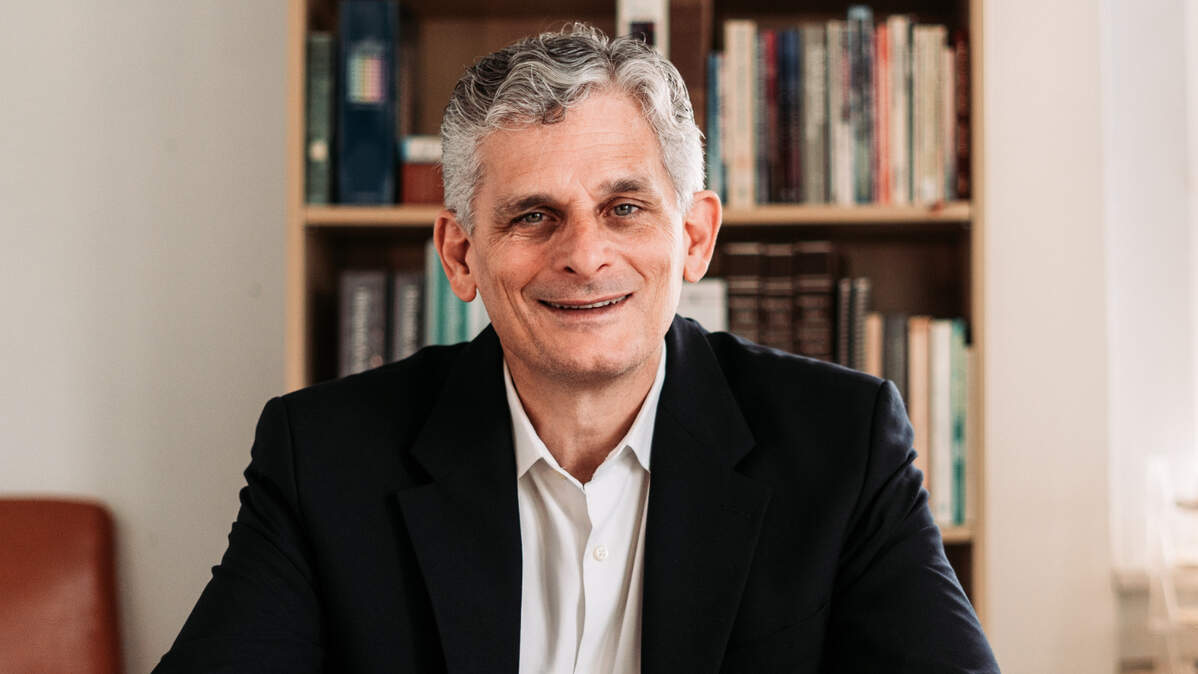
A Wichita school board candidate is proposing to experiment with the district’s children, separating masked and unmasked students and then studying them to see who gets COVID-19 and who doesn’t.
USD 259 candidate Brent Davis also proposes to try “safe and inexpensive” medications in the schools to see if they have any effect on preventing COVID.
“We need to maybe actually bring some doctors into the school system to do some studies and when parents want to maybe have not masking in one part (of the school) and masking in another part and then look at the results,” Davis said. “Why are we, you know, guessing, when parents have the choice about what to do with their kids?”
Dr. Thomas Moore, an infectious disease specialist and director of infection control at Wesley Medical Center, said Davis’ proposal is a horrible idea.
“It is unethical and it is illegal to perform clinical trials on children without their parents’ consent,” Moore said. “There are all sorts of things that have to be done legally and ethically before pursuing a grand research study like this. No scientific study can be performed on children — who are a very vulnerable population — without express controls.”
Davis owns a tutoring and test-preparation business and is one of three candidates in the Nov. 2 election for the District 2 seat on the school board.
The other candidates are incumbent Julie Hedrick, a retired district employee, and Justin Bjork, a real estate agent.
Davis floated his ideas on COVID during a recent forum for school board candidates in south Wichita.
“There is quite a bit of debate on if kids are actually being helped by being masked or if they’re being hurt, you know, if this raised C02 levels, other bacterial infections, things like that, they can come when, in masking kids,” he said. “We could try to work a solution where we separate them into groups and then actually study (them).”
He also proposed giving students common medications to see if they have any effect.
“We also need to think about using all the different medications that we possibly could, trying some of those out,” he said. “There are drugs that have been used to help millions of people with certain conditions that are very safe and inexpensive, that we just aren’t being able to try right now.
“So I think that there are many solutions to try and we can do that in a way that honors parents’ right to raise their kids in the way that they think is safe as long as it is safe for them and they’re not getting sick.”
In a follow-up interview, Davis wouldn’t say if those medications include the deworming drug Ivermectin or the malaria drug hydroxychloroquine, which have been widely — and inaccurately — touted by Internet sources and politicians as potential COVID cures.
“I’d rather not say what other medicines right now because I’m not a physician,” Davis said. “There are a lot of different potential medicines that are being given that are proven safe and are not going to harm people from taking them and that would be worth trying — even just Vitamin D, and zinc and Coricidin and things like that as a prophylactic to see how that works. I think it would be worth trying to do that and making ourselves available for that and parents that want to do that.”
That’s just not possible in the way that Davis describes his plan, Moore said.
Moore has spent more than a year and a half treating many of the sickest COVID patients in Wichita and said he enthusiastically supports legitimate research on prevention and treatment. But Davis’ proposal wouldn’t even come close to the scientific rigor required, he said.
“Any experimentation, whether it’s masking versus unmasking, or giving medications to children, has to be carefully reviewed by a data safety and monitoring board, it has to be reviewed by scientific experts and ethics experts to make sure there’s no undue risk or undue harm to the children,” he said.
He also said Davis’ proposed study wouldn’t tell doctors anything they don’t already know.
“These studies have already been done and we know what works and doesn’t work,” Moore said. “Masking works.”
The medications Davis proposes testing, and others, “have been looked at and found to be not effective,” Moore said.
“There’s no reason to reinvent the wheel by repeating clinical studies that have already been done,” he said. “You’re not going to gain anything by doing that except subjecting people to increased risk and potential harm for what appears to be negligible benefit.”
Even ordinarily benign medications and supplements can be dangerous when taken at the high dosage levels suggested by those who wrongly tout them as COVID treatments, Moore said.
“Any medication you give people, you can give them too much of it,” Moore said. “Vitamin D is not harmless, you can get hypervitaminosis-D.”
That’s a condition where excess Vitamin D raises blood calcium levels causing nausea, vomiting and weakness — and possibly bone pain and kidney stones.
And just because a drug can kill COVID in a lab dish, that doesn’t mean it can do any good in the body, Moore said.
“Just look at Ivermectin,” he said. “It’s a safe and very well-tolerated drug for the vast majority of people at the doses prescribed for parasitic infections. But when you start giving doses to mimic the effectiveness against the (COVID) virus in vitro, you kill people.”
This story was originally published October 4, 2021 at 4:53 AM.