The U.S. Supreme Court upheld voting laws in Arizona. What does that mean for Kansas?
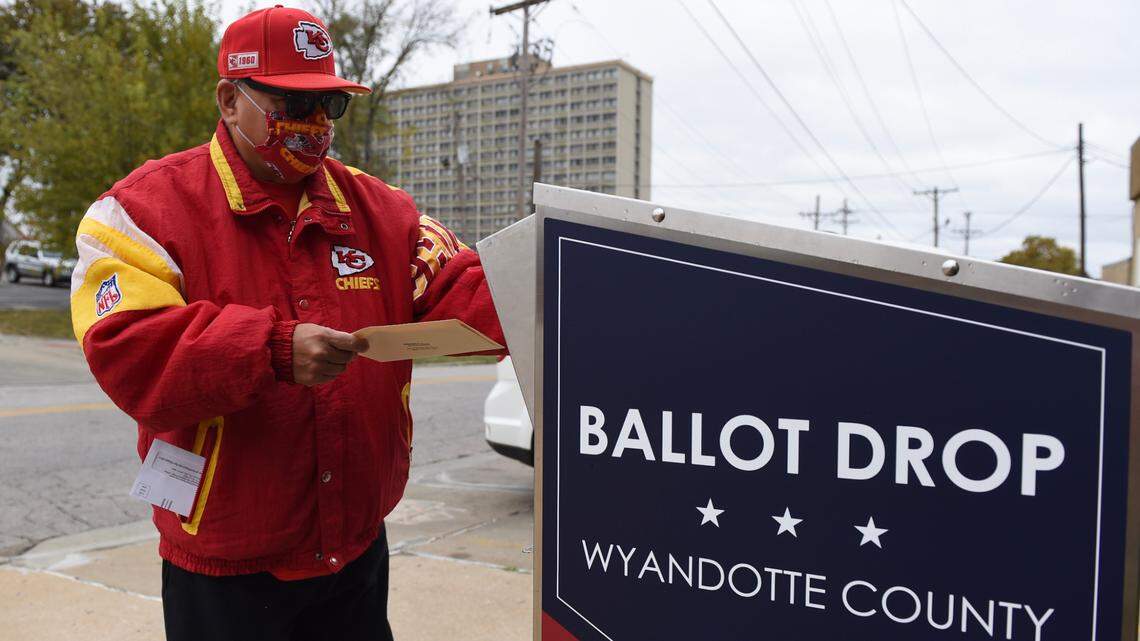
New Kansas limits on the return of completed advance ballots appear likely to survive any challenge that they violate federal voting rights laws, under a U.S. Supreme Court ruling on Thursday that upheld tighter restrictions in Arizona.
But the Kansas law, which imposes several rules on advance voting, may still be vulnerable to ongoing lawsuits alleging they violate the First Amendment and the state constitution.
The Supreme Court in a 6-3 decision affirmed an Arizona law that prohibits anyone other than a family member or caregiver from returning another person’s early ballot. The opinion, a major voting rights ruling, comes after Republican legislatures across the country advanced a host of voting measures following the 2020 election.
While the federal Voting Rights Act provides vital protections against discriminatory voting rules, the law “does not deprive the States of their authority to establish non-discriminatory voting rules,” Justice Samuel Alito wrote in the majority opinion. The 1965 law prohibits discrimination in voting procedures on the basis of race.
The Kansas law, which went into effect on Thursday, isn’t as restrictive as the Arizona law, making it unlikely the law could be successfully challenged under the Voting Rights Act. The Kansas measure makes it illegal to return more than 10 advance ballots on behalf of other Kansans.
Advance voters in Kansas who give their ballots to someone else must also sign a form verifying they were not forced or unduly influenced. According to the National Conference of State Legislatures, this provision falls in line with rules in place in other states, including Colorado and Pennsylvania.
The Legislature passed the voting provisions in May over Democratic Gov. Laura Kelly’s objections. Lawmakers also approved a bill prohibiting the executive and judicial branches of government from altering election laws.
“Today’s U.S. Supreme Court decision sends a strong message that states have authority to enact measures designed to ensure secure and accurate elections,” Attorney General Derek Schmidt, a Republican running for governor, said in a statement. “The outcome of this case strengthens our arguments that courts should reject the pending legal challenges to the reasonable election-integrity reforms enacted this year by the Legislature.”
The Kansas restrictions face two court challenges. One was filed in state court by a trio of Kansas civic groups who argue that the limits on returning ballots impose a burden on voters without a compelling state interest. The other, filed by national voting rights groups in federal court, contends that a provision limiting the mailing of advance ballot applications violates the First Amendment.
The state-level lawsuit — filed by Loud Light, Kansas Appleseed and the League of Women Voters of Kansas — claims provisions requiring signature matching on all mail-in ballots, banning distribution of mail applications from out-of-state groups and criminalizing “the appearance of being an election official” are civil rights violations.
Loud Light, which focuses on youth turnout, and the League of Women Voters of Kansas said Wednesday they would stop their voter registration activities when the laws go into effect on July 1 out of concern they could be mistaken for election officials and prosecuted.
The organizations requested an injunction of the law but are waiting on a ruling from a judge.
“Because it is so broad it can be applied arbitrarily and discriminatory,” Davis Hammet, Loud Light’s director, said. “These are people who would be registering voters and they’d have to take a very real risk that they’d lose their right to vote.”
A separate lawsuit in federal court, filed by the Campaign Legal Center on behalf of Vote American and the Voter Participation Center, argues that the new laws barring out-of-state organizations from sending advance ballot applications to Kansans and limiting the content of the applications sent by in-state groups violate the First Amendment.
In a Twitter post, Thursday, the Campaign Legal Center criticized the Supreme Court decision as making it “hard for Latino, Native American and Black voters to make their voices heard.” President Joe Biden said he was “deeply disappointed” in the decision.
Rick Hasen, an election law expert at the University of California, Irvine, School of Law, wrote that the court had severely weakened Section 2 of the Voting Rights Act — the provision of the law that specifically bans racially discriminatory voting rules — as a tool to fight laws that make it harder to register and vote.
“This is not a death blow for Section 2 claims, but it will make it much, much harder for such challenges to succeed,” Hasen wrote.
The Associated Press contributed reporting
This story was originally published July 1, 2021 at 11:36 AM with the headline "The U.S. Supreme Court upheld voting laws in Arizona. What does that mean for Kansas?."