
Liquor retailers urge Kansas lawmakers not to let grocery stores sell full-strength booze
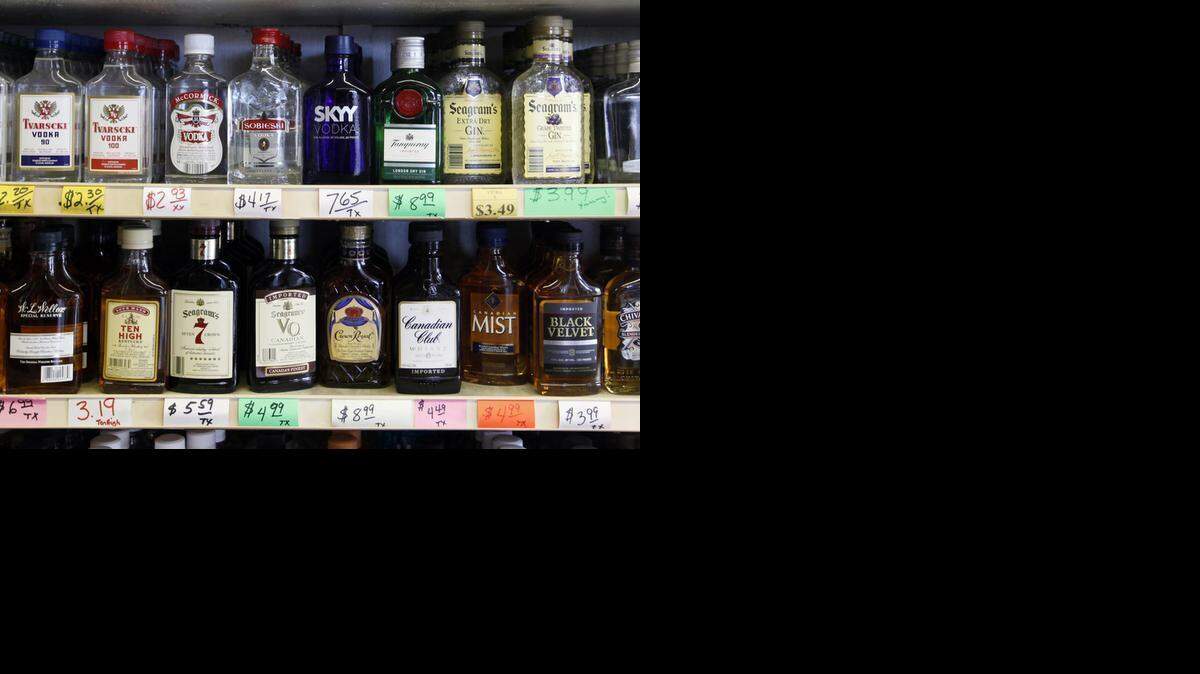
Small-business owners pleaded with lawmakers to oppose a bill that would enable grocery stores to sell liquor and convenience stores to sell full-strength beer at a packed committee hearing at the Capitol on Thursday.
The House Commerce Committee held the second of three hearings on House Bill 2200 on Thursday afternoon. The bill, commonly referred to as the “Uncork Kansas” bill, would allow grocery stores to begin selling liquor in 2018.
The bill would cap the number of liquor licenses in the state at its current level – about 750 – meaning that Dillons, Hy-Vee and other grocery stores would need to purchase licenses from existing liquor stores. The grocery chains would have to get a license for each store rather than one for the chain. The bill would also allow liquor stores to begin selling other items, such as food, alongside beer, wine and liquor.
Opponents warn that the bill would hurt small businesses and increase the likelihood that children could get access to alcohol.
Tuck Duncan, lobbyist for the Kansas Wine and Spirits Wholesalers Association, took out a bowl and two eggs. He said that the eggs represented the state’s current liquor and beer systems and then broke them in the bowl and began stirring.
“You’re going to have nothing but a scrambled system out there,” he said.
Duncan also warned that the bill’s language would allow a big-box retailer to buy up all of the liquor licenses in a county and then operate only one store, leaving the other licenses unused and preventing competition.
Steve Faust, a liquor store owner from Johnson County, said the bill would put him and other store owners out of business. He called this ironic given lawmakers’ frequent rhetoric about helping small businesses.
“Are we and our businesses somehow worth less than other Kansas businesses?” he asked.
However, proponents of the bill say it would increase convenience for consumers and lead to more competition, which would benefit both consumers and the economy.
Dick Stoffer, lobbyist for Hy-Vee, said that seven of the eight states the chain operates in allow liquor to be sold at grocery stores and that for the chain to expand in Kansas “we need this product.”
“When we open a new store, there’s about 600 jobs. It’s a $20 million investment, so you take that times 10 stores at minimum,” he said Thursday morning.
Dave Dillon, retired chairman of Kroger, the company that owns Dillons stores, said shoppers want the freedom to buy wine and liquor at the grocery store.
“We hear this request from busy moms who want a bottle of wine with their dinner who are crunched for time and don’t want the hassle of an additional stop,” Dillon said Wednesday during the first hearing when proponents spoke.
He called the free market a Kansas principle.
Sedgwick County Commissioner Jim Howell, who spoke Thursday as a civilian and not on behalf of the county, said the bill would lead to a monopoly of big-box stores, such as Walmart and Dillons, and that the current system that has allowed independent stores to thrive should be kept.
“This bill is a loser,” Howell said. “These mom and pop shops have invested generations into their stores.”
Amy Campbell, lobbyist for the Kansas Association of Beverage Retailers, said liquor stores that currently lease space in a shopping center owned by a big box store could be forced out of their leases if the bill becomes law in its current form.
Kelly Reed, an employee at K & S Liquor store in Derby, said he worries that if the bill passes he will lose his job. He also said the cap on the number of liquor licenses would make it impossible for small businesses to enter into the market in the future.
“It just puts it to a point that a small businessman can’t hardly get into the business anymore,” he said.
Rep. Ken Corbet, R-Topeka, called it “sad that people come up here and ask to take something from somebody else.”
Rep. Mark Hutton, R-Wichita, chair of the committee, said that each side had presented “doomsday scenarios” about what would happen if the legislation did or didn’t pass, but that “like so many things up here, those needles usually meet in the middle.”
Hutton said there was still a lot of work to be done on the bill before it would likely get the support it needed to be passed out of the committee.
Jessica Lucas, spokeswoman for Uncork Kansas, said the coalition is “willing and open” to making changes to the legislation so that liquor store owners are comfortable with it advancing.
Some opponents, however, will be tough to sway.
Frances Wood of the Women’s Christian Temperance Union said the bill would be dangerous because while a recovering alcoholic can avoid going to a liquor store he cannot avoid going to a grocery store.
Wood wore a sign around her neck that said “117.” She said this was the number of alcohol-related traffic deaths in the state in 2012, the most recent year for which she could find data. She told lawmakers that passing the bill would cause that number to go up.
Reach Bryan Lowry at 785-296-3006 or blowry@wichitaeagle.com. Follow him on Twitter: @BryanLowry3.
This story was originally published February 12, 2015 at 5:52 PM with the headline "Liquor retailers urge Kansas lawmakers not to let grocery stores sell full-strength booze."