
Gov. Sam Brownback cuts funding for schools and higher education
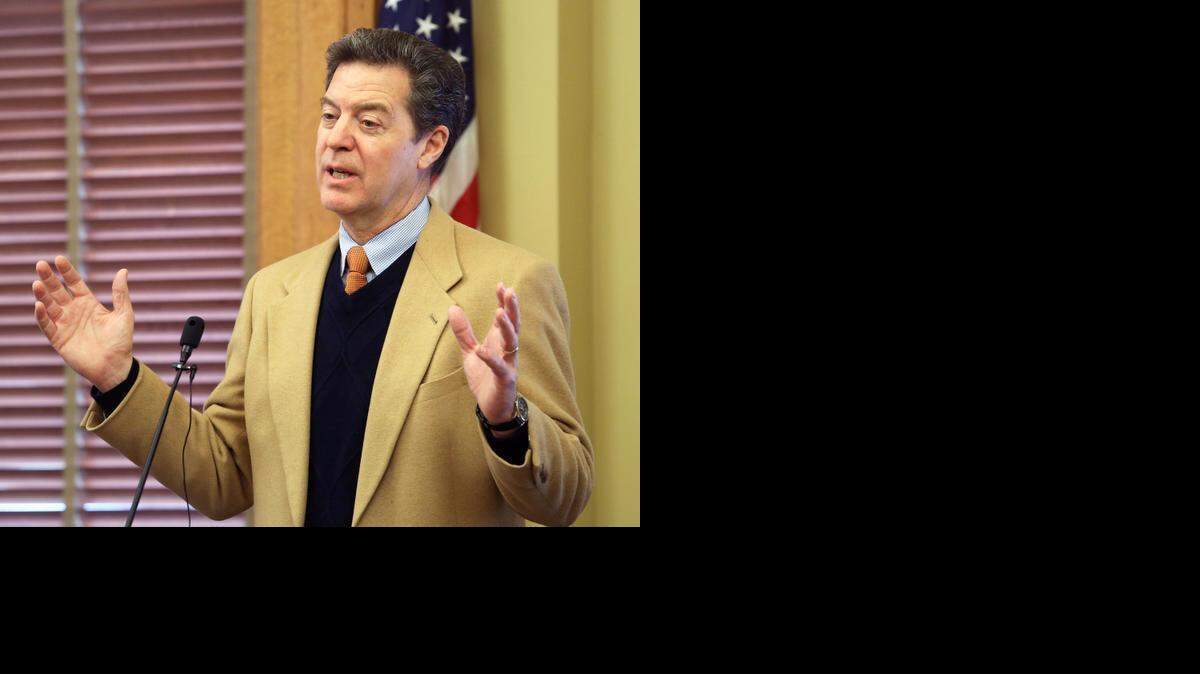
Gov. Sam Brownback announced Thursday that he will cut funding for public schools and higher education to help keep the state solvent through June, a move that has sparked anger from some lawmakers and education advocates after his previous promises to safeguard education funding.
The automatic cuts do not need legislative approval and will go into effect March 7. The governor will cut the state’s regents universities by 2 percent and public schools by 1.5 percent across the board, for a combined savings of $44.5 million.
The cuts were announced after the state missed its January revenue expectations by $47 million.
Brownback’s announcement came just minutes before the Kansas Senate met to debate and vote on a bill to fix the budget. That bill does not affect school funding, but would move money out of the state highway fund and other dedicated funds to meet state expenses through the end of June. In all, the budget bill makes nearly $250 million in fund transfers and spending reductions.
That bill, which passed by a vote of 24-13 and now goes to Brownback for his signature, would still come short of closing the state’s shortfall through the end of June by $800,000.
Brownback argued the school spending is driving the state’s fiscal woes. He made no mention of income tax cuts, which many lawmakers and economic analysts say are driving the state’s budget problems.
“The dramatic increase in state education funding that has occurred over the last four years is unsustainable,” Brownback said in a news release. “School districts are estimated to have approximately $381 million in reserve fund balances to help them offset the smaller than expected increase in state funding. The Kansas Department of Education should work with school districts to help them with any cash flow challenges that may arise.”
Schools would still receive more funding than they did last year, but less than they were supposed to receive this year. Under the cuts announced by Brownback, the Wichita school district will lose more than $3 million from what it was set to receive this school year.
Judy Deedy, executive director of Game On for Kansas Schools, a parental advocacy group, expressed concern.
“We knew this was going to happen. The math doesn’t work,” Deedy said. “These cuts are hurtful. This is serious. At a time when our schools have higher demands than ever, now is not the time to start pulling back on funding.”
Senate President Susan Wagle, R-Wichita, defended the governor’s decision to include schools in his allotment plan. The governor had left education funding off the table when he announced initial budget cuts in December.
“I originally had concern that not everybody shared in his original allotments … the governor made a cut to general government and he held harmless the schools,” Wagle said. “And so, I think he just was forced into this position after seeing January’s revenues.”
Andy Schlapp, lobbyist for Wichita State University, said the university would lose about $1.5 million. “It’s a setback, but not the end of the world,” Schlapp said.
He said WSU is committed to moving forward with its plan to create an innovation campus that connects students and the technology sector.
“We understand the difficulties of the budget. We took a cut today. We get it. It’s unfortunate,” Schlapp said. “But we’re more than ever committed to that process, the innovation campus, growing the Kansas economy and having a workforce that can compete globally, so we’re going to continue on that path.”
Brownback’s statement noted that even after the cuts, funding for higher education would be $20 million more this year than last. Funding for K-12 education would still be $177 million higher than last year, due in large part to a Supreme Court ruling that called for the state to put more money into schools.
Brownback blamed schools for the state’s budget problems and called for lawmakers to reform two areas in the school finance formula addressed in last year’s court ruling, local option and capital outlay funding.
The Legislature passed a bill last year meant to close gaps between districts in these areas; that bill was estimated to cost about $130 million but ended up costing about $190 million.
Sen. Ty Masterson, R-Andover, has introduced a bill that would recalculate the way aid is distributed and reduce the state aid from last year’s bill by nearly $40 million. Brownback all but endorsed that bill in his news release and said that if lawmakers changed the way money is distributed, “the legislature could, and should” restore his cuts.
Brownback highlighted recent news reports in The Wichita Eagle about a $48,000 grand piano purchased by a Kansas City, Kan., high school as proof of the flaws of the school finance formula.
Senate Minority Leader Anthony Hensley, D-Topeka, accused the governor of waging war against public education by saying the only way to avoid his cuts to schools and universities is to cut schools.
“I’d say that’s pretty brazen. Because that in essence is making a public threat … threatening the Legislature to take action that in any event is going to be bad for public education,” Hensley said in a meeting with reporters shortly after the Senate vote.
During the debate on the budget bill, Hensley referenced the governor’s talking point that the state should act like a family and learn to live within its means.
“The problem with this analogy is that no Kansas family or business would voluntarily cut off a source of their income, drain their savings account, rob their retirement funds and still expect to have a financially secure future,” he said.
But Masterson delivered a passionate defense of the governor and the tax cuts, which reduced rates and eliminated income taxes on the owners of more than 190,000 businesses, during the budget debate.
“You know what drives me crazy is when I hear this Kansas lost … $700 million,” Masterson said. “Money didn’t disappear. I can also say Kansans find $700 million.”
Reach Bryan Lowry at 785-296-3006 or blowry@wichitaeagle.com. Follow him on Twitter: @BryanLowry3.
How area schools are affected
Here are the cuts by district announced Thursday:
Wichita, $3 million
Andover, $272,000
Circle, $98,000
Derby, $352,000
Goddard, $275,000
Haysville, $299,000
Maize, $349,000
Mulvane, $91,000
Valley Center, $144,000
How universities are affected
Here is a breakdown of the cuts:
Wichita State University, $1.5 million
Board of Regents, $4.5 million
University of Kansas, $2.7 million
University of Kansas Medical Center, $2.1 million
Kansas State University, $2.15 million
KSU Extension Systems and Agriculture Research Programs, $950,000
KSU Veterinary Medical Center, $293,000
Pittsburg State University, $710,000
Fort Hays State University, $680,000
Emporia State University, $632,000
This story was originally published February 5, 2015 at 2:29 PM with the headline "Gov. Sam Brownback cuts funding for schools and higher education."