
Kansas lawmakers to weigh constitutional amendment ahead of special session
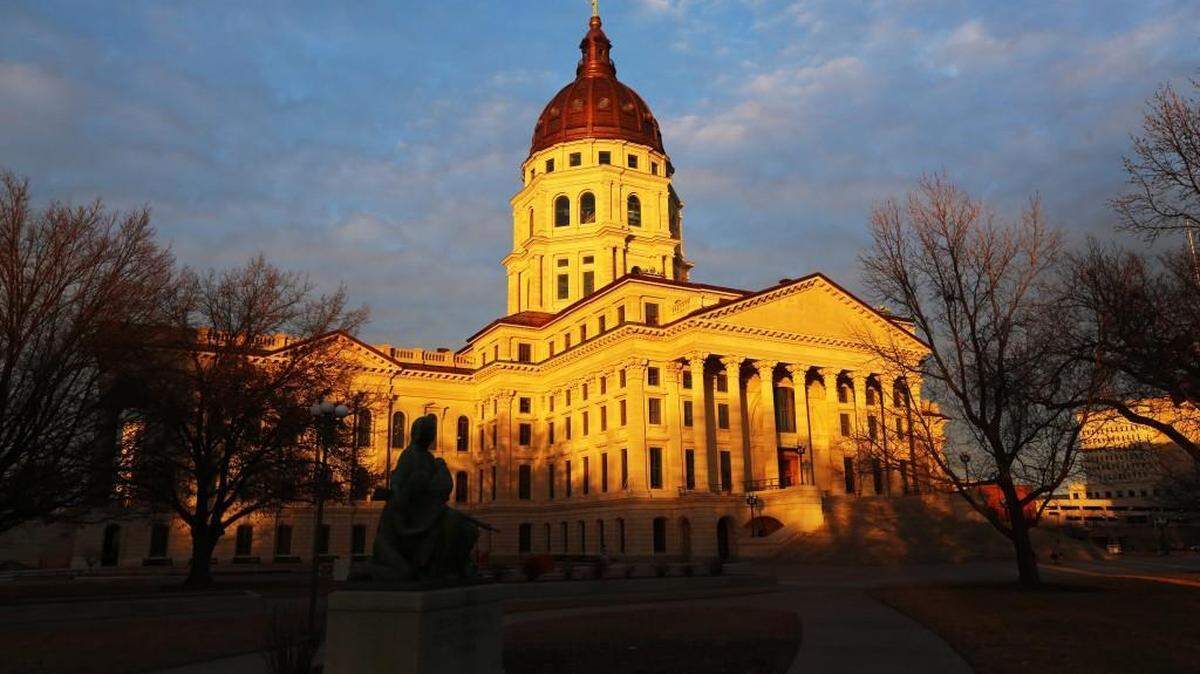
Some Kansas lawmakers will meet a week ahead of their special session to discuss the prospect of passing a constitutional amendment to restrict the Kansas Supreme Court from closing schools in the future.
The proposal would not affect the court’s order for the Legislature to fix inequities in school funding before June 30, but it could limit the court’s authority in future rulings.
“I think the people of Kansas should get the opportunity to decide whether closing schools should ever be an option for the court or the Legislature,” said Senate Vice President Jeff King, R-Independence.
I think the people of Kansas should get the opportunity to decide whether closing schools should ever be an option for the court or the Legislature.
Senate Vice President Jeff King
R-IndependenceThe court ruled last month that the Legislature had failed to ensure equitable school funding. If the Legislature does not resolve the issue before the deadline, the court could block the distribution of $4 billion in state education funding, triggering a shutdown of school districts in July.
Gov. Sam Brownback has called lawmakers back for a special session on June 23 to address the ruling, which could lead to $38 million more for school districts statewide.
The Senate and House judiciary committees will meet a week early to discuss a proposed constitutional amendment that would prohibit the court from closing schools in the future.
“I know tens of thousands — if not hundreds of thousands — of parents in the state are worried that they’ll have a place to send their kids, teachers are worried if they’ll have jobs and I think we need to let the voters decide whether they want constitutional protections to ensure that our schools stay open,” said King, who chairs the Senate Judiciary Committee.
If a constitutional amendment receives approval from two-thirds of both the Kansas House and Kansas Senate, it will be placed on the November ballot for voters to decide.
“I’m good with letting the people tell us what to do,” said Rep. John Barker, R-Abilene, the House Judiciary chair.
Sen. Carolyn McGinn, R-Sedgwick, a member of the Judiciary Committee, said that she would prefer for the Legislature to focus on crafting an equity fix rather than wading into the constitutional debate.
“If we continue to talk about whether we’re going to defy the courts or whatever, we’re really wasting our time and taxpayers’ money, because at this point in time we’re where we are today and if we want to change the constitution that’s something we can talk about for next year,” she said. “But right now we’re at the final hour.”
Article Six
If voters approve the amendment, it could restrict the court’s authority to rule in the future, including when it decides whether school funding is adequate.
A decision on adequacy could potentially yield hundreds of millions more in state funding for school districts.
John Robb, the attorney for the Wichita school district and other plaintiff districts, called the push for an amendment “a knee-jerk reaction.”
“If we amended the constitution every time we didn’t like a court order, we’d be doing it every week. The people of Kansas put Article Six in for a reason — because they wanted their courts protected,” Robb said. “The courts have been protecting the schools, and the legislators are just mad as hornets about it.”
If we amended the constitution every time we didn’t like a court order, we’d be doing it every week.
John Robb
the attorney for the Wichita school district and other plaintiff districtsArticle Six of the Kansas Constitution requires the Legislature to ensure suitable funding for schools, a requirement that was enacted by a constitutional amendment in 1966 and under which the current school finance case has been litigated.
Limiting the court’s power to rule in future school finance cases would make this requirement impossible to enforce, Robb said.
“If you take all remedies away from the court, you emasculate Article Six. You nullify it. It’s like not having it,” Robb said. “If there’s no way to enforce it, there’s no reason to have it. It would be like making a freedom of religion argument and saying there’ll be no remedy if the government prevents you from going to church.”
‘Next big hammer’
Jeffrey Jackson, a professor at Washburn University School of Law, said the court could enforce the suitability requirement in other ways if that happens, including ordering the appropriation of money, something that federal courts did when enforcing the desegregation of the Kansas City, Mo., school district.
“That becomes your next big hammer, I think,” he said. He noted that the state district court has ruled that way in the past, but that the Kansas Supreme Court has not so far.
Rep. John Carmichael, D-Wichita, the ranking Democrat on the House Judiciary Committee, said if Republicans don’t want the court to be able to rule on school finance, they should bring an amendment “to eliminate the requirement of a suitable education for Kansas schoolchildren.”
“If that’s really what the voters of this state and the citizens of the state believe is a good idea, then that’s what they need to bring, simply to say, ‘We don’t have to adequately fund our schools and it’s not a constitutional requirement in Kansas,’” Carmichael said. “Now, I don’t think that’s the state that any of us want to live in.”
Jackson said the Legislature could theoretically “pass a constitutional amendment saying basically there is no remedy.”
“Then you’d have a right, but no remedy,” he said. “It would be close to the same effect as repealing that provision in the first place, basically turning that part of the constitution into an advice statute that says, ‘Hey, you should do this, you have the power to this, but there’s no remedy if you don’t.’”
‘A sideshow’
Carmichael predicted the proposal would fall short of the 84 votes needed to pass in the House, pointing out that an attempt to change the way Kansas Supreme Court justices are selected fell short of the minimum votes needed earlier this year.
The proposal’s real intent is to serve as “political theater and a sideshow to try and distract voters from the real crisis in Kansas,” Carmichael said.
Barker said the amendment could pass in the House but that would depend on the wording. Barker, a retired judge, said he personally likes to give judges a wide range of options of how to rule “but if judges overreach, then there should be some restriction on that.”
“On less than 1 percent of a budget if you want to close schools, that’s pretty dramatic. That’s like trying to shoe a horse with a sledgehammer,” Barker said.
Bryan Lowry: 785-296-3006, @BryanLowry3
This story was originally published June 9, 2016 at 1:11 PM with the headline "Kansas lawmakers to weigh constitutional amendment ahead of special session."