
Builders plan to comment on proposed duplex rules in this Wichita-area town
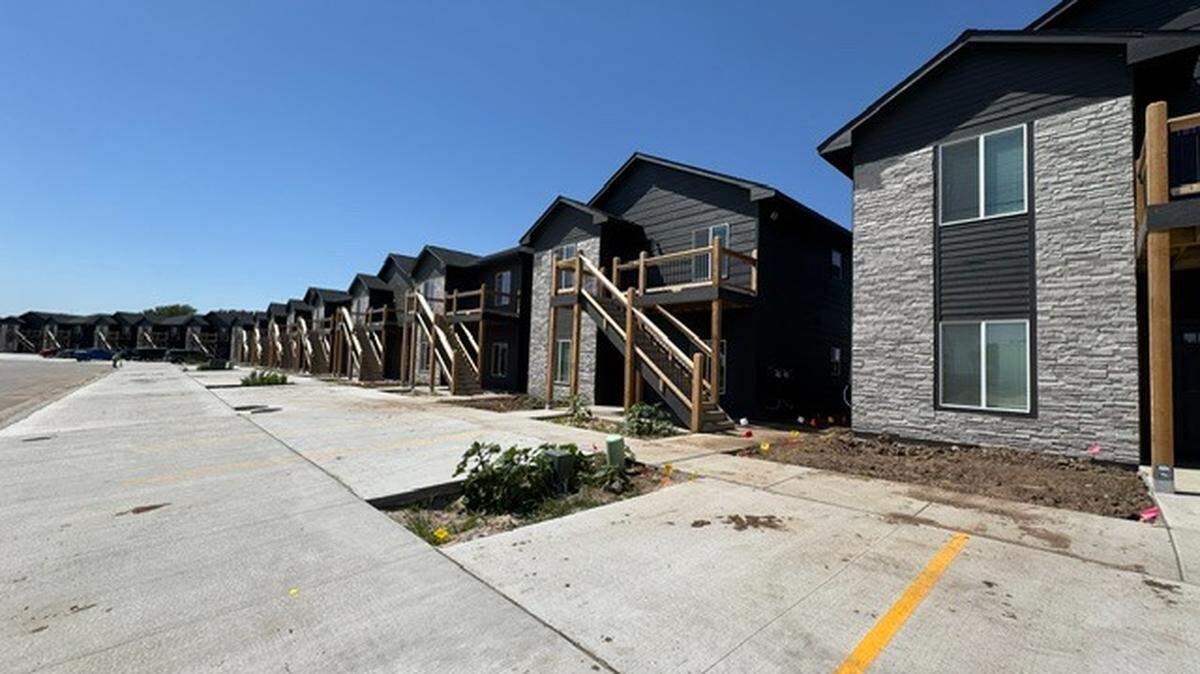
The Wichita Area Builders Association will get the chance to weigh in on Goddard’s proposed duplex regulations before the City Council votes on them. But it’s not clear what the association will say.
It’s also not clear whether the city will make any changes to the pending regulations, which have been developed over several months.
“I can’t say … whether changes will be made based on WABA’s comments, but we’re creating an opportunity for potential marginal adjustments if they bring something to us that we feel could add value,” City Manager Craig Crossette told The Eagle via a May 28 email. “There are a couple other slight tweaks we’re looking at as well.”
Tyler York, WABA’s president and CEO, and at least three home builders plan to address the Goddard City Council on June 15 regarding the proposed regulations, York said during a May 29 phone interview with The Eagle.
“Our goal isn’t to ultimately stop these standards from going through,” York said. “But we would like to talk about what these regulations could mean to the cost of these developments.”
He went on to say that there is a “diversity of thought” even among WABA members about the potential value — or potential harm — of what Goddard is proposing.
“Some of our builders are experiencing the same duplex fatigue that these communities are,” York said.
On May 27, the Derby City Council approved a regulation governing everything from the density to design of future duplex developments. York said Derby and Goddard aren’t the only two communities in Sedgwick County considering similar regulations, although he declined to identify any other communities by name.
York said he didn’t want to discuss specifics of Goddard’s proposed policy until WABA has a chance to meet with the City Council.
Crossette recently shared a text exchange with York that led to Crossette’s recommendation to delay action on the duplex resolution. The council had planned to consider the new duplex regulations at its May 18 meeting.
That text thread included these concerns from York: “(Duplexes are about) the only ‘affordable’ housing options for those entering the market with the wages we have here. These new rules in Goddard will certainly increase costs on builders/developers, which will be passed on to the end user. It’s going to eat up more land per unit so density will be an issue. To have 10% windows on the front requires the building to either be a whole lot wider or two-story. You can’t meet current market demands by … having (a) 40% cap on two-family units in an entry-level subdivision.”
Rethinking the affordability factor on duplexes
During his interview with The Eagle, York pointed to a Wall Street Journal article that was published recently calling Wichita “a rare Mecca of affordability”. That article referenced, in part, the area’s “duplex boom” as a reason for the affordability.
York said he thinks a lot of locals scoffed at the premise, adding: “Over the past five or six years, I think competitiveness — rental competitiveness — has just gone through the roof.”
He went on to say that changes for future duplex developments in Goddard and other places will make those projects even more expensive.
“My members can’t develop and build under conditions that make it harder to put people into homes,” York said in his text to Crossette.
WABA didn’t have specific numbers on duplex construction, but total home building in the greater Wichita area was down in the first quarter of this year, when 308 building permits were filed, compared with the 337 permits filed in the first quarter of last year. And the market is a long way from recovering from the Great Recession of 2008-09. In the first quarter of 2006, for example, 667 residential building permits were filed, followed by 561 during the same time in 2007, according to WABA data.
York said that duplexes have played a critical role in getting more people into single-family homes, and not just in Goddard.
“For many that are coming into the housing market right now, renting a duplex might be their only option while they build their savings to own a single-family home,” York said.
Goddard’s proposed duplex regulation
As proposed on May 18, Goddard’s duplex resolution would include the following changes:
• Duplexes may not make up more than 40 percent of the total number of homes in future developments.
• New design standards would seek to diversify the look and improve the perceived quality of these properties.
• Developers must install a private amenity that meets the standards provided in the resolution. Options include playground equipment, trails, open lawn play areas, picnic facilities, benches, shade structures, sports courts or other improvements approved by the city.
• The proposed resolution allows the City Council to waive in part or in whole provisions of the resolution in the event they are deemed impractical.
• The latest version of the resolution has removed language related to irrigation, lighting and other elements in an attempt to prevent a developer from stating these items constitute an amenity.
• Five-foot-wide sidewalks would be required on all through streets in new developments featuring duplexes, and a minimum of two trees per lot would be required before a certificate of occupancy is issued.
• Varied porches, rooflines and facade depths would be required to create variety and individuality of the dwelling units. In addition, windows must make up at least 10% of the front wall of each home, and garage doors may not take up more than 50% of the front of the home.
• A minimum of 30% of front exterior walls or side walls that face the street would be required to be finished with decorative masonry, stone or stucco. “Synthetic or imitation materials with a false or ‘tacked on’ appearance” will not be allowed without the written approval of the city manager or his or her designee.
• Roofs and exterior paint colors would have to be varied and have predominantly earth-tone colors.
• Side and rear elevations, garages, carports and all accessory structures would have to show the “same level of design, aesthetic quality and architectural detailing” as the front-facing parts of the main structure. “Long, monotonous rows of garage doors and building walls” would not be allowed in the current version of the resolution.