
Kansas governor rejects Legislature’s property tax bill as a ‘false promise’
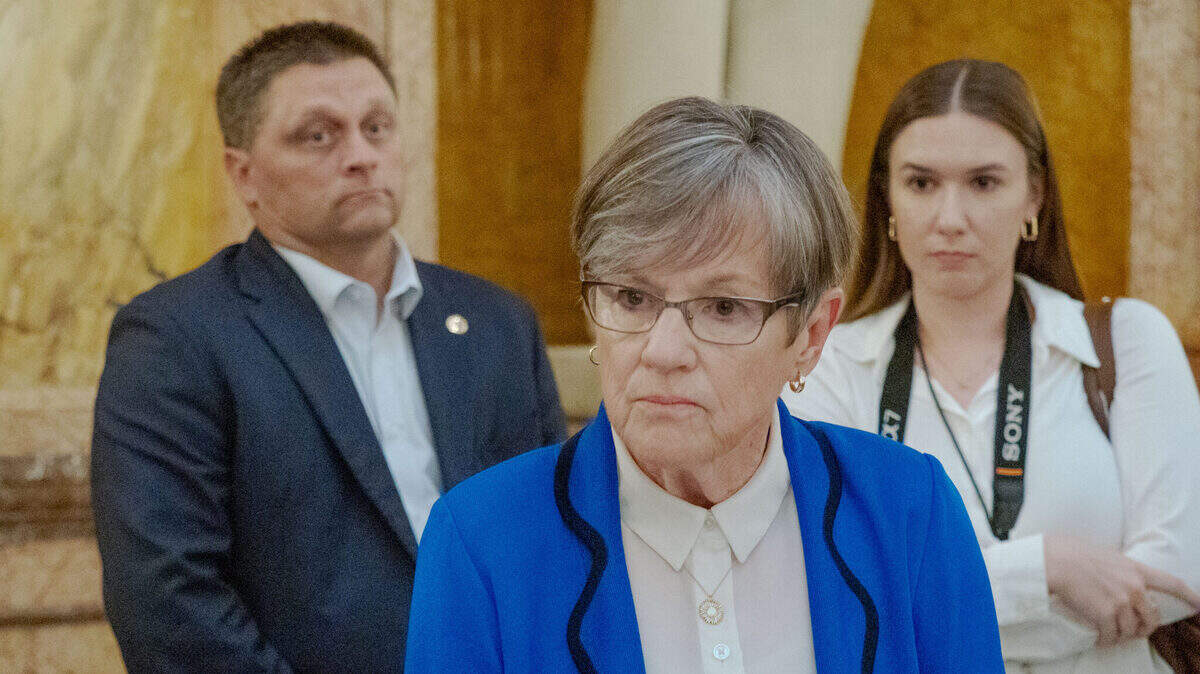
Democratic Gov. Laura Kelly on Monday vetoed a bill adopted by the Kansas Legislature to curtail rising property taxes by placing unprecedented restrictions on the ability of cities and counties to increase spending.
House and Senate Republicans secured passage of House Bill 2043 at close of the 2026 session, but the Legislature adjourned rather than wait to see whether the governor accepted or rejected the bill. The decision to leave Topeka on April 11 meant there was no chance for the Legislature to override Kelly’s veto of the bill limiting local government spending increases to a 3% cap or the rate of inflation — whichever was smaller.
Under the bill, decisions by a city or county government to exceed the new benchmark could be blocked if 10% of voters taking part in a previous election for secretary of state signed a petition.
“For the last several years, the Legislature has promised to solve the property tax issue for Kansans. This has always been a false promise,” said Kelly, who acknowledged property taxes were too high. “It is time for the Legislature to partner with our city and county officials to develop a strategy to reduce the property tax burden on their constituents.”
The bill was approved by the House on a vote of 87-35. The Senate pushed it through on a 27-13 vote. If those totals were to hold, and the Legislature were in session, the bill would have had enough support to override the governor.
Despite making property tax relief among the Legislature’s top priorities in 2026, GOP leadership in the House and Senate fought throughout the session on how to accomplish the goal. There was bipartisan concern that rash changes by the Legislature could make it financially difficult for local units of government to operate. Property taxes are primarily levied at the local level, with the exception of 20 mills set aside to fund the state’s public school system.
House Speaker Dan Hawkins, a Wichita Republican campaigning for state insurance commissioner, sought approval of bills, including HB 2043, to get at the property tax riddle by limiting local government spending.
He alleged, without evidence, the governor had no intention of signing a bill granting property tax relief and asserted she vetoed it “for purely political reasons.”
“The high cost of property taxes in Kansas has reached crisis level and HB 2043 simply gave taxpayers a voice,” Hawkins said. “If local governments want to raise taxes beyond what families can keep up with, Kansans should have the right to say, ‘No.’ ”
Earlier in the day, Hawkins begged the governor to give the bill careful consideration. The House speaker asked Kelly to “put politics aside and put the people of Kansas first.”
Meanwhile, Senate President Ty Masterson, a Republican from Andover competing for the GOP nomination for governor, maintained the best method of dealing with the property tax question was to amend the Kansas Constitution to set a 3% cap on annual increases in assessed valuation of property. There were bipartisan objections to the constitutional amendment concept because lawmakers concluded cities and counties would secure revenue from other tax sources rather than lower the property tax burden.
Masterson was despondent about the House’s refusal to accept the Senate’s preference for the constitutional amendment option. The Senate president expressed contempt for the House-favored alternative vetoed by Kelly, saying it was merely “better than nothing.”
Kelly unsuccessfully urged the Legislature to consider a package featuring a one-time $250 reduction on vehicle property taxes, a doubling of the current $75,000 residential exemption from the property tax mill levy for schools, and creation of a $60 million state fund to help counties buy down property tax increases.
This outline followed a plan recommended by Democratic Sen. Ethan Corson, who has been endorsed by Kelly in the Democratic Party’s race for governor.
“Legislative leadership never allowed legislators to discuss or vote on my proposal. Instead, they ramrodded through another sure-to-fail, untenable property tax bill,” the governor said.
This story first appeared on Kansas Reflector, a nonpartisan, nonprofit news organization covering state government, politics and policy.
This story was originally published April 28, 2026 at 11:32 AM.