What do Trump’s tariffs mean for Kansans in 2026? One sector may be hit hard
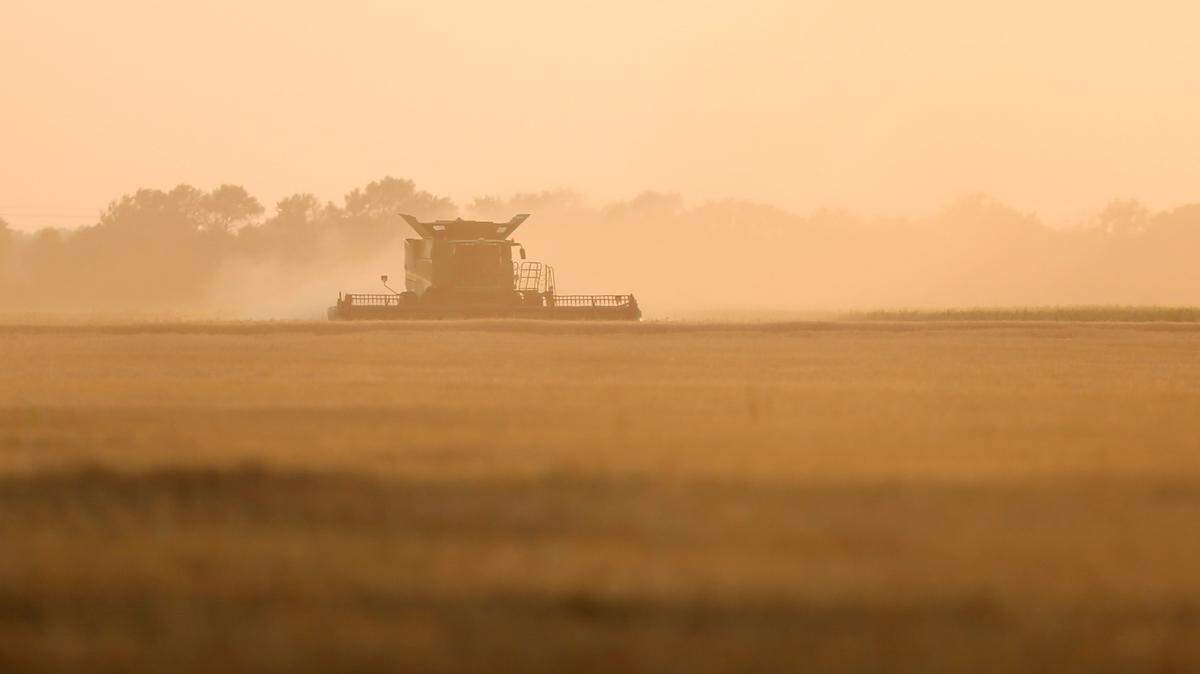
According to one Kansas State University professor, tariffs imposed under President Donald Trump’s administration could have an outsized effect on the state’s agriculture industry.
Donna Ginther, economics professor at K State, said tariffs will most likely continue to hit Kansas farmers, maybe even more so in the second year of Trump’s administration.
“Over time, we may feel more of the bite,” Ginther said.
So, what goods could this affect? What products does Kansas export? Here’s a quick guide.
What are tariffs?
Tariffs are taxes applied to goods imported from other countries. They are usually put in place to protect domestic industries, but can be used to retaliate against trade practices, the U.S. Council on Foreign Relations says.
The response to tariffs may lower demand for specific products, or cause importers to charge higher prices, which are then passed along to the consumer, Ginther said.
“If it’s something that you need, then you are going to be paying higher prices,” Ginther said.
How will tariffs impact Kansas agriculture?
Tariffs affect both products that consumers will purchase and those that Kansas exports to other countries, as those importers may choose to retaliate, as well.
“For the longest time, we exported soybeans and other commodities from Kansas to China, and China stopped buying a lot of our agricultural goods,” Ginther said. “When you start engaging in tit-for-tat tariffs . . . countries retaliate.”
Kansas also looms large in the high-tech manufacturing sector, producing airplane parts and GPS systems, which play a large role in the state’s economy.
“Those may also be affected by tariffs in terms of people not wanting to buy them,” Ginther said.
In July, President Trump and the European Commission President announced that all aircraft parts would be exempt from the U.S.-European trade agreement. That doesn’t mean all airplanes will not have imposed tariffs, however. Last week, Trump threatened a 50% tariff on all planes made in Canada unless Gulfstream products, made in America, are certified in the country, CNN reported.
Allen Featherstone, head of K State’s Department of Agricultural Economics, said steel will likely become more expensive due to tariffs.
“Those equipment type things [are] probably going to be a little bit more expensive, depending on how the companies decide to put price,” Featherstone said.
Additionally, fertilizer could also be subject to higher prices.
“A lot of the fertilizer we input, and so certainly that will be an issue,” Featherstone said.
However, lowering costs elsewhere may help the price of fertilizer.
“A lot (of fertilizer) is petroleum based, (and) with the decrease in petroleum prices, that will kind of be a counterbalance,” Featherstone said.
When it comes to output, Featherstone said, soybeans are a major Kansas export and likely to be affected by tariffs. The state is also a big producer of sorghum, which may be of even more of a concern.
“That one may actually have a bigger economic impact than soybeans because … there (are) a lot less states that produce sorghum,” Featherstone said.
The Trump Administration rolled out a $12 billion bailout program for farmers struggling in the midst of tariff uncertainty. The funds, mostly coming from the Agriculture Department’s Farmer Bridge Assistance program, were announced after China’s decision to halt purchases of U.S. farm products due to announced tariffs. The assistance will go to producers of corn, cotton, sorghum, soybeans, rice and wheat, the New York Times reports.
The top five markets Kansas exports goods to, as of 2023, are Mexico, Canada, Japan, China and Korea, according to the Kansas Department of Commerce.
According to the KDOC, the top 10 exports from Kansas in 2023 were:
- Aircraft and parts
- Meat
- Industrial machinery
- Cereals
- Electric machinery
- Oil seeds
- Vehicles and parts
- Food industry residues and waste
- Optic and medical instruments
- Inorganic chemicals