Here’s why the public price tag for Chiefs stadium in Kansas may top $6 billion
AI-generated summary reviewed by our newsroom.
- Analysts estimate Kansas’ Chiefs stadium deal could cost taxpayers about $6.3B.
- Kansas plans $1.8B in STAR bonds plus $975M more, debt service raises burden.
- Researchers flag the deal as the largest U.S. stadium subsidy by capital cost.
The public price tag on the Kansas City Chiefs’ planned Kansas stadium development will likely add up to more than double the topline figures included in the deal announced Dec. 22 that secured the team’s 30-year commitment to the Sunflower State.
In the end, it may cost taxpayers more than $6 billion, according to experts familiar with such projects who reviewed the Kansas deal at The Star’s request.
On the deal’s surface, Kansas has agreed to issue $1.8 billion in sales tax and revenue, or STAR bonds, to fund construction of the domed stadium in Wyandotte County.
The state has also committed to issuing up to another $975 million in STAR bonds to fund privately owned developments around the stadium and in Olathe, where the team plans to build a training facility and headquarters.
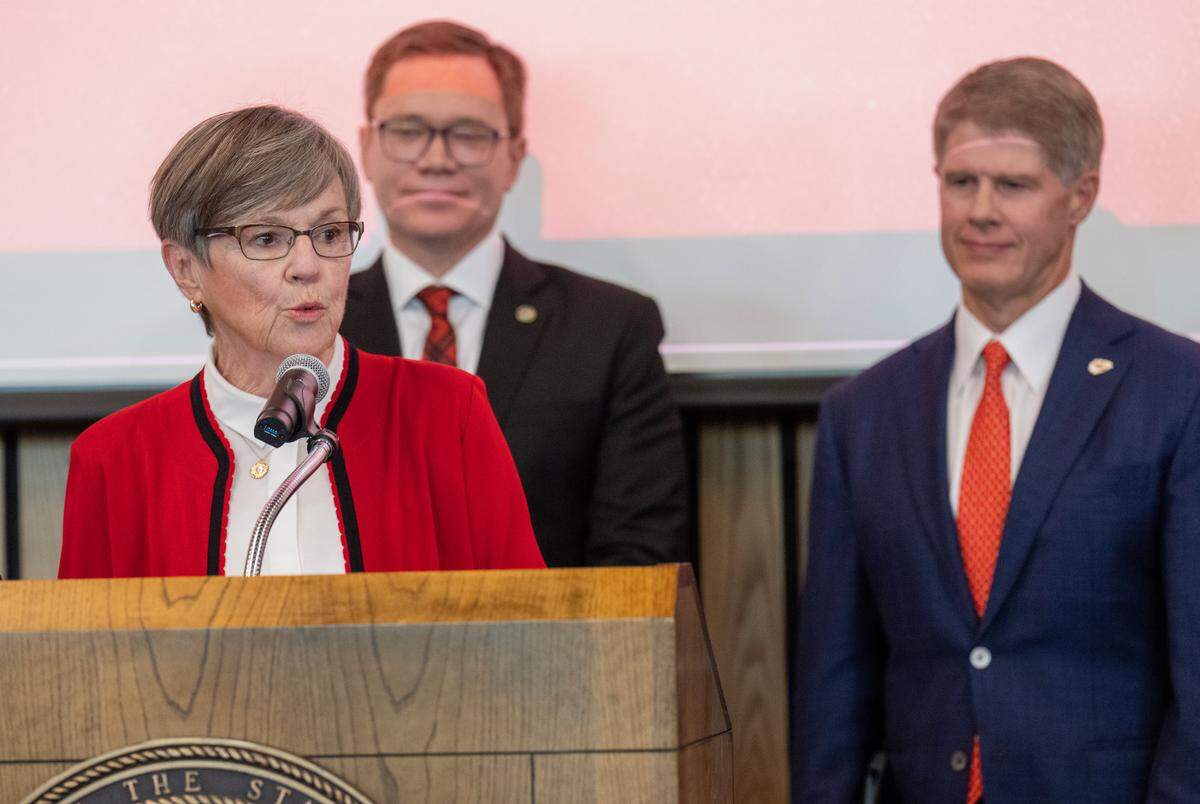
Together, those figures touted last Monday in a celebratory announcement in Topeka with state officials and the Chiefs, add up to $2.775 billion.
“The $2.775 billion is, again, an underestimate because that ignores debt service costs,” said Geoffrey Propheter, a professor at the University of Colorado-Denver who has studied sports and urban affairs.
Assuming a 30-year bond payment at 4.2% interest with level debt service, Propheter estimated the $1.8 billion bond issuance alone would have an annual debt service of roughly $170 million.
“Once you factor in debt service costs, once you factor in the property tax exemption on the stadium site . . . and then the state’s commitment to maintenance costs — once you add all those up and do the calculations in present value terms, you’re at $4.1 billion. In nominal terms, you’re at $6.3 billion,” Propheter said.
Possible property tax exemptions for team facilities in Johnson County could further add to the price tag, he said.
The lion’s share of public money poured into the project will come from state — and possibly local — sales tax revenue generated across a vast new STAR bond district that will span virtually all of Wyandotte County and a broad swath of western Johnson County.
Until the bonds funding the project are paid off, incremental revenue generated within the STAR bond district beyond a baseline amount set by the Kansas Department of Commerce will be diverted from other government priorities.
Is Chiefs’ incentive largest ever?
Another researcher told The Star that by at least one metric, Kansas’ deal to poach the Chiefs from Missouri represents the largest public subsidy in the history of American professional sports.
J.C. Bradbury, a professor at Kennesaw State University in Georgia, specializes in sports economics and maintains a comprehensive database tracking how much public money has gone to support each American professional sports team’s stadium.
Bradbury’s analysis found that Kansas is poised to spend more on capital construction costs than any other state or local government has contributed to a stadium project before.
“When I say it’s the most expensive public subsidy on a stadium, I’m only looking at the capital construction costs and putting those in present value terms,” Bradbury said.
His analysis includes the $1.8 billion that will directly support stadium construction. It doesn’t account for the millions in annual maintenance money that will come out of Kansas’ sports betting revenue, property tax abatements that will likely keep all team facilities off the tax rolls, or the $975 million that Kansas could dole out in support of the mixed-use development as construction milestones are achieved.
“I do separate out ancillary developments because they’re different, because that’s not an apples to apples comparison,” Bradbury said.
With those caveats, though, the Chiefs stand to receive more public dollars for their stadium than any other professional sports team in the U.S. or Canada has before, Bradbury said.
To date, Olympic Stadium in Montreal is the most heavily subsidized stadium project in North America, he said. Completed in 1976 before the Olympic Games and later converted into the home of the Montreal Expos, Olympic Stadium received just under $1.5 billion in public funding, adjusted for inflation.
After that, the $1.26 billion in public support for the Tennessee Titans’ soon-to-open new Nissan Stadium in Nashville represents the largest public subsidy, followed by the $950 million in public financing for the New Orleans Superdome, the home of the Saints, which opened in 1975.
Comparing Kansas and D.C. stadium deals
Propheter, the University of Colorado-Denver professor, takes a slightly different approach to comparing stadium subsidies. His analysis accounts for other aspects of projects beyond capital construction costs, including incentives related to ancillary development.
In his assessment, Kansas offered the Chiefs the second most generous stadium package of all time in terms of wealth and resources being transferred from taxpayers to team owners. Only the Washington Commanders were given better terms when they inked a deal earlier this year, Propheter said.
Commanders owner Josh Harris will foot the construction bill for the $2.7 billion stadium. The city has committed to spending $1.1 billion upgrading infrastructure around the stadium development.
But the aspect of the deal that Propheter said makes it uniquely team owner friendly is the 90-year exclusive development right land lease the city is giving Harris on 20 acres of riverfront property along the Anacostia River.
Monetizing the value of the lease rights over 90 years to calculate incentive value, Propheter said the arrangement will cost D.C. between $6 billion and $25 billion in forgone revenue, with the low end assuming the land value doesn’t appreciate at all.
“The D.C. deal is by far the most generous, lucrative transfer of taxpayer resources to a team owner,” Propheter said.
“That being said, the state of Kansas, Kansas lawmakers are doing their best to try to match D.C.”
This story was originally published December 31, 2025 at 3:53 PM with the headline "Here’s why the public price tag for Chiefs stadium in Kansas may top $6 billion."