
Changes coming to Social Security, agency head says in visit to Wichita
AI-generated summary reviewed by our newsroom.
- Social Security ends paper checks Sept. 30, shifts all payments to direct deposit
- Agency targets 200M online accounts by 2026 to streamline service and access
- Wait times drop after phone system overhaul, official says; audit will verify results
The head of the Social Security Administration visited Wichita to discuss operational challenges, changes and recent improvements aimed at cutting wait times and moving the bulk of the agency’s operations online.
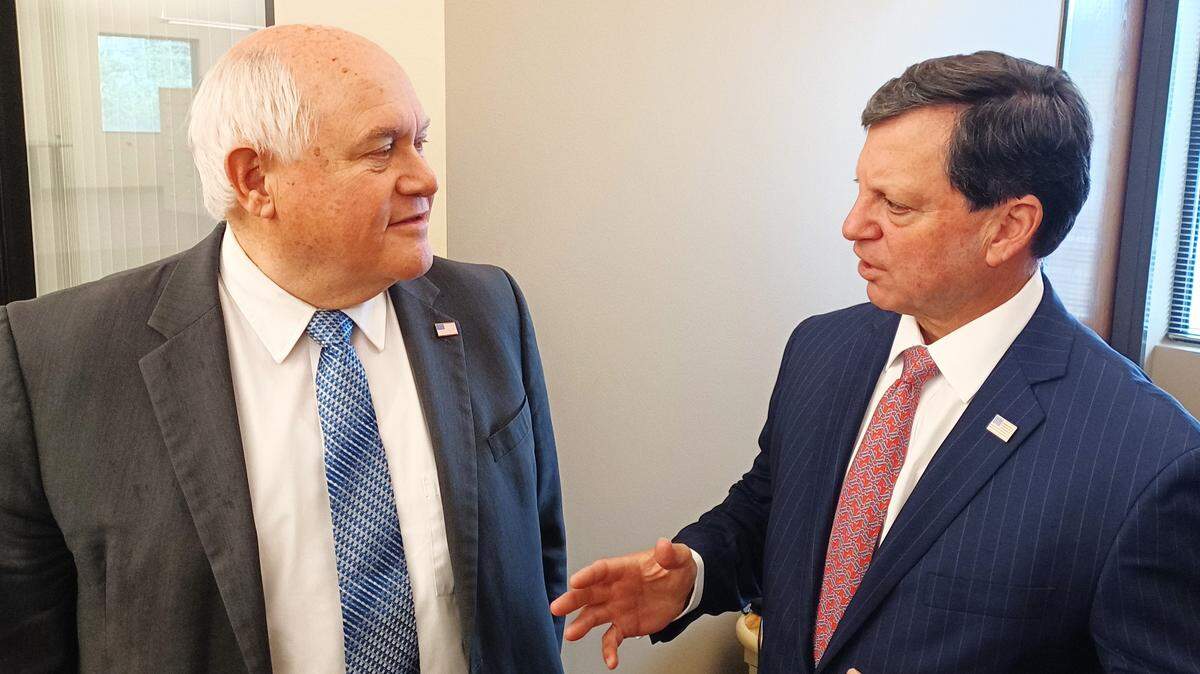
Frank Bisignano, commissioner of the Social Security Administration, met privately with U.S. Rep. Ron Estes, a Wichita Republican who is the chairman of the House Ways and Means Committee’s subcommittee on Social Security, and Colleen Wienck, district manager of Wichita’s field office, on Sept. 5 ahead of a major change at the end of September.
That’s when the agency will end paper checks for all federal payments to comply with a March executive order by President Donald Trump. Those payments will instead be available for direct deposit only.
Bisignano said the agency has 75 million online accounts right now and that his goal is to grow that number to 200 million by as early as 2026. A free My Social Security account allows people to view their earnings history, estimates of future and current retirement, disability and survivors benefits. You can also apply for a replacement Social Security card and other services that have traditionally required in-person visits.
It allows people to apply for retirement and disability benefits online, without the need for an office visit. (Survivors have to make an appointment to apply by phone or in person.)
The visit comes amid pressure from Democratic Sen. Elizabeth Warren of Massachusetts and the Social Security Administration’s acting inspector general to investigate the accuracy of the agency’s reported improvements to call wait-times and other services affected by a reorganization by the Department of Government Efficiency.
An Eagle reporter joined Bisignano and Estes on a tour of the Social Security Administration’s Wichita office in east Wichita and asked a few questions during a brief Q&A session.
Questions and responses have been lightly edited for length and clarity.
Q. What have you learned during your visit to Wichita’s Social Security office?
Bisignano: Every office is different. You know, we have 1,250 field offices, and I try to get to at least one a week. I’m not at all surprised by how good our management is. This, obviously, is one of our higher volume offices in the Midwest and even in our other areas of the country. When you sit down with management . . . you are able to take away items that you can take back, and it’s mostly how we coordinate better, even around areas like vital statistics. Obviously, it’s always great to spend time with somebody like Congressman Estes and both of us being here together, I think it’s a real strategic advantage because we’re partners in making it better for America.
Estes: Obviously, it’s important for constituents in the Fourth District to be able to get their benefits processed in a timely manner and being able to get their checks or direct deposit, trying to get away from checks, but making direct deposits and just being able to have the commissioner here, you know, raises the awareness more about the services that are provided by the Social Security Administration here. Also, you know, it helps with the folks that are working here because, I mean, they know their work is appreciated in terms of what they do as a service to constituents in South Central Kansas.
Q. You are pushing hard to move things online — to digitize operations, payments, etc. — and you said you want to have 200 million online accounts by next year. Are you confident you can get that done?
Bisignano: It is doable. And first, I’d start off with, you know, remember, we have 72 million beneficiaries but we have more than 330 million Social Security numbers in force right now. And that’s the client base. You know, half the people who come to get served in this office are not beneficiaries. We’re providing so many other services now, including initial disability claims, which the office does a fabulous job with. So we will always need the field offices. But there are many things — start with the simple replacement card that, if you have a My Social Security account, you’d never have to come to a field office for. So, over time, what we’ll continue to do the touch of a human, helping a human through one of the most important processes in their life around Social Security and afford that whole digital experience that most people use every day in their daily life.
Q. What’s the goal of this digital push?
Bisignano: First of all, I’m interested in improving the experience for people who work in the office, also giving them the best tools and the easiest way to interact with the public. I think it’s how do we raise employee satisfaction? How do we raise client satisfaction? And, most of all, as I’ve said multiple times, and I know I have the full support of the congressman here, we’re going to meet people where they want to be met. Anybody that wants to come to a field office, this field office will be here for them. Anybody who wants to do everything on the web, we’re going to have that capability for them, too.
Estes: You’re seeing more and more people wanting to use the web, wanting to use the telephone instead of coming and spending a long period of time waiting in a line like what may have been the requirement 10 years ago or 20 years ago. And, as we’ve seen over the past few years, there have been problems with the phone system that was put in several years ago. There was a bad contract, and the system that was designed to replace it didn’t work. So that’s been pulled out now and we’re putting in the new telephone system that actually makes it easier and more seamless for the field offices to work with the processing centers and to help on a national basis.
Q. While going digital may speed things up, how do you make sure that everyone’s data and identifying information is safe?
Bisignano: I think it increases security, right? You know, the Social Security number is the one number that’s most used by everyone, and our job has always been to tremendously safeguard all of that. And I think, you know, the digital environment — although you’ll have people attempting fraud there, there’s also fraud in your mailbox, potentially, where you see people taking checks, as an example.
Q. People are worried that these changes will make it harder to get ahold of a human being to resolve their problems and that offices will close and it’ll be harder to navigate and that eventually it’ll all be fully automated. What do you say to them?
Bisignano: I have been very, very, very clear that we are not closing field offices. I’ve been quite adamant about that.
Estes: I’m supportive of that, having offices that people can come to. I think what we’ve seen with rolling out the new phone system in July here, you’re seeing a lot better response times, and it’s working better for folks to use. I know in the past, over the past year, we’ve had complaints to our office that people couldn’t get their issues resolved and that’s being improved now. That’s an important part. And we’re seeing now the number of people with old age, retirement processing is more seamless and we’re seeing fewer questions about that. I also want to compliment the (Trump) administration for the way they rolled out the Social Security Fairness Act throughout this year in terms of getting literally billions of dollars to recipients like firefighters and police officers and their survivors, widows and widowers. It’s been beneficial and cut that time that had been estimated that it would take to do that.
Q. Commissioner Bisignano, regarding the Inspector General’s review of your agency’s phone wait times, what are your thoughts on that?
Bisignano: I think it’s a fabulous item. The senator (Warren) was quite surprised at the turnaround in performance — so surprised that she asked for an audit of it. And we all know what the results of the audit are going to be: A-plus. It was up at 40 minutes a year ago and it’s single digits now. That’s technology and that’s good leadership and that’s management and support from Congress.