
‘They saved our lives’: Now, Kansas disability rights group’s funding is in peril
Nancy Jensen had to wait almost two decades for justice. It wouldn’t have come without the Disability Rights Center of Kansas, she says.
Now, the legal advocacy watchdog group that helped put her abusers behind bars is facing an existential threat.
The center stands to lose more than 60% of its guaranteed federal funding in 2026 if the Trump administration’s budget proposals for the Department of Health and Human Services and the Department of Education are adopted as written.
The proposals call for eliminating nearly $70 million of grant funding nationwide for protection and advocacy agencies established by Congress 50 years ago to serve people with intellectual and developmental disabilities.
“They saved our lives,” Jensen said of the center’s work on behalf of victims who endured years of abuse at a Newton group home for adults with mental disabilities.
Jensen was the first former Kaufman House resident to file a complaint with the state of Kansas about the horrors that took place there — including coerced sexual activities on videotape, forced labor in the nude and punishment by stun gun.
For years, Jensen’s warnings and those of other former residents went unheeded. When the state did try to investigate, Arlan Kaufman — the licensed social worker who ran the group home with his wife, Linda — sued and won a $75,000 settlement.
But unlike state and local authorities, the Disability Rights Center — as federally mandated protection and advocacy agency — was authorized to conduct welfare checks on private properties like the Kaufmans’. After being notified of former residents’ repeated warnings, the advocacy group made an unannounced visit to Kaufman House in 2004.
The evidence the center uncovered and the testimony of former residents whom they represented throughout the Kaufmans’ federal prosecution landed the couple in prison in 2006 following their convictions on charges including Medicare fraud, forced labor and involuntary servitude.
“I had hospitalizations. I had therapists. No one believed me,” Jensen said. “But that day when I testified, I was vindicated. I was validated. And I was believed. I just had to wait eighteen years.”
Linda Kaufman was granted early parole in 2016 because of health complications and died in 2019. Arlan Kaufman died just over a year later in prison after being denied early release.
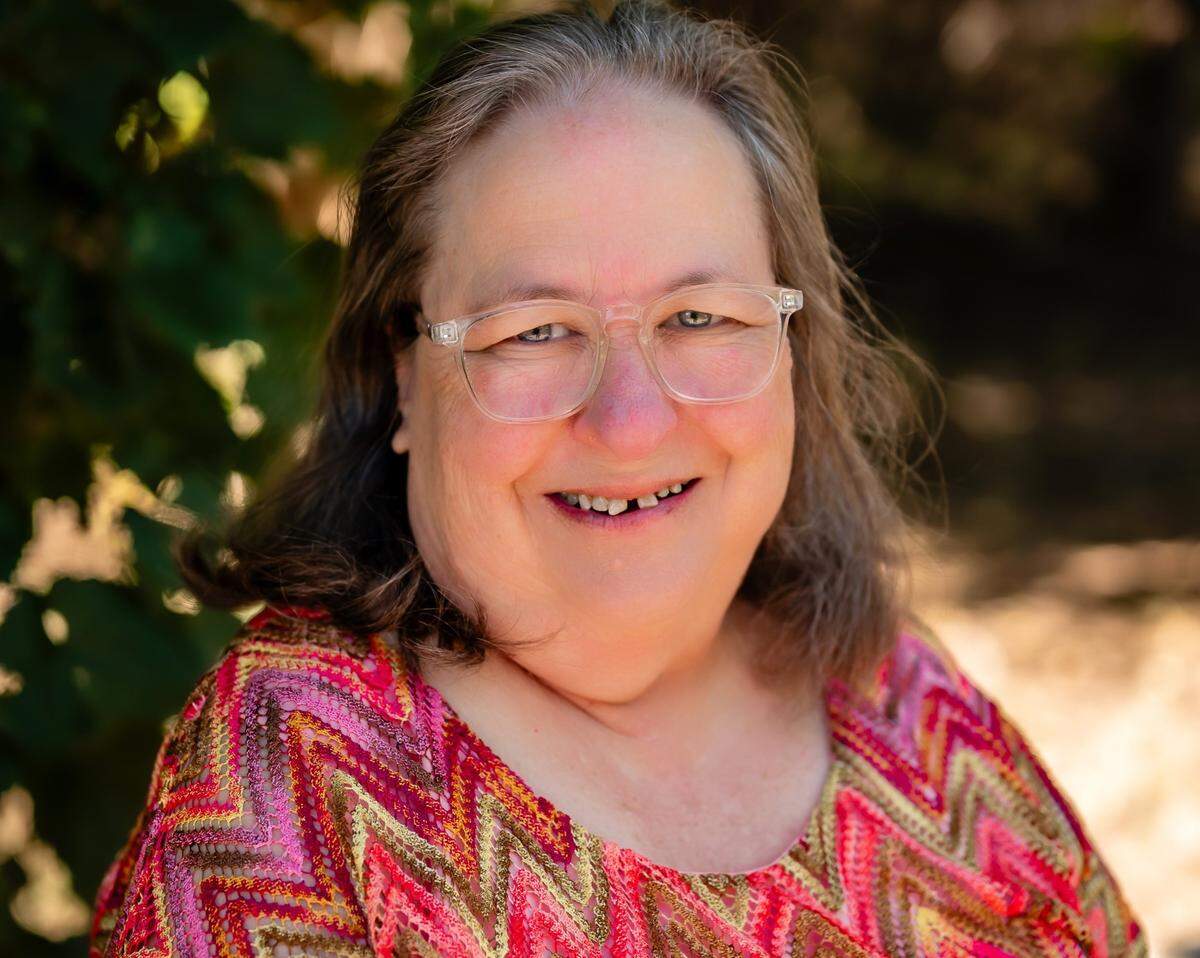
Disability Rights Center aims to weed out neglect, abuse
The Disability Rights Center’s mission is to weed out neglect and abuse perpetrated against Kansans with disabilities, and to fight for necessary accommodations that help them live more fully.
Laura Howard, secretary of the Kansas Department for Aging and Disability Services, called the center’s work invaluable and criticized the proposed funding cuts, which could destabilize independent protection and advocacy agencies in all 50 states and seven U.S. territories.
“DRC has been a strong partner for many years, and we are disappointed to learn of this drastic proposal to reduce critical funding that will ultimately harm Kansans with disabilities,” Howard said in a statement to The Eagle.
This year, the center is receiving approximately $1.8 million in federal grant funding through programs including Protection and Advocacy for Individuals with Mental Illness, or PAIMI, and Protection and Advocacy for Individual Rights, or PAIR. More than $1 million of that funding is now in peril.
“If the president’s budget became law, we would, for people with significant illness, we’d have to dramatically scale back our service,” said Rocky Nichols, the center’s executive director.
Under the 2026 budget, PAIMI would take a cut of more than $25 million — or about 65% — and the PAIR program would lose its entire $20.15 million budget. The federal budget likely won’t be finalized until September or October at the earliest.
PAIMI and PAIR funding are both necessary, Nichols said, because protection and advocacy agencies can only serve people through PAIMI if they have proper documentation of a significant mental illness.
If someone has a mental illness but improper documentation to prove their diagnosis, the center can still serve them through the PAIR program, Nichols said.
A Department of Education budget memo explains the decision to defund PAIR, “as part of the Administration’s overall effort to restore fiscal discipline and reduce the Federal role in education.”
Without the funding to operate as it has for decades, the watchdog group would struggle to thoroughly investigate every complaint it receives — roughly 2,000 a year, Nichols said.
The kinds of cases the center specializes in — from ADA compliance to violations of special education law and fair housing law — aren’t often a focus of private law firms because they offer no major payday, Nichols said.
If a building lacks a wheelchair ramp, the goal of a lawsuit is to get the ramp built. “The remedy is the accessibility,” he said.
Those hard-fought legal battles improve everyday life for the center’s clients, Nichols said.
Advocating for people with disabilities
Cindy is a 60-year old Sedgwick County woman who lives with schizophrenia, COPD and respiratory failure.
The center said it would share only the first names of its clients to protect their privacy, given the personal nature of the challenges they faced.
In 2023, Cindy’s daughter and guardian contacted the center after discovering that the assisted living facility Cindy lived at had neglected her, leaving her unattended in bed without the help she needed to use the toilet. Her bed became soiled with feces and Cindy had to be hospitalized for two weeks after becoming septic, Nichols said.
As part of its investigation into the incident, the center requested medical records from the facility and assisted Cindy in her transition to a nursing facility with the more intensive support services she needed.
In 2018, Elia was a 12-year-old Sedgwick County student whose autism, anxiety disorder and ADHD sometimes led to behavioral challenges at school. During one incident, he was placed in a seclusion room and, instead of using de-escalation strategies, school staff held the boy face down for 16 minutes in violation of a state order against prone restraint in schools, Nichols said.
A DRC attorney filed a complaint with the Kansas State Department of Education on behalf of Elia’s family. Following an investigation, KSDE substantiated the violation, ordering the school to provide its staff with training on safe, lawful, and appropriate behavioral interventions.
Another key aspect of the center’s work is identifying when treatment facilities take advantage of Medicaid and other government programs by attempting to keep patients in their care for longer than necessary. For-profit facilities can have a financial incentive to continue collecting reimbursement checks — even when their services no longer fit the needs of patients, Nichols said.
Raul, a 30-year-old Johnson County man with bipolar disorder, schizophrenia and Asperger’s syndrome, was admitted to a for-profit nursing facility in 2020 because of mental health issues. He remained institutionalized there for an extended period despite the facility not providing support for people with developmental disabilities, such as Asperger’s syndrome, Nichols said.
DRC staff intervened to help Raul get discharged from the facility and set up with community-based support services that better served his needs and dramatically decreased the cost of taxpayer-subsidized treatment, according to Nichols.
Voter accessibility and vocational training
Other federal disability rights programs are also at risk. Budget proposals suggest funding could be eliminated for a program dedicated to helping people with disabilities register to vote and ensuring accessibility at polling stations.
Also at risk of being defunded is the Client Assistance Program, or CAP, which helps people with disabilities obtain vocational training and jobs.
After representing Jensen during the Kaufman trial, DRC made use of the program to assist her in obtaining a job at Wichita State University’s Center for Community Support and Research.
Jensen found her voice and became a fierce advocate for people with mental health challenges, testifying before Congress about the importance of federal funding for disability rights programs.
During Jensen’s year at Kaufman House, she remembers Arlan Kaufman telling her she would never hold down a job, that she would burn out members of her church and the mental health system, and that she should never get married or have children. Once she escaped his web of torment, she proved him wrong, defying him with each personal achievement.
Now, she wants to ensure that other people navigating their own disabilities have the same opportunities preserved for them. She said she worries what could happen to vulnerable people if protection and advocacy agencies have to lay off staff and cut back on services.
“Maybe there would be two or three people in an office that didn’t lose their job because of this, but they couldn’t handle everything that we would want them to,” Jensen said.
“I am concerned that we are going to go back to the dark ages.”
This story was originally published July 18, 2025 at 4:55 AM.