
When will Wichita, Sedgwick County start spending opioid settlement money?
Elected officials with Wichita and Sedgwick County want to speed up the process of getting $15.5 million in opioid settlement dollars into the community.
The city and county decided in 2023 to pool their funds after they signed on to a national settlement agreement with opioid manufacturers and distributors for their role in the opioid crisis.
But that money has largely been sitting untouched as the governments waited for guidance on how to spend it from a local needs assessment and strategic plan that were completed earlier this year.
“We have been lucky enough in a really terrible situation to receive some of these funds, and I want to make sure that we’re not just continuing to talk the talk,” city council member Maggie Ballard said. “We really need results, and that’s what our community is desperate for.”
City and county officials discussed creating an advisory group made up of 11 to 15 community members that work in mental health and substance use treatment and prevention and other providers to review applications for the money.
The advisory group was part of recommendations from the strategic plan, as well as hiring a third party to oversee where the money goes and monitor how it is spent, much like how the state opioid settlement board is set up.
It’s also how the city and county’s special liquor tax committee functions.
But elected officials stopped short of fully supporting hiring a third party because of the cost, especially since the fund will be set up for a limited amount of time.
Since the city and county signed on to the settlements in 2021, it has received but not spent more than $5 million. The rest of the money will be disbursed over the next 14 years.
“There’s a third party that actually administrates and then also does the evaluation piece. It’s my understanding that’s about $145,000 a year,” Assistant County Manager Rusty Leeds said about the liquor tax committee. “So that would be a primary cost.”
Commissioner Jim Howell suggested either the city or county fully take over administering the funds, but that idea was quickly shut down.
Elected officials also had differing opinions about where the money should go.
The plan recommends that nearly 40% go toward expanding treatment in the county, while the rest go toward integrated care, education and overdose prevention.
Overdose deaths are trending downward in Sedgwick County but are still much higher than other parts of the state. In 2023, 243 people died from an overdose — most fentanyl-related — in the county, according to the health department.
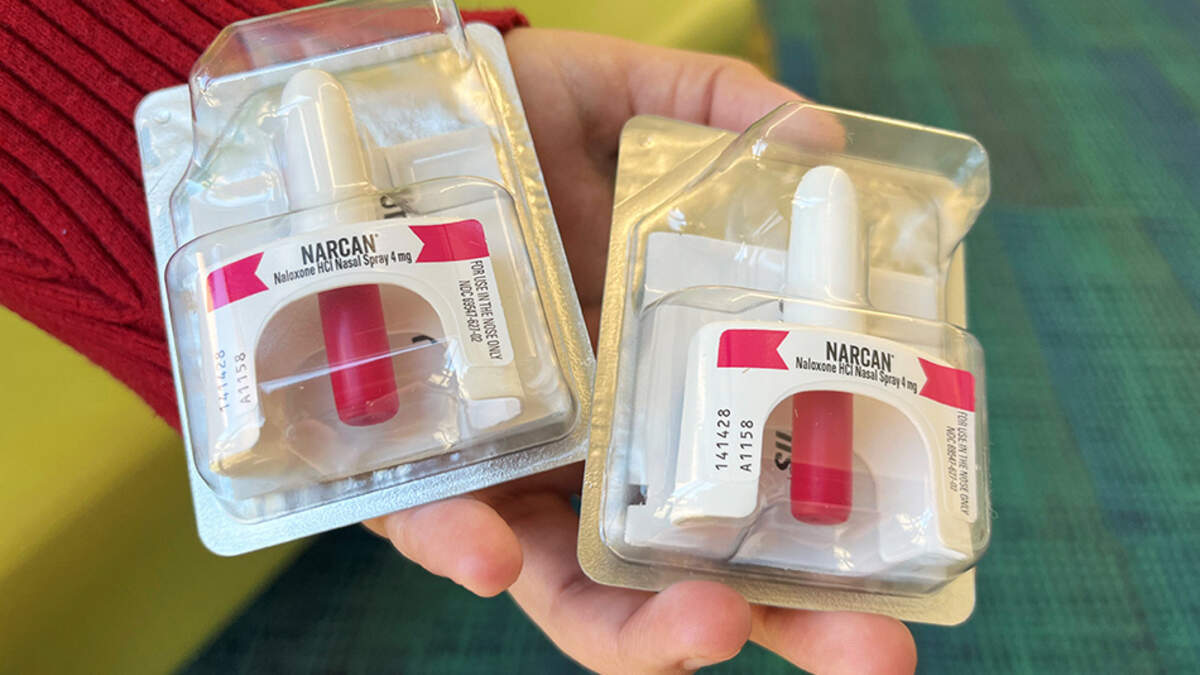
Howell opposed using settlement dollars for naloxone, often referred to as Narcan, a lifesaving medication that reverses an opioid overdose.
“I’m actually not a fan of the Narcan,” Howell said. “I’ve talked to the law enforcement about this. It’s popular, but at the end of the day, it actually has a mixed message to the users that they can use these drugs, and they can have a solution if they go too far.”
Council member Mike Hoheisel pushed back on Howell’s statements and suggested using the money for education and prevention, as well as getting people treatment while they’re at the Sedgwick County Jail — all of which the plan recommended.
Hoheisel and other council members also suggested using the funds to provide treatment and prevention services to people in the city’s multi-agency center (MAC) for the homeless.
“When people are in jail, they dry out,” Hoheisel said. “That’s a good time to be able to try and really get to them, so that way they don’t go back out on the street and start using again.
“MAC adjacent programs to help with the population that we have in the MAC, try and get them into a rehab until we have available beds as well.”
City and county officials will vote on a memorandum of understanding and creating the advisory council to begin discussion on allocating the funds by the end of the year.
“I don’t want to clog this thing up because of discussions about the bureaucracy,” Commission Chair Ryan Baty said. “The fees? That’s genuine. It’s a genuine conversation we have to have. I don’t give a damn if it’s the city or the county, but let’s get the advisory council going, and let’s get the dollars implemented.
“People are dying in the streets like, let’s get the dollars implemented.”
This story was originally published April 29, 2025 at 4:05 PM.