
Kansas has millions to spend addressing substance use disorders. What new report says
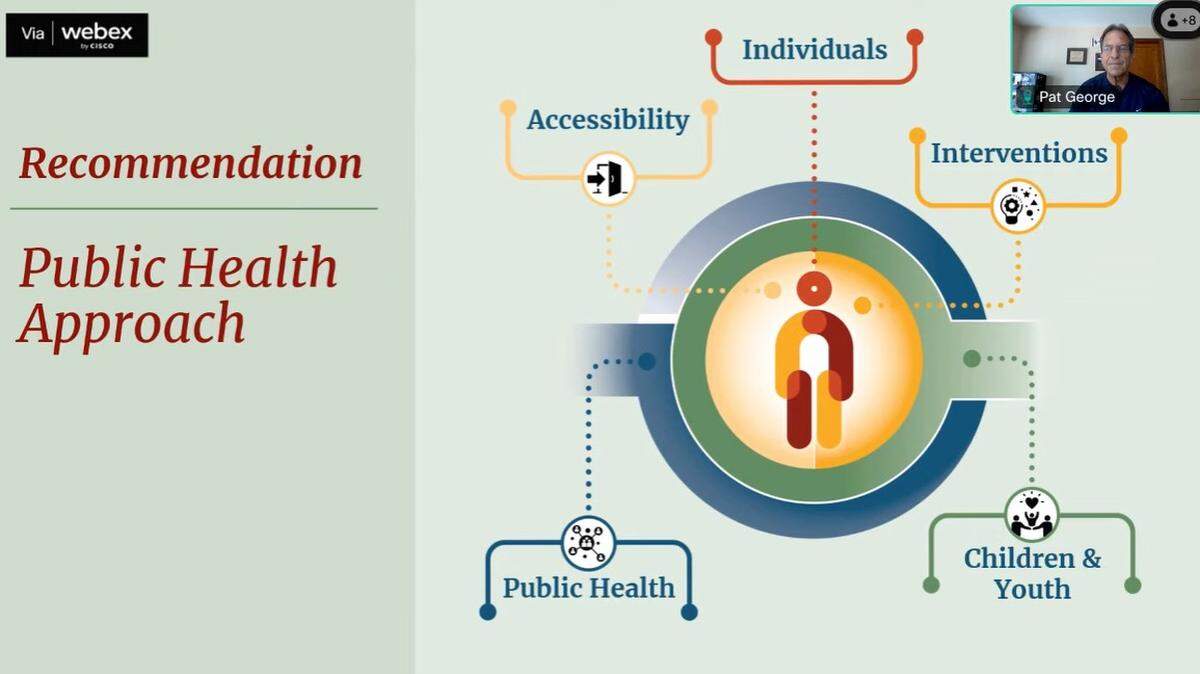
A statewide report is calling for Kansas to take a public health, rather than punitive, approach to help people with substance use disorders.
The report was ordered by the Kansas Fights Addiction board, which will oversee allocations of more than $340 million in opioid settlement funds over the next 18 years.
“The needs assessment we really see as a first piece of the puzzle,” Janine Hron, associate director of the University of Kansas’ Center for Public Partnerships and Research, told the board at its April meeting. “It provides us a solid foundation to springboard the board into more strategic grant making.”
The assessment was developed in the past year by the center and the Sunflower Foundation using several surveys and public listening sessions throughout the state.
Using data from the National Survey on Drug Use and Health, the assessment says one-fifth of Kansans have a substance use disorder. That jumps to one-third for Kansans ages 18 to 25.
Many don’t seek treatment or other help because of stigma, financial barriers or lack of access to resources, the assessment says.
The assessment found the largest need for treatment among young adults and teens.
Kansas has a limited number of options for people younger than 18 seeking substance use disorder treatment, and that number dwindles for people who seek treatment in their early teens.
“Any way you slice it, in order to benefit in the system, you have either got to be in the know or really lucky,” Hron said.
The report calls for an individualized approach on how to address substance use in each of the state’s counties.
Using Sedgwick, Wyandotte, and Saline counties as an example, the assessment showed that each county has different needs and variables that affect overdose and substance use disorder rates.
Sedgwick and Wyandotte counties have high overdose and sexually transmitted disease rates, but differ when looking at HIV prevalence and leisure time among adults — all factors that can go into whether someone develops a substance use disorder or is able to access treatment.
Saline County had a higher density of liquor stores and homelessness.
“This kind of comparison helps move us beyond the one-size-fits-all intervention towards place based strategies that are crowded in the data and aligned with the realities of what each community is facing,” KU researcher Silke Von Esenwein said.
The landscape for substance use treatment in the state is rapidly changing as the federal government continues to make cuts to substance use disorder grants.
Nearly two-thirds of substance use disorder funding in the state comes from the federal government.
Because of those federal cuts, the state’s opioid settlement funds are likely to become the largest pot of funding available for providers, and those grant funds through the board have already been in high demand.
“One of the biggest challenges in Kansas’ substance use treatment system is it relies heavily on short term grant based funding,” von Esenwein said. “It tends to be reactive, meaning it’s designed to respond to crises or specific issues after they arise, rather than allowing communities to plan proactively.”
The assessment also called for expanding drug testing services in the state and for using syringe exchange programs, which received pushback when Sedgwick County released a similar assessment earlier this year.
Syringe exchange programs are illegal in Kansas, but legal in surrounding states. Any bill to legalize such programs would likely face steep opposition in the Kansas Legislature, including from law enforcement.
“I made it very clear… I am not for that idea whatsoever,” Sedgwick County Sheriff Jeff Easter told county commissioners in February.
The report will be available to the public later this spring after it goes through final edits.
The board will use the report for guidance on where to allocate settlement funds over the next several years.
“You can be a catalyst,” Hron said. “You, the KFA board, and this whole structure within the ecosystem, a catalyst for keeping us focused, a catalyst for bringing communities together.”